


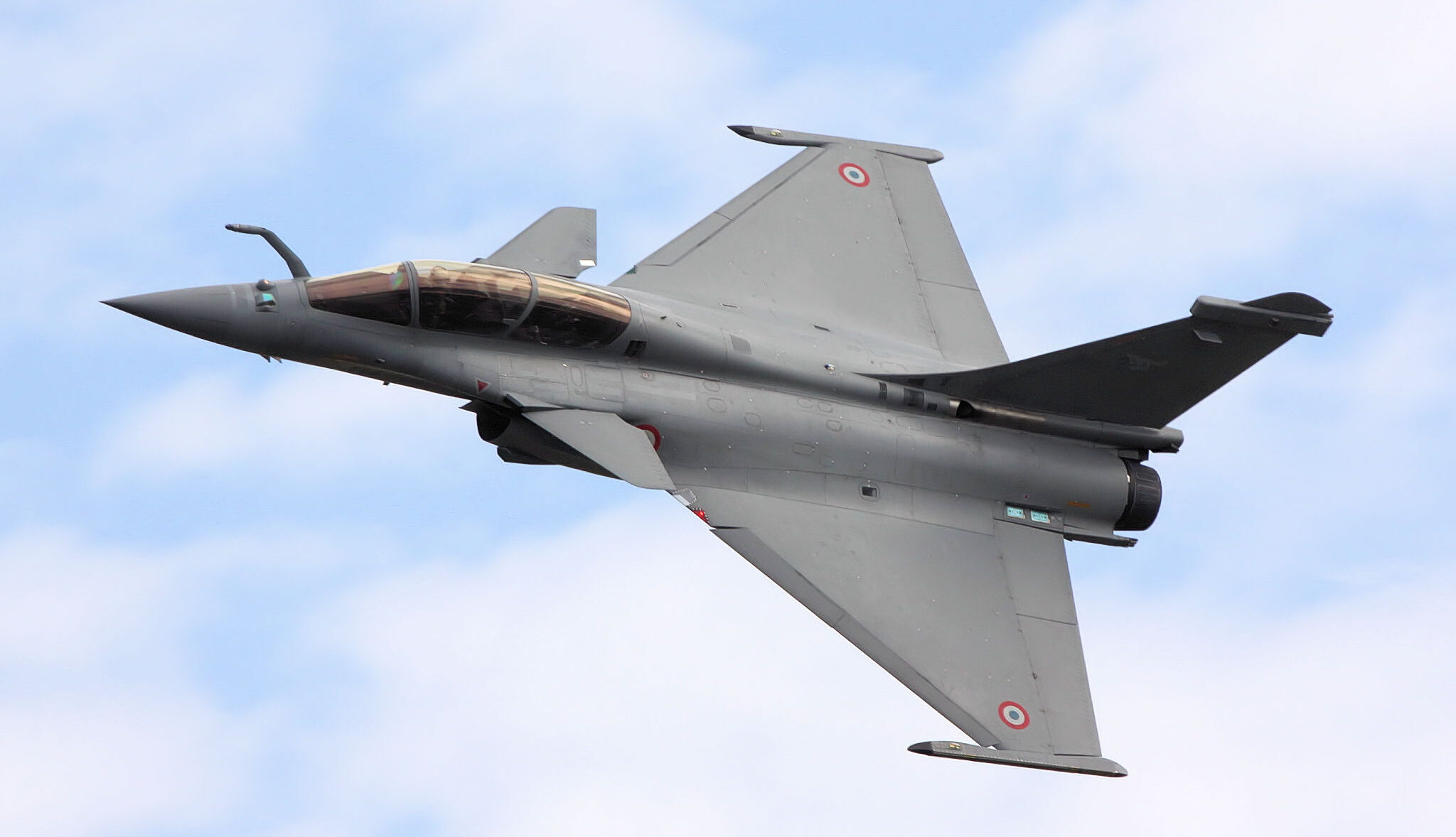
France has successfully integrated 68mm laser-guided rockets onto its Rafale fighter jet as an affordable counter to the growing threat of long-range kamikaze drones. The Defence and Security Agency (DGA) completed integration testing on July 7, 2026, marking the rapid operationalisation of a capability conceived just months earlier.
The Lutte anti-drone sur avion de combat (Ladac) programme delivers laser-guided rockets to the French Air and Space Force in response to the proliferation of inexpensive one-way attack drones such as Iran’s Shahed-136 variants, which have proven effective in recent conflicts. France’s DGA, working with the Air and Space Force’s expertise centre and support from Dassault Aviation and Thales, compressed the entire development cycle from contract award to first operational capability in less than eight months.
Flight trials conducted since February 2026 validated radar detection, laser designation pod tracking, rocket pod carriage, and live-fire guidance against representative aerial targets. The first batch of launcher pods, rockets, and Talios laser designation pods equipped with Ladac mode will reach operational squadrons from late July 2026.
The 68mm laser-guided rocket selected for integration was already qualified on the Tiger attack helicopter, allowing France to accelerate development by leveraging proven munitions architecture. This approach differs fundamentally from deploying full-sized air-to-air missiles against low-cost drones, which defence planners increasingly view as economically inefficient and operationally wasteful.
The Rafale’s integration of laser-guided rockets reflects a broader shift across Western air forces adapting to drone proliferation. Modern air combat doctrine now emphasizes tiered air defence responses: reserving expensive beyond-visual-range missiles for high-value manned aircraft while employing cheaper precision-guided munitions against unmanned threats. This cost-exchange calculus has become central to operational planning following extensive drone use in Ukraine and the Middle East.
For the Indian Air Force, which operates 36 Rafale fighters acquired under a 2016 contract with Dassault, the French initiative underscores the evolving role of combat aircraft in contested airspace. India’s Rafales are equipped with Talios pods and execute precision-strike missions, but indigenous options for anti-drone capability remain limited. The Indian Defence Research and Development Organisation (DRDO) has pursued air defence solutions including the Akash and Spyder systems, yet tactical air-to-air anti-drone munitions lag behind international standards.
The Ladac programme also signals that NATO air forces view kamikaze drone interception as a core mission requirement, not an auxiliary capability. France’s rapid integration cycle demonstrates that mature defence-industrial ecosystems can field new air-combat solutions within political timelines demanded by active conflicts abroad.