


China has warned that Japan’s expanding military presence in the South China Sea could prove more destabilising than that of the United States, as regional tensions intensify a decade after the 2016 Hague arbitration ruling rejected Beijing’s expansive maritime claims.
Wu Shicun, founding president of China’s National Institute for South China Sea Studies, made the assessment during a security roundtable in Hong Kong, citing Tokyo’s participation in this year’s Balikatan exercises with the United States and the Philippines as evidence of Japan’s growing military footprint in the disputed waters.
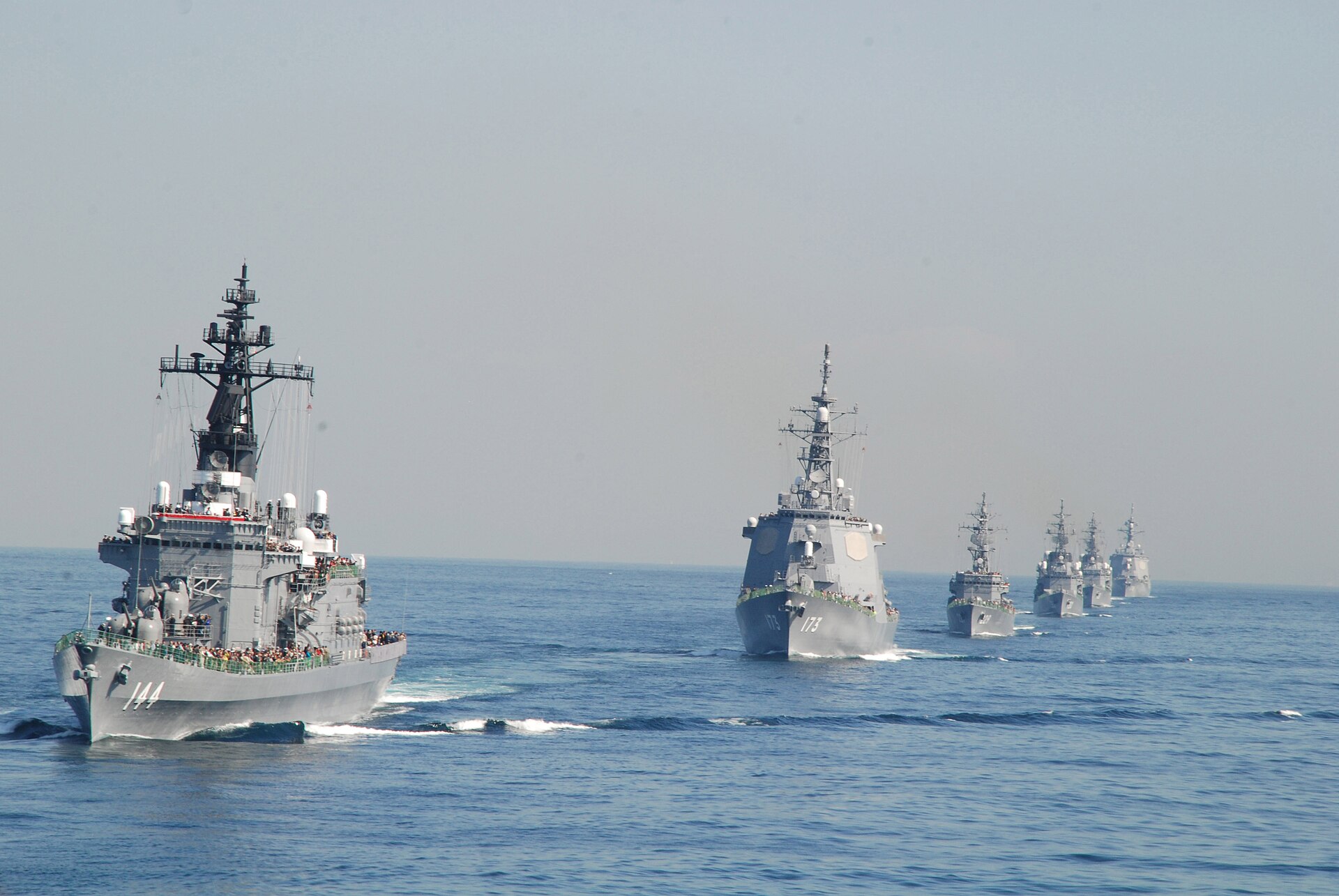
The Balikatan exercises, which are held annually and involve combined operations training between US and Philippine forces, saw Japan deploy over 1,400 personnel, three warships, and transport aircraft. More significantly, Japan conducted the first overseas live firing of its Type 88 surface-to-ship missile system, striking a decommissioned Philippine Navy vessel during the drills.
Wu characterised this display as unprecedented. “This is the first time that Japan has shown off its military muscle since the end of World War II,” he stated, arguing that Japan’s military deployment into the South China Sea carries “inherent destructive” potential that could ultimately exceed American involvement in the region.
Japan’s Type 88 anti-ship guided missile represents a key element of Tokyo’s maritime strike capability. The system, developed domestically, is designed to engage enemy surface vessels at extended ranges and is among Japan’s most advanced weapons platforms. Its deployment in a live-fire exercise in the South China Sea signals Japan’s willingness to operationally test its capabilities in a strategically sensitive zone.
The timing of Wu’s remarks underscores escalating diplomatic friction. On Sunday, 14 countries including the United States and the Philippines reaffirmed the Hague tribunal’s ruling as legally binding and criticised Beijing’s refusal to comply with it. Japan separately stated that China’s non-compliance violated “the principle of peaceful settlement of disputes,” prompting Beijing to summon a senior Japanese embassy official and lodge a formal protest.
Wu also argued that Manila and its allies’ continued reliance on the 2016 arbitration ruling to advance their interests made lasting stability in the South China Sea untenable. “As long as Manila and its partners do not give up using the ruling to serve their own interests, peace and stability in the South China Sea cannot be guaranteed,” he said.
The broader context reflects Japan’s strategic repositioning in Indo-Pacific security architecture. Under successive administrations, Tokyo has gradually expanded its defence footprint beyond its immediate territorial waters, participating in multilateral exercises and strengthening security partnerships with regional allies, particularly the Philippines and Australia.
China’s pushback against Japan’s role differs from its historical criticism of US operations in the South China Sea, suggesting Beijing views Tokyo’s emerging naval activism as a qualitative shift in regional balance and a challenge to China’s narrative of regional dominance.