


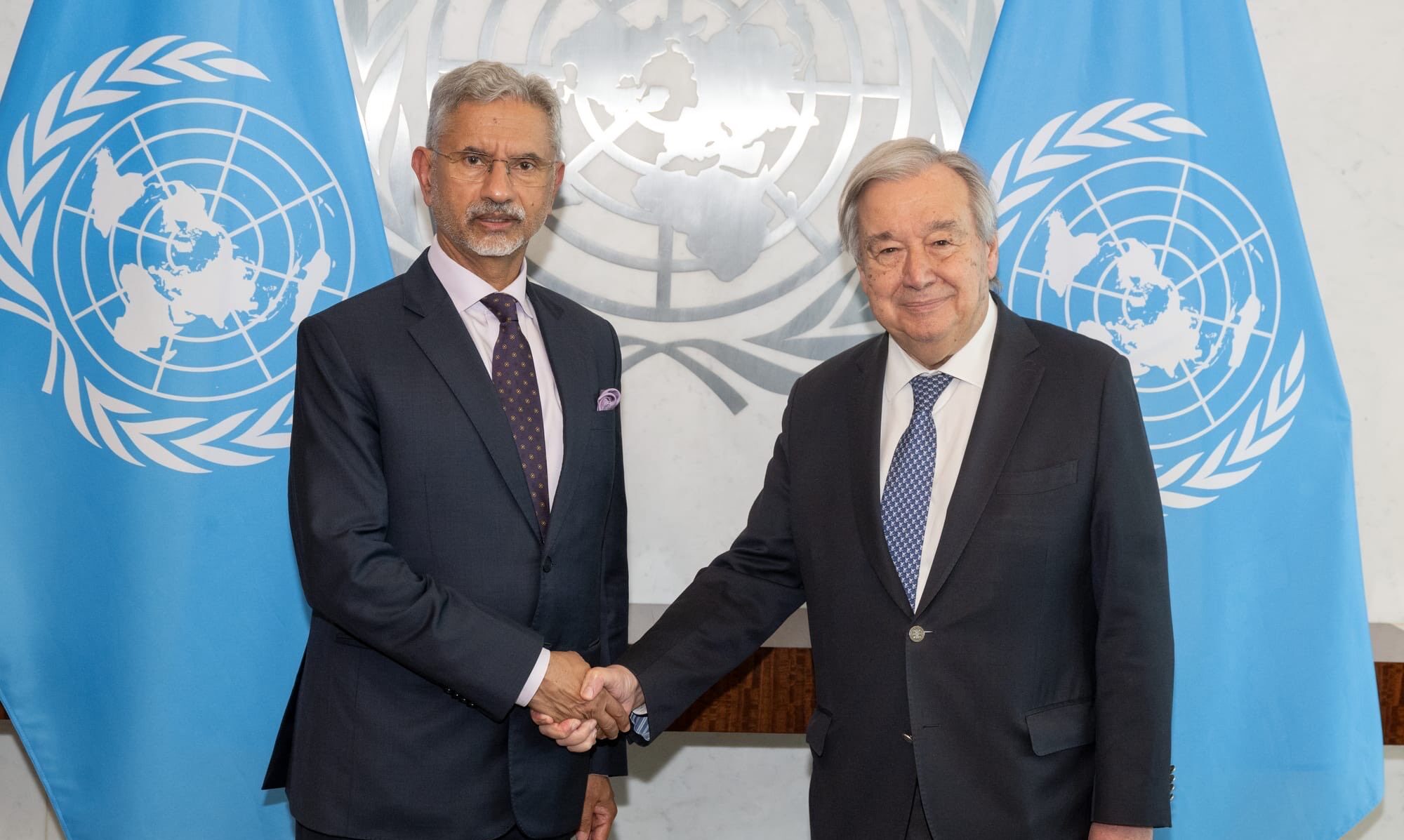
India’s Foreign Minister met with United Nations Secretary-General António Guterres to formally launch the country’s campaign for a non-permanent seat on the UN Security Council for the 2028-29 term, according to the Ministry of External Affairs.
The bilateral engagement underscores India’s sustained commitment to multilateralism and its role in global governance structures. A permanent presence on the Security Council has long been a stated Indian objective, though India has pursued non-permanent membership as an intermediate strategic position.
India last held a non-permanent UNSC seat in 2021-22, when it took on significant responsibility during a particularly turbulent period marked by geopolitical tensions in Eastern Europe and Indo-Pacific maritime disputes. That tenure saw India chair several key committees and shape resolutions on counterterrorism, maritime security, and peacekeeping operations.
The 2028-29 term represents India’s next opportunity to occupy a council seat, following the established rotation schedule among UN member states. Election to the non-permanent seats occurs two years before the term begins, placing the campaign squarely within India’s current diplomatic agenda.
India’s case for UNSC representation rests on several pillars. As the world’s most populous democracy and a permanent voice in forums like the G20 and BRICS, India positions itself as a bridge between the Global North and Global South. Its active participation in peacekeeping operations, with Indian troops deployed across multiple UN missions, further strengthens its candidacy.
Engagement with the UN Secretary-General at this early stage reflects India’s diplomatic strategy of building consensus among permanent council members and regional blocs. The timing of the campaign launch also signals India’s intent to secure pledges from African nations, traditionally pivotal voters in UNSC elections.
India’s defence and foreign policy posture has increasingly intersected with multilateral frameworks over the past decade. The country’s maritime doctrine, space defence initiatives, and counterterrorism frameworks all carry implications for UN deliberations on international security. A council seat amplifies India’s ability to shape discourse on these issues and protect national interests in critical votes.
Previous UNSC tenures by India have seen constructive engagement on arms control, nuclear non-proliferation, and regional conflict resolution. The Ministry of External Affairs has signalled that a 2028-29 seat would enable India to advance similar priorities while championing the interests of emerging economies and developing nations within the council’s inner circle.