


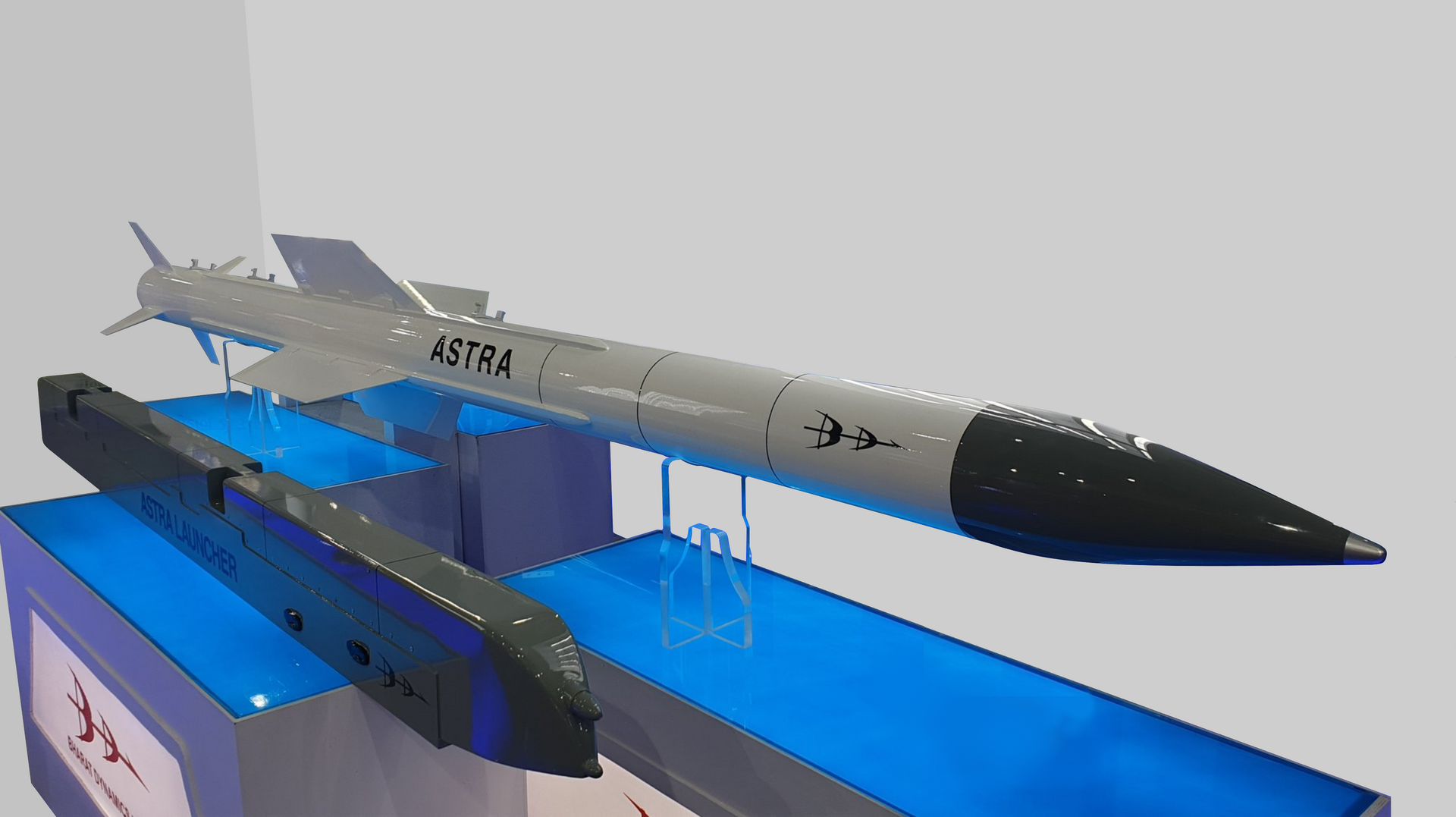
India is opening missile production to private defence manufacturers, with the ASTRA MK-2 air-to-air missile set to lead this landmark policy shift, according to reports. The move signals a fundamental realignment of how India’s defence industrial base will operate and marks a significant acceleration of the government’s Make in India and Atmanirbhar Bharat initiatives in critical weapon systems.
The ASTRA MK-2 is the advanced iteration of India’s primary beyond-visual-range air-to-air missile developed by the Defence Research and Development Organisation (DRDO). The original ASTRA system entered service with the Indian Air Force in 2019, addressing a long-standing capability gap in medium-range air combat. The missile is designed to be launched from Su-30MKI fighters and other compatible aircraft platforms and has become integral to IAF air superiority operations.
The MK-2 variant represents a generational upgrade, featuring enhanced range, improved seeker technology, and superior guidance algorithms compared to the baseline ASTRA. This advancement aligns with global air-to-air missile evolution, where longer stand-off ranges and improved target discrimination against contemporary air defence systems are now baseline requirements.
Historically, missile production in India has remained the domain of government-owned Defence Research and Development Organisation (DRDO) and Hindustan Aeronautics Limited (HAL), with limited private sector participation. This new policy framework allows qualified private defence contractors to manufacture, assemble, and potentially co-develop missile systems in partnership with DRDO or independently under stringent security and technical oversight.
The decision reflects lessons drawn from India’s aircraft and radar manufacturing sectors, where private participation has accelerated production timelines and reduced unit costs. Companies already engaged in defence electronics, composite materials, and precision engineering will now have pathways to enter missile production, creating a competitive industrial ecosystem.
The ASTRA MK-2 serves as the proving ground for this policy because the platform is mature, operationally proven, and strategically critical. By allowing private firms to participate in its serial production, the government can scale manufacturing capacity without expanding DRDO’s institutional footprint while creating indigenous supply chains across the defence industrial ecosystem.
India’s air-to-air missile fleet currently relies on ASTRA for medium-range engagements, with short-range Astra Mark 1 variants complementing longer-range systems still under development. Expanding production capacity through private contractors directly addresses IAF requirements for higher missile inventories and faster replacement cycles as aircraft fleets modernise.
The policy also positions India competitively in potential exports, as allied nations seek Indian-origin air combat systems. Licensed production agreements could follow, leveraging private sector manufacturing efficiency to serve regional partners aligned with India’s strategic interests.