

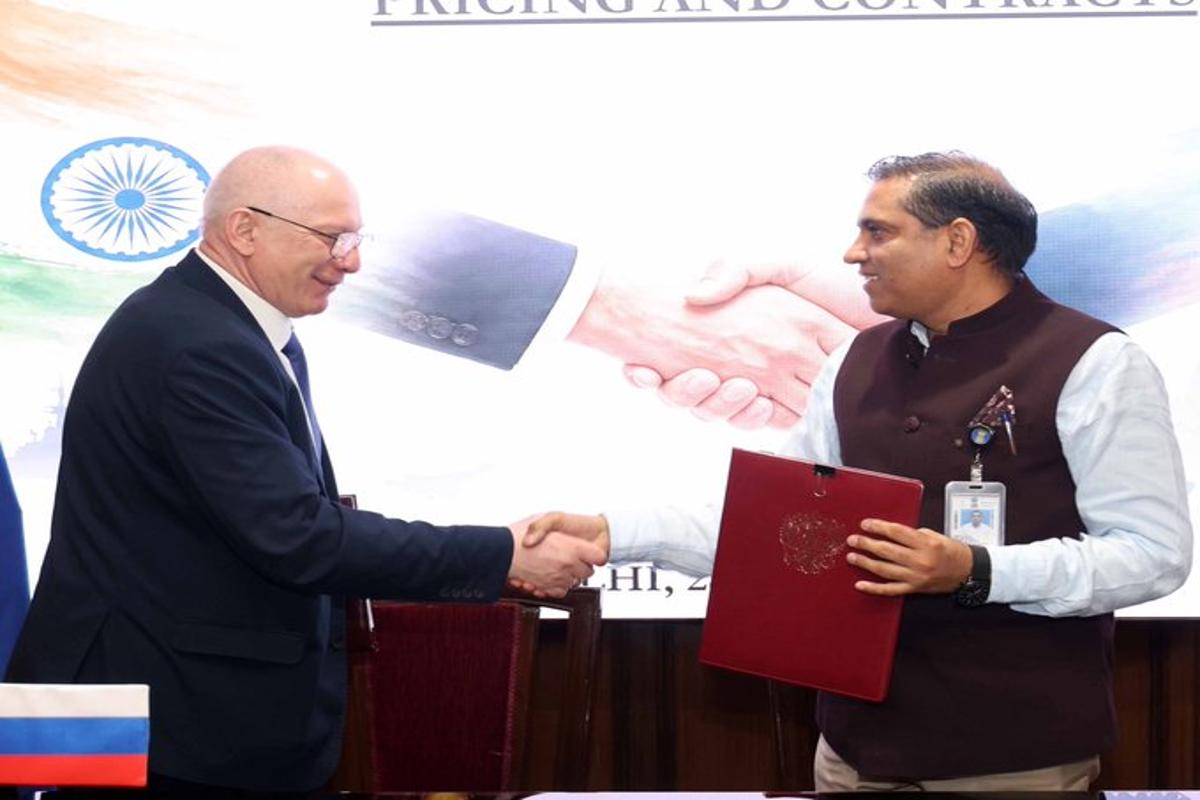
India and Russia have reinforced their long-standing defence partnership with the successful conclusion of the 5th Working Sub-Group meeting focused on defence support and logistics in New Delhi. The discussions, held over two days, centered on improving the sustainment ecosystem for military platforms supplied by Russia to the Indian Armed Forces.
Senior defence officials from both countries reviewed key operational issues such as maintenance support, availability of critical spares, and cost management of defence contracts. A major emphasis was placed on enhancing after-sales service frameworks to ensure higher operational readiness of existing military assets.
The Indian delegation was led by Joint Secretary Dinesh Kumar, while the Russian side was headed by Sergey Yashin, a senior official responsible for military-technical cooperation. Both sides acknowledged the need for faster resolution mechanisms and improved coordination between agencies handling defence logistics and procurement.
During the meeting, discussions also explored ways to make long-term support systems more efficient, including better pricing models and smoother execution of ongoing contracts. The goal is to minimize downtime of key platforms and ensure seamless lifecycle management.
This Working Sub-Group operates under the broader India-Russia Inter-Governmental Commission on Military and Military Technical Cooperation, which serves as the main institutional mechanism guiding defence relations between the two countries.
India continues to rely significantly on Russian-origin equipment across its Army, Navy, and Air Force. As a result, strengthening maintenance and support infrastructure has become a priority area in bilateral defence engagement.
The latest round of talks reflects a shared commitment to modernize support systems while sustaining existing defence ties. It also signals a gradual shift toward more structured and efficient defence collaboration, particularly in areas beyond procurement.