


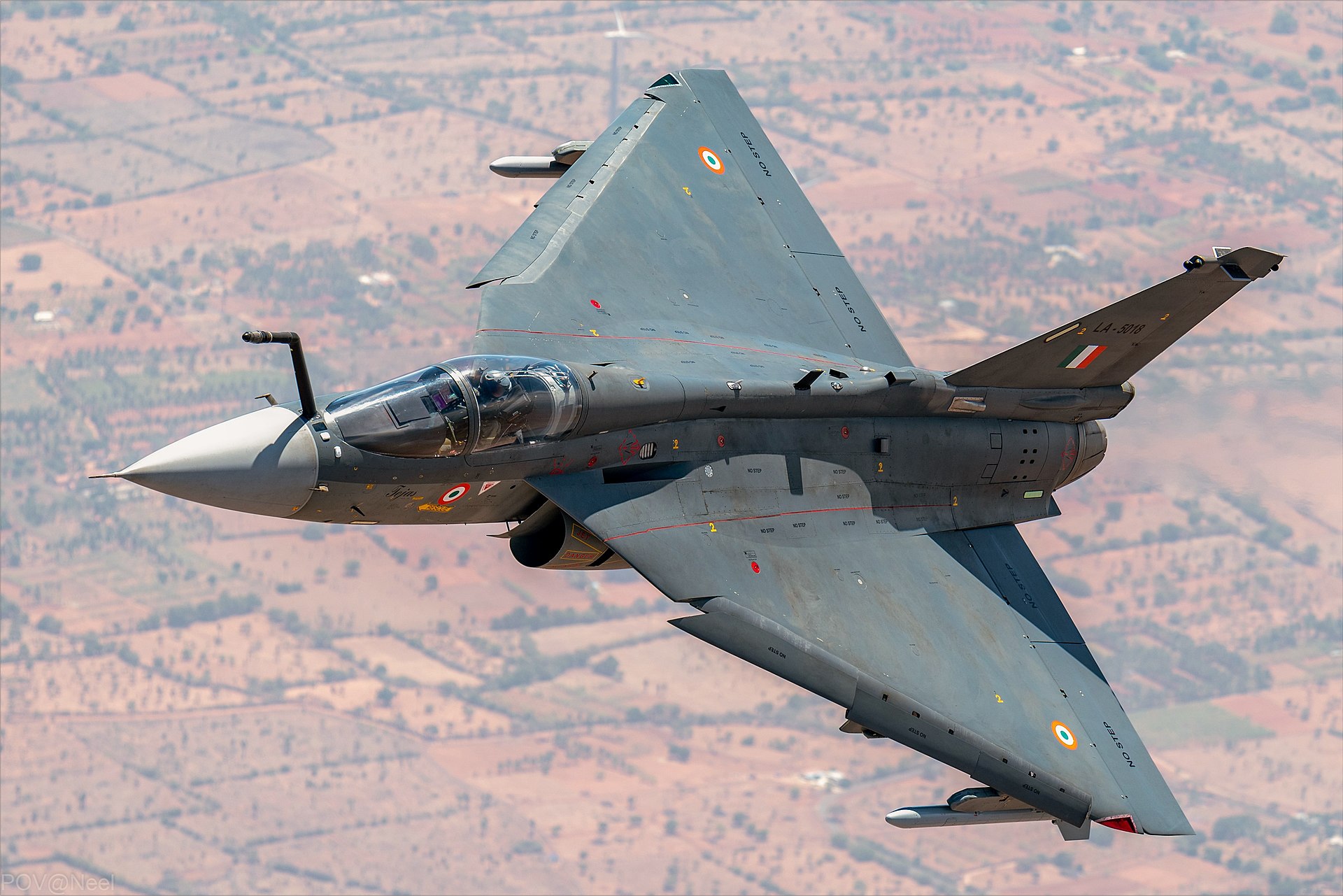
The Indian Air Force’s Tejas Mk-1A is already a major step forward in India’s indigenous fighter aircraft programme, but defence experts believe its combat effectiveness could be further enhanced by integrating an advanced Infrared Search and Track (IRST) system. Such a capability would significantly improve the aircraft’s ability to detect hostile aircraft without relying solely on radar, making it better suited for operations in increasingly contested airspace.
Unlike conventional radar, an IRST system detects the heat signatures emitted by aircraft engines and airframes. Since it works passively without transmitting radio waves, it enables a fighter to locate and track enemy aircraft while remaining difficult to detect. This capability is becoming increasingly valuable as modern air forces introduce stealth aircraft and sophisticated electronic warfare systems designed to reduce radar effectiveness.
The Tejas Mk-1A already incorporates several major upgrades over the earlier Tejas variants. It features an Active Electronically Scanned Array (AESA) radar, an improved electronic warfare suite, advanced mission computers, secure communication systems, and compatibility with a wider range of air-to-air and air-to-ground weapons. These enhancements have transformed the aircraft into a capable multi-role platform for the Indian Air Force.
Adding an advanced infrared sensor would complement these existing systems by providing another layer of target detection. In electronic warfare environments where radar signals may be jammed or intercepted, passive infrared tracking can help pilots maintain situational awareness while reducing the aircraft’s electromagnetic signature.
The Indian Ocean Region is witnessing rapid military modernisation, with several regional powers expanding their air and naval capabilities. Long-range maritime patrols, island security missions and air defence operations demand fighters that can operate effectively across vast distances while responding to evolving aerial threats. A passive detection system would enhance the Tejas Mk-1A’s ability to monitor hostile aircraft during such missions.
Modern fighter aircraft increasingly combine AESA radars with infrared search-and-track systems to create a multi-sensor combat environment. Sensor fusion enables pilots to receive information from multiple sources simultaneously, improving target identification, tracking accuracy and overall battlefield awareness. Integrating a similar capability into the Tejas Mk-1A would align the aircraft with global trends in next-generation fighter design.
An internally integrated IRST solution would also preserve external weapon stations and minimise aerodynamic drag compared to pod-mounted alternatives. This approach could improve both operational flexibility and aircraft performance while maintaining a clean aerodynamic profile.
As India continues to strengthen its indigenous defence aviation ecosystem, future capability upgrades remain central to keeping the Tejas Mk-1A relevant against emerging threats. While no official announcement has been made regarding the integration of an IRST system, defence observers believe such an upgrade would further enhance the aircraft’s survivability, situational awareness and effectiveness in both air defence and maritime operations.