

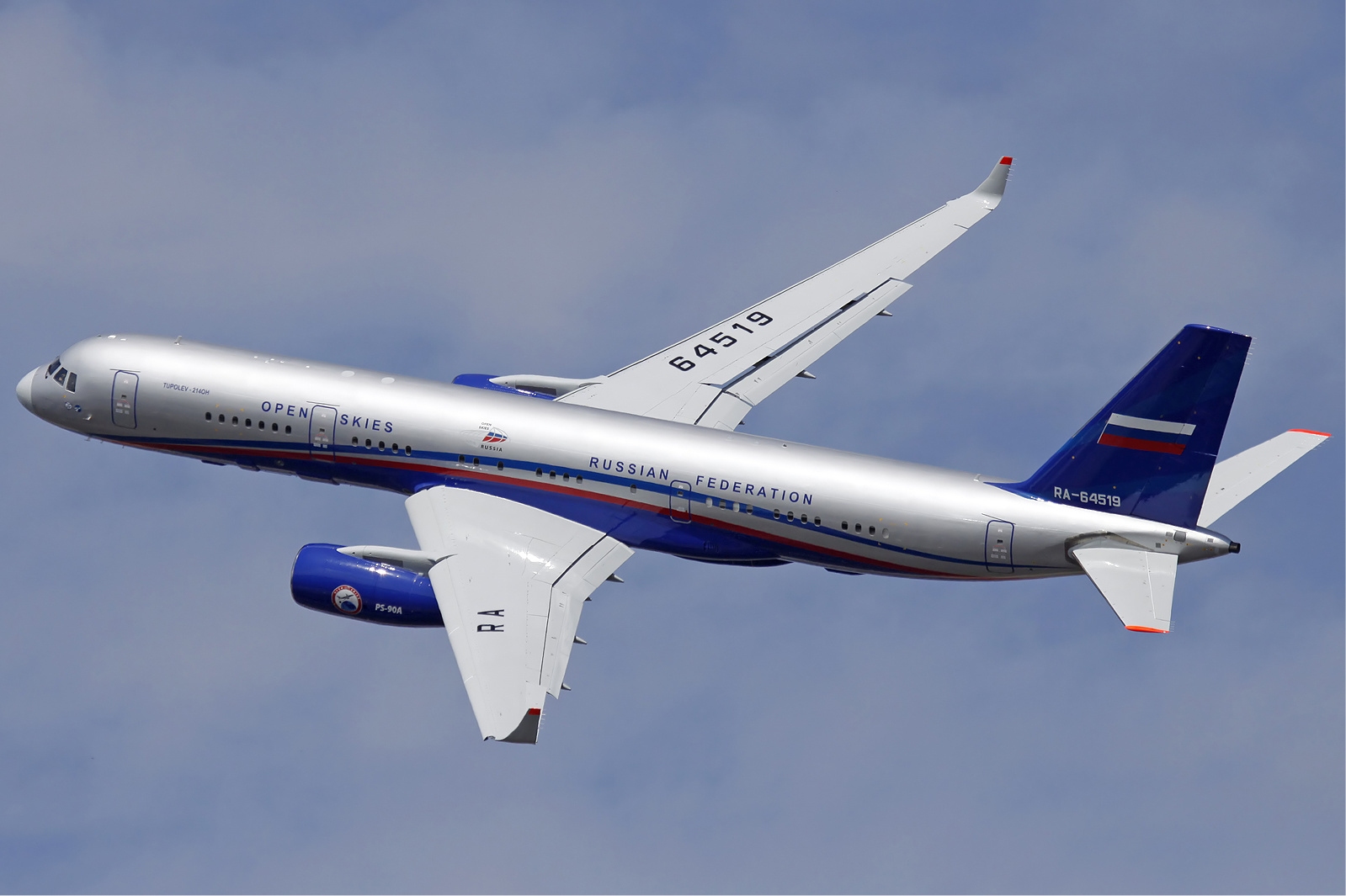
Russia has flown its elite Tu-214PU airborne command-post aircraft into Tehran as military tensions between the United States and Iran intensify in West Asia, according to reports on Monday. The deployment signals Moscow’s sustained strategic alignment with Tehran and readiness to coordinate military operations at the highest level during the ongoing conflict.
The Tu-214PU is Russia’s airborne command centre, purpose-built for crisis coordination and presidential travel. Based on the Tupolev Tu-214 narrow-body airliner, the aircraft has been extensively modified with advanced secure communications and command-control systems enabling senior government leaders to exercise state functions while airborne. The letters “PU” denote the Russian concept of a flying “control post,” distinguishing it from conventional passenger transport.
The aircraft is equipped with specialised radio systems and secure voice networks designed to maintain operational continuity during national emergencies. It cruises at approximately 850 km/h and carries a range of roughly 6,500 kilometres. Later military variants, including the Tu-214PU-SBUS, feature enhanced communications capabilities suited to modern battlefield coordination and multi-agency command frameworks.
Russia’s decision to deploy this platform to Tehran carries multilayered significance. By positioning an airborne command post in the Iranian capital, Moscow is publicly signalling continued military cooperation and willingness to provide high-level operational support, whether through intelligence sharing, diplomatic coordination, military consulting, or contingency planning for further escalation.
The deployment arrives as the Iran-US conflict shows renewed intensity following a ceasefire announced by US President Donald Trump in June. Last week, strikes resumed after Iranian operations targeted ships in the Strait of Hormuz. The Islamic Revolutionary Guard Corps announced strikes on US-aligned air bases in Kuwait, including Ali Al-Salem and Ahmed Al-Jaber, claiming destruction of fuel infrastructure, Patriot air defence systems, and early warning radar equipment as part of what it termed the third phase of an “eye-for-an-eye” operation against American military targets.
The presence of the Tu-214PU underscores Russia’s deepening military integration with Iran at a moment when regional actors face uncertainty over conflict trajectory. For Western observers and regional partners of the United States, the aircraft’s arrival in Tehran represents a visible commitment by Moscow to sustain Iran’s operational capability and command structure despite ongoing American military pressure.