


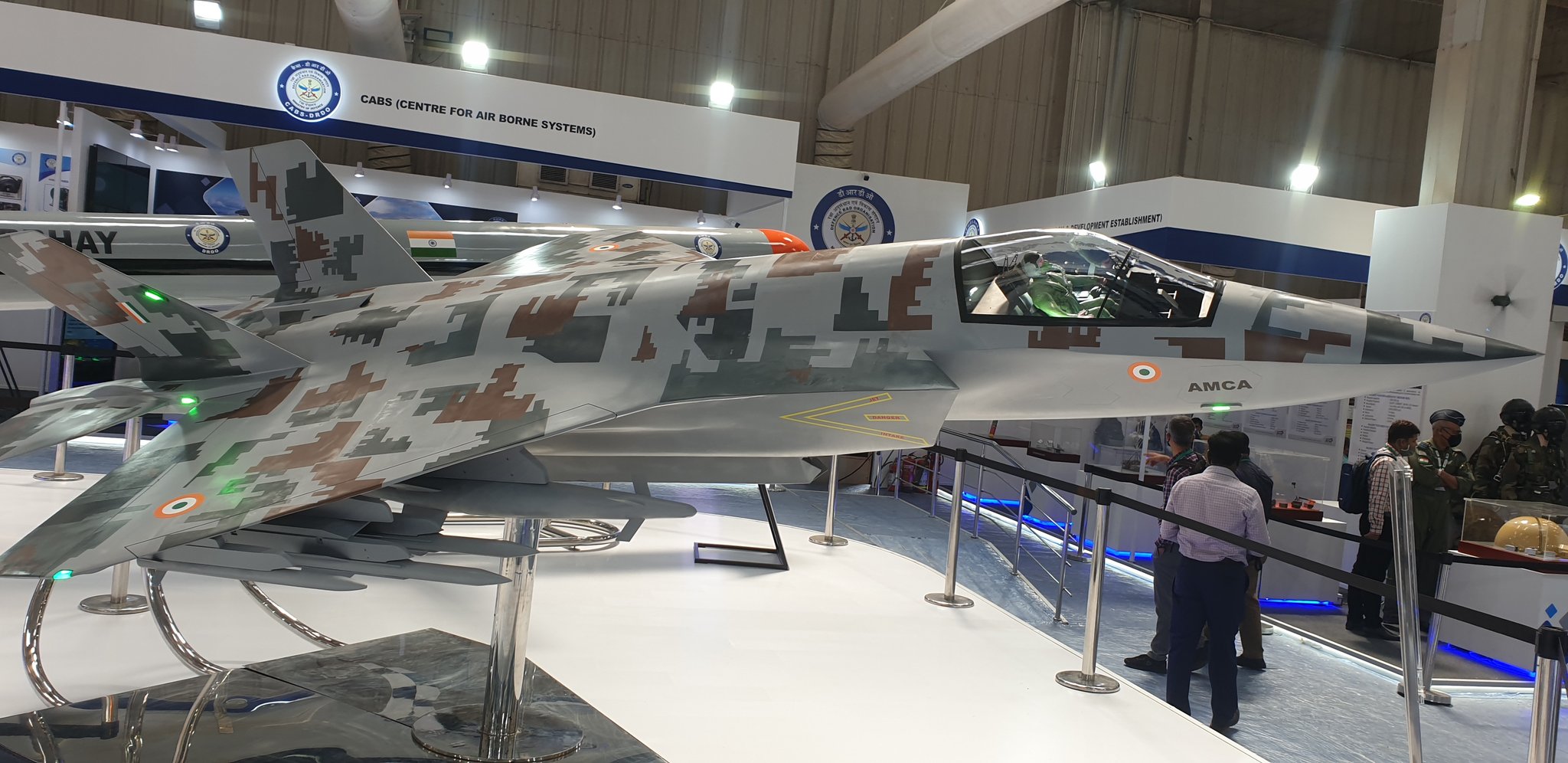
The AMCA represents a significant milestone in India’s indigenisation strategy. Conceived by the Defence Research and Development Organisation in collaboration with Hindustan Aeronautics Limited, the programme aims to deliver a fifth-generation fighter with low-radar cross-section, supersonic cruise capability, and advanced sensor fusion architecture.
The aircraft is designed to operate across multiple domains: air-to-air combat, deep strike, maritime patrol, and airborne early warning. Its configuration emphasises internal weapons carriage to maintain stealth characteristics and reduce vulnerability to detection by adversary air defence systems.
Development timelines for fifth-generation platforms have proven challenging globally. Several international programmes have experienced cost overruns, schedule slippages, and technical complications in integrating stealth geometry with modern avionics and propulsion systems. India’s AMCA development trajectory, anchored within DRDO’s established aerospace ecosystem and supported by HAL’s manufacturing infrastructure, positions the programme within India’s broader Make in India and Atmanirbhar Bharat objectives.
The AMCA will eventually complement the Tejas light combat aircraft and serve as a platform for testing next-generation systems including active electronically scanned array radar, distributed aperture sensors, and networked data fusion capabilities. Its introduction into Indian Air Force service will enhance India’s air combat capability across the Indo-Pacific region.
The programme reflects India’s commitment to reducing dependence on imported combat aircraft through domestic design and manufacturing. Unlike acquisition-dependent approaches, the indigenous development pathway creates technological sovereignty and builds institutional capacity within the Indian aerospace sector.
International partnerships are being explored to accelerate critical technology development without compromising strategic autonomy. Engine technology, advanced composite materials, and sensor integration remain focus areas where collaborative arrangements may enhance capability maturity within the given timeframe.
The AMCA’s competitive positioning against contemporary and emerging fifth-generation platforms worldwide will be determined by its operational effectiveness in air-to-air engagement, radar cross-section performance, and real-world integration of weapons and sensor packages across its service life.