


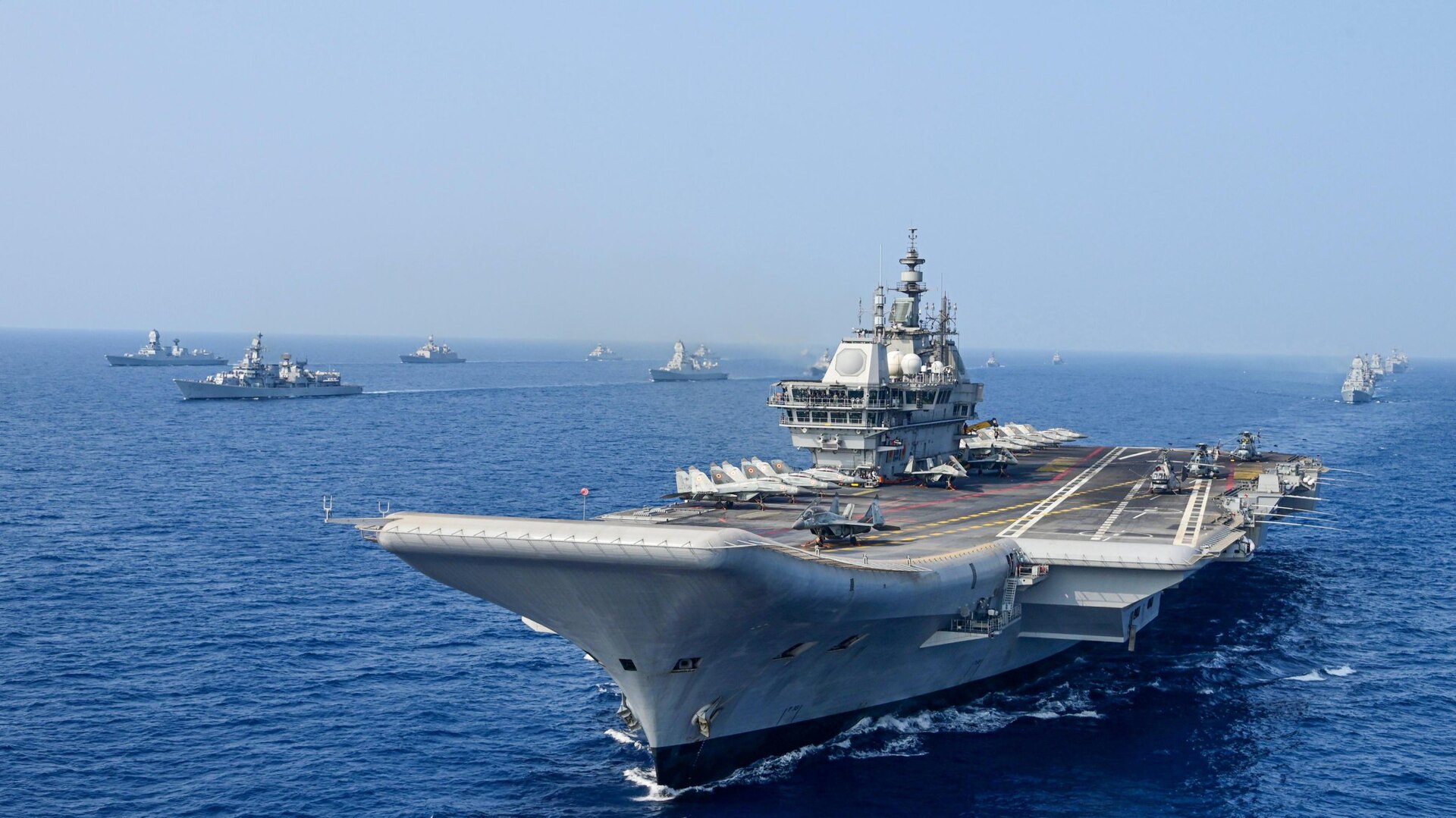
The Indian Navy is charting an ambitious warship construction programme valued at approximately ₹1 lakh crore, centred on three major projects: the Project 15C guided-missile destroyers, Project 17B stealth frigates, and Project 18A nuclear-powered ballistic missile submarines, according to defence sources.
This multi-decade shipbuilding strategy represents one of the Navy’s largest modernisation initiatives and directly aligns with India’s maritime security posture in the Indo-Pacific region, where rising naval competition and extended sea lanes demand sustained force development.
Project 15C will extend the Visakhapatnam-class destroyer lineage, which began with INS Visakhapatnam in 2021. These vessels displace over 7,300 tonnes, feature an integrated mast architecture for reduced radar cross-section, and carry advanced combat management systems. The class serves as the Navy’s primary air-defence and anti-submarine platform for blue-water operations. The follow-on Project 15C batch is expected to incorporate lessons learned from the first four ships and upgraded sensor suites.
Project 17B will build on the Nilgiri-class frigate design, which prioritises stealth characteristics and modular construction. These ships, displacing around 6,600 tonnes, emphasise indigenous systems integration and are optimised for coastal and open-ocean patrol roles. The Project 17B variant is likely to feature enhanced combat information systems and expanded indigenous content aligned with the Navy’s self-reliance objectives.
Project 18A represents India’s expansion into submarine-based nuclear deterrence. These boats, when operationalised, will carry India’s K-series submarine-launched ballistic missiles and form a critical leg of the country’s nuclear triad. This programme underscores India’s strategic autonomy in maintaining credible second-strike capability.
The consolidated ₹1 lakh crore outlay reflects the compounding costs of naval shipbuilding over 15-20 years of production, including design refinement, material procurement, labour, and integration of cutting-edge sensor and weapon systems. Major portions of procurement and construction are likely to flow through Cochin Shipyard Limited, Mazagon Dock Shipbuilders, and Garden Reach Shipbuilders and Engineers, anchoring India’s defence-industrial base.
This expansion directly addresses China’s sustained naval growth in the Indian Ocean and reflects New Delhi’s commitment to maintaining maritime superiority along critical sea lanes through which over 80 per cent of India’s trade transits. The phased construction schedule ensures continuous industrial capacity utilisation and technological advancement across India’s shipyards.