


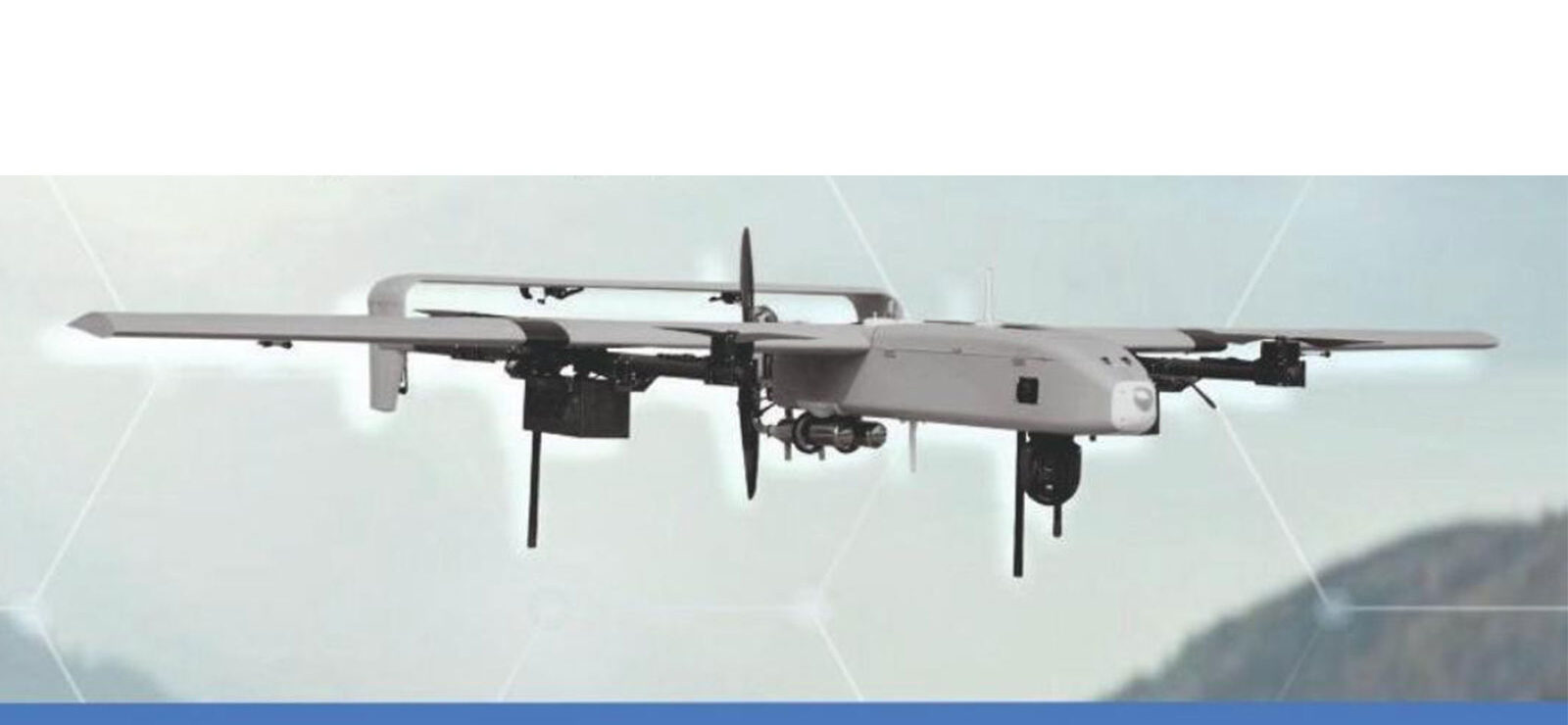
The Indian Army has selected the Tata-NIBE consortium as the lowest bidder for a ₹1,600 crore contract to develop and supply loitering munitions, marking a significant step in the service’s effort to acquire indigenous precision strike capabilities for tactical battlefield operations.
Loitering munitions, commonly known as kamikaze drones or suicide drones, are unmanned aerial systems designed to loiter over a target area before diving onto their objective with precision. The systems represent a critical capability gap in the Indian Army’s organic firepower architecture, particularly for short-range, cost-effective strikes against dispersed or mobile targets in contested terrain.
The Tata-NIBE partnership brings together Tata Advanced Systems Limited, a key defence manufacturing player with extensive experience in unmanned systems and aerospace platforms, alongside NIBE, leveraging complementary expertise in systems integration and electronics. This collaboration underscores India’s growing reliance on public-private partnerships to accelerate the development and production of advanced defence systems under the Make in India initiative.
Loitering munitions fill a distinct operational niche between conventional artillery and manned air support. They offer lower cost per target engagement than guided missiles, extended dwell time over a target area for time-sensitive targeting decisions, and reduced collateral damage compared to conventional bombardment. Modern variants can be equipped with multiple sensor suites for autonomous or operator-in-the-loop engagement, making them suitable for complex tactical scenarios involving fortified positions, convoy interdiction, or precision strikes in urban or semi-urban environments.
Several international militaries have operationalised loitering munition systems over the past decade. Israel’s Harop system targets air defence radars, while Azerbaijan’s Loitering Munition (also supplied by Israel) saw extensive use during the 2020 Nagorno-Karabakh conflict. Russia has deployed various loitering systems in Ukraine since 2022. India’s acquisition comes at a time when operational requirements from border conflicts and counterinsurgency operations have underscored the utility of such precision, expendable platforms.
The contract award follows India’s broader indigenisation push in defence manufacturing. The Defence Ministry has prioritised developing indigenous capabilities across platforms, avionics, propulsion systems, and munitions to reduce dependence on imports and boost domestic industry. A domestic loitering munition programme aligns with this strategy while creating intellectual property and manufacturing expertise within the Indian defence industrial base.
The Tata-NIBE contract will likely encompass design validation, prototype development, testing, and series production phases. The timeline and production schedule will influence how quickly the systems become operationally available to field formations, particularly those deployed in high-threat environments along the northern and northwestern frontiers.