


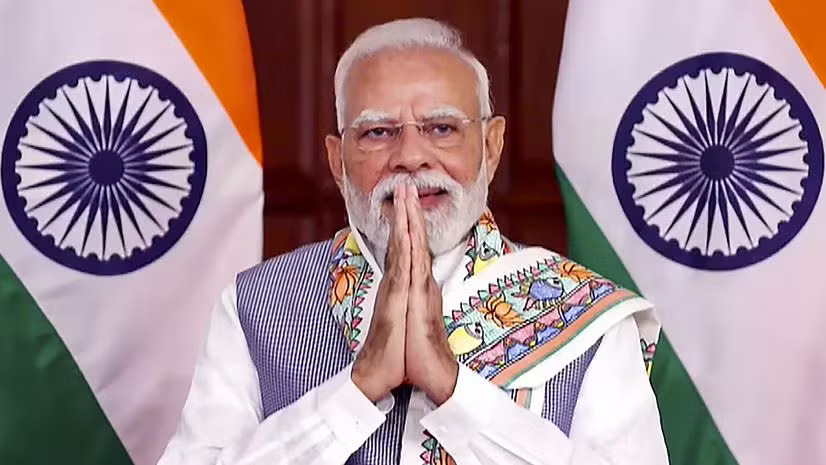
Prime Minister Narendra Modi is intensifying India’s defence and strategic partnerships across the Indo-Pacific region, according to recent developments, even as China conducts advanced missile tests and the United States recalibrates its regional engagement strategy.
The diplomatic push reflects New Delhi’s long-standing commitment to deepening security relationships with like-minded democracies in the Indo-Pacific, a region increasingly shaped by great power competition and the assertion of military capabilities by Beijing.
India’s Indo-Pacific strategy centres on the Quad mechanism, the informal grouping of India, Japan, Australia, and the United States that has evolved from dialogue partnership into a substantive security architecture. Through Quad platforms, New Delhi has expanded defence technology sharing, joint military exercises, and capacity-building initiatives with partner nations. The Indian Navy has become a visible presence through freedom of navigation operations, anti-piracy deployments, and humanitarian assistance missions across the Indian Ocean region.
China’s ongoing missile development programme remains a central concern for India’s defence planners. Beijing’s investments in anti-ship, air defence, and hypersonic missile systems raise questions about force projection capabilities and regional stability. These tests also underscore the technical sophistication China brings to potential military confrontations in the South China Sea and broader Indo-Pacific theatres where Indian interests are engaged.
The evolving United States role in the region adds complexity to India’s calculus. Washington’s commitments to regional security remain substantial, though geopolitical priorities and domestic constraints periodically reshape American engagement patterns. India has maintained strategic autonomy while deepening defence cooperation with the US through initiatives such as the QUAD, bilateral exercises like Yudh Abhyas, and defence industrial collaboration spanning aerospace and maritime domains.
For India’s defence establishment, the current environment reinforces the imperative to accelerate indigenous capability development, expand interoperability with partner militaries, and modernise the Indian Navy and Indian Air Force. The Navy’s long-term maritime strategy places emphasis on expanded presence across the Indo-Pacific, supported by new destroyer and frigate classes, advanced submarines, and carrier task group operations.
India’s Make in India defence manufacturing push aligns with these strategic objectives. Closer defence partnerships with quad nations and other democracies create pathways for technology transfer, joint development, and co-production arrangements that strengthen indigenous defence capacity while deepening strategic alignment.
Modi’s diplomatic engagement reflects recognition that the Indo-Pacific order will be shaped not by unilateral assertions but by coalitions of democracies that value rules-based norms, freedom of navigation, and respect for international law. For India, this positioning serves both immediate security needs and longer-term aspirations as a leading defence power in the region.