

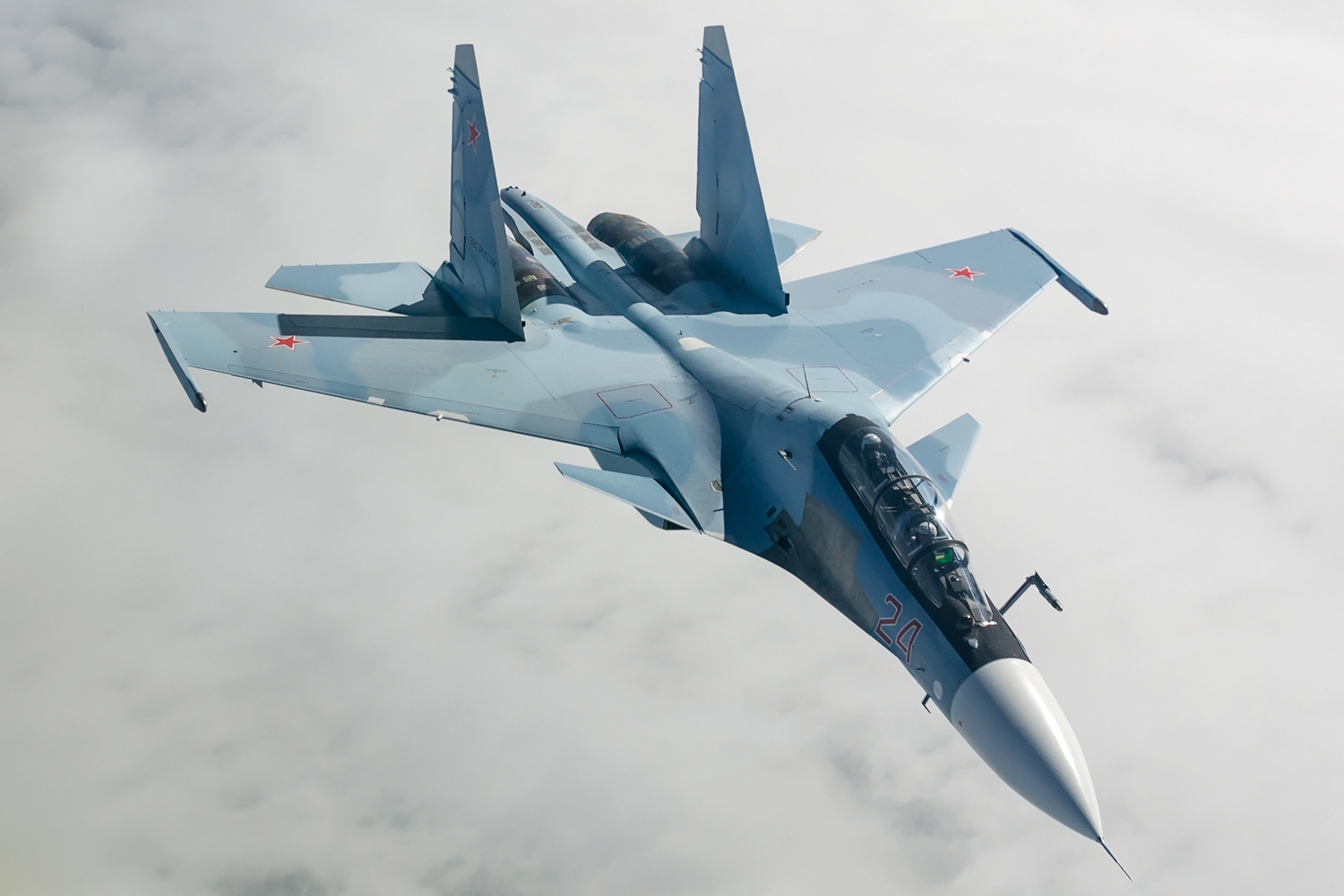
Russian frontline air units have begun receiving the modernised Su-30SM2 multirole fighter equipped with next-generation AL-41F-1S turbofan engines, according to defence sources tracking Russian air force procurement and modernisation efforts.
The Su-30SM2 represents a significant upgrade over the baseline Su-30SM variant, which has formed the backbone of Russian tactical air power since the early 2000s. The introduction of the AL-41F-1S engine marks a generational leap in propulsion technology, delivering enhanced thrust, improved fuel efficiency, and extended operational range compared to the earlier AL-31F series powerplants that equipped prior Su-30 variants.
The Su-30SM platform itself is a derivative of the Sukhoi Su-30 family that evolved from deep partnerships between Russian and Indian defence industries. India operates over 270 Su-30MKI fighters, the Indian variant of this airframe, which has been manufactured jointly by HAL and Sukhoi since the late 1990s. The MKI variant incorporates Israeli avionics, French-origin radar refraction coating, and indigenous Indian mission systems integration, establishing the airframe as a cornerstone of Indian Air Force tactical capability.
The AL-41F-1S engine upgrade in the Russian Su-30SM2 variant focuses on increased bypass ratio and improved turbine blade materials, enabling higher sustained performance in sustained dogfight scenarios and at altitude. Russian defence officials have emphasised that the engine modification extends maintenance intervals and reduces operational costs per flight hour, a critical consideration for sustaining large-scale air operations in the Ukraine theatre.
India’s Su-30MKI fleet continues to operate with the AL-31F engine, though HAL and Sukhoi have maintained technical roadmaps for potential future engine upgrades. The Indian Air Force has progressively integrated indigenous avionics, sensor fusion capabilities, and data-link architecture into the MKI fleet, particularly through the Sukhoi Upgrade Programme initiated over the past decade.
The fielding of the Su-30SM2 underscores Russia’s commitment to modernising existing platforms rather than accelerating procurement of fifth-generation fighters, a strategic choice driven by cost and production constraints. For India’s defence establishment, the Russian move validates the enduring operational utility of the Su-30 airframe family, even as the Indian Air Force diversifies procurement through platforms such as the Rafale, MiG-29UPG, and indigenous Tejas fighter development programmes.