


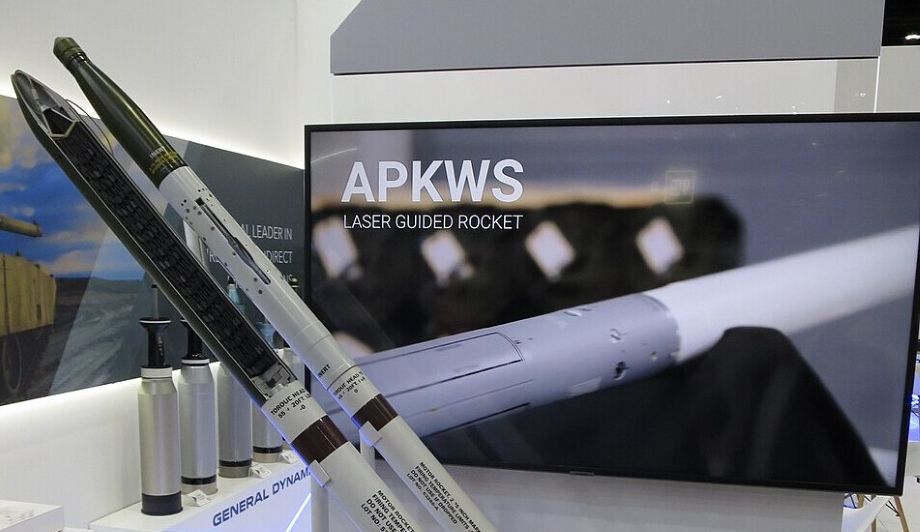
The United States State Department has approved the sale of 20,000 Advanced Precision Kill Weapon System (APKWS) II laser-guided rockets to Saudi Arabia in a deal valued at $1.96 billion, with BAE Systems as the principal contractor.
The approved package includes 10,000 air-to-air guidance sections and up to 10,000 air-to-ground guidance sections, along with LAU-131/A seven-shot rocket pods, Mk66 rocket motors, Mk-152 high explosive warheads, proximity fuzes, spare parts, training, and technical support. The sale strengthens the Royal Saudi Air Force’s precision strike capability against both ground and aerial targets while minimizing collateral damage.
The APKWS II system, developed by BAE Systems, converts unguided 70mm Hydra rockets into precision-guided munitions by inserting a laser guidance package between the warhead and motor. This approach delivers accuracy comparable to conventional missiles at a fraction of the cost, making it highly cost-effective for air operations.
The timing of Saudi Arabia’s procurement reflects lessons learned during the Iran conflict that began in February 2026. The opening phase involved coordinated US and Israeli strikes on Iranian nuclear facilities, missile infrastructure, and senior military leadership. Iran responded with sustained waves of ballistic missiles, cruise missiles, and one-way attack drones targeting Israel, Gulf military infrastructure, and Saudi Arabia specifically.
Iranian strikes struck Saudi air bases, logistics hubs, air defence sites, and critical infrastructure supporting American operations. The conflict extended into the Strait of Hormuz, where Iran closed the waterway and repeatedly targeted commercial shipping with drones and missiles. Through this critical chokepoint passes approximately one-fifth of global oil and liquefied natural gas trade.
The conflict underscored the evolving threat posed by low-cost unmanned systems and the tactical vulnerabilities of traditional air defence infrastructure. Saudi Arabia’s acquisition of a large quantity of precision-guided rockets represents a shift toward layered air defence incorporating guided munitions capable of engaging both conventional targets and drone threats with reduced waste.
The APKWS system has proven effective across multiple platforms. It can be deployed from rotary-wing aircraft including Apache gunships and various fixed-wing platforms such as F-15E Strike Eagles, providing operational flexibility. The modular design permits rapid adaptation to different targeting requirements, whether engaging ground installations or aerial threats.
The laser guidance architecture requires target illumination by ground or airborne laser designators, making it dependent on existing Saudi targeting infrastructure and coordination capabilities. This integration requirement means the purchase advances not only Saudi Arabia’s strike precision but also the maturity of its air-ground coordination systems across the Royal Saudi Air Force.