

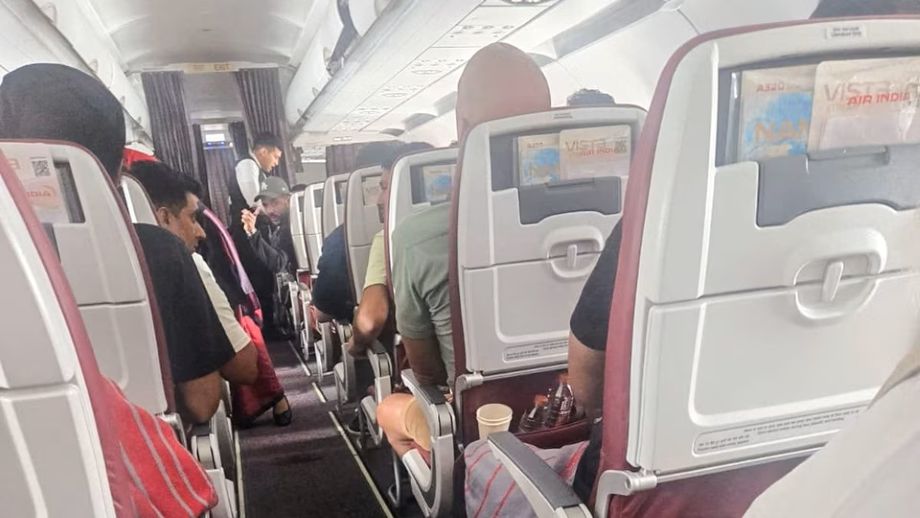
An Air India Airbus A320 operating from Phuket to Delhi experienced a rare technical malfunction on August 4 that caused the aircraft to suddenly lose approximately 300 feet of altitude during cruise. The latest findings indicate that the incident involved a sequence of problems affecting all three of the aircraft’s hydraulic systems.
Flight AI2379 was carrying 137 passengers and eight crew members when the incident occurred over Odisha. According to Airbus’ preliminary technical assessment, the aircraft temporarily lost hydraulic control across its Green, Blue and Yellow systems. The disruption affected important flight-control surfaces, including the elevator and ailerons, for approximately four seconds.
The elevator and ailerons play a crucial role in controlling an aircraft’s movement. The elevator helps control pitch, allowing the aircraft to move its nose up or down, while the ailerons control the aircraft’s roll. A simultaneous disturbance involving multiple hydraulic systems is therefore considered an unusual event and has become a major focus of the ongoing investigation.
During the incident, the aircraft’s nose reportedly pitched up without a corresponding pilot command before the aircraft lost altitude. The autopilot also disengaged, while flight-control warnings were recorded. The aircraft eventually stabilised after the crew responded to the situation and continued its flight toward Delhi.
A post-flight maintenance report has also revealed a series of warnings recorded around the time of the incident. These included low-pressure indications involving the Green, Blue and Yellow hydraulic systems, low reservoir levels in the Yellow and Blue systems, an autopilot disconnect and an elevator flight-control fault.
The sudden movement of the aircraft caused people inside the cabin to be thrown around, resulting in injuries. The Aircraft Accident Investigation Bureau and aviation authorities reported that 20 passengers and four cabin crew members were injured in the incident. The aircraft itself was able to recover and subsequently landed safely at Delhi.
The incident has now moved beyond the initial assumption of a turbulence-related event. Technical evidence from the aircraft has pointed investigators toward a combination of hydraulic, flight-control and autopilot abnormalities. However, the exact sequence and root cause have not yet been established.
The AAIB is continuing its investigation, with the aircraft’s flight-data recorder, cockpit voice recorder, maintenance records and other evidence being examined. Airbus is providing technical assistance to investigators as they work to determine why all three hydraulic systems were affected and how the temporary flight-control disruption contributed to the 300-foot altitude loss.
The Phuket-Delhi incident is significant because the Airbus A320 family is designed with multiple independent hydraulic systems to provide redundancy for critical aircraft functions. A temporary disturbance involving all three systems is therefore an unusual occurrence that requires detailed technical analysis.
For now, investigators have not established a final cause. The Airbus assessment provides important new information about what happened aboard AI2379, but the full investigation will be required to determine whether the hydraulic abnormalities directly caused the sudden altitude change and how the different warnings were connected.