


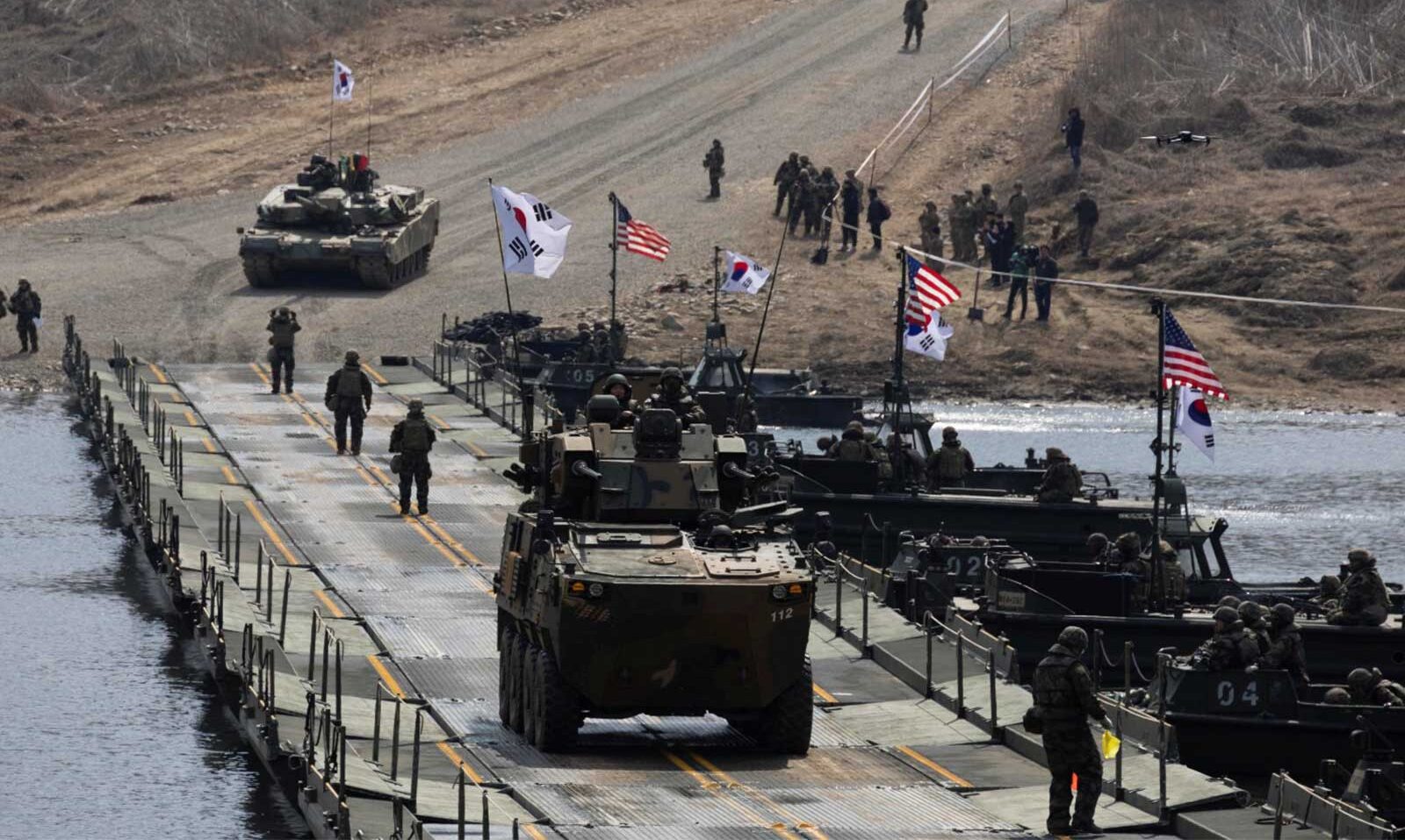
The United States and South Korea have shortened their annual Ulchi Freedom Shield (UFS) military exercise following an order from US President Donald Trump to reduce the scale of American participation, in a move that highlights Washington’s renewed interest in engaging North Korea.
The exercise, which began this week, was originally scheduled to continue for 11 days. Under the revised plan, the drills will conclude on August 21, bringing the exercise to five days. Some associated field-training activities have also been reduced, canceled or shifted to simulated training. US officials have said the changes are intended to preserve essential readiness and core training objectives.
Trump’s decision has attracted particular attention because of his stated desire to maintain diplomatic engagement with North Korean leader Kim Jong Un. The US president has pointed to his relationship with Kim as one reason for reducing the military exercises, arguing that the drills can send an unnecessarily hostile signal to Pyongyang.
The annual UFS exercise is a major component of US-South Korean military preparedness. It combines command-post activities with field training designed to strengthen the two countries’ ability to coordinate during a potential security crisis on the Korean Peninsula. This year’s changes therefore carry significance beyond the shortened schedule, particularly for allied operational coordination and deterrence.
South Korean authorities have confirmed that adjustments were made at the request of the US side and that the two countries are continuing discussions over the specific scope of the modified training activities. Seoul has also expressed hope that Trump’s relationship with Kim could contribute to renewed diplomatic engagement with Pyongyang.
The development comes against a complicated regional security backdrop. North Korea continues to maintain and develop its nuclear and missile capabilities, while Washington and Seoul have repeatedly emphasized the importance of maintaining deterrence and military readiness. Earlier this year, the two countries also reaffirmed their commitment to strengthening extended deterrence and cooperation against North Korea’s advancing nuclear and missile capabilities.
For Washington, scaling back the drills could create additional space for diplomacy with Pyongyang. Trump is reportedly interested in another meeting with Kim, potentially during a future Asia trip. However, analysts remain divided over whether reducing military exercises will actually encourage North Korea to return to negotiations.
The shortened Ulchi Freedom Shield exercise therefore represents a delicate balance between maintaining allied military preparedness and creating conditions for renewed diplomacy. How North Korea responds in the coming weeks could determine whether the latest US policy shift develops into a broader effort to restart talks with Pyongyang.