


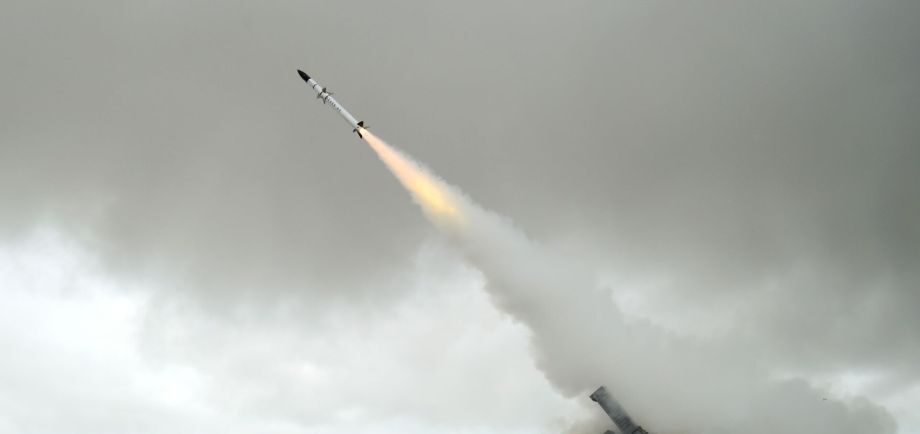
India is steadily advancing Project Kusha, its indigenous long-range air defence programme designed to counter aerial threats across extended ranges, according to development officials.
Project Kusha represents a cornerstone of India’s air defence modernisation strategy, intended to provide the Indian Air Force and Army Air Defence with a credible long-range surface-to-air missile capability. The programme aligns with the government’s Make in India initiative and reduces dependence on foreign systems for critical air defence architecture.
Long-range air defence systems are essential components of any modern military’s layered air defence posture. They form the outer ring of protection against aircraft, cruise missiles, and unmanned aerial vehicles operating at extended standoff ranges. India’s existing air defence inventory includes the Russian-origin S-400 Triumf systems acquired in recent years, but indigenous capabilities provide strategic autonomy and reduce foreign technology dependence.
Project Kusha sits within India’s broader air defence ecosystem alongside medium and short-range systems. The Akash missile family, developed by the Defence Research and Development Organisation, provides medium-range coverage. Point defence is handled by systems like the Tunguska and Porcupine platforms. Kusha’s long-range mandate fills a critical gap in extending India’s air defence umbrella deeper into contested airspace.
Development of indigenous long-range air defence systems demands sophisticated capabilities in radar integration, command and control networks, missile guidance, and multi-target engagement architecture. These programmes typically span years of research, testing, and refinement before reaching operational readiness. The progression from concept to production-ready systems requires extensive ground and flight trials to validate performance against diverse threat scenarios.
The advancement of Kusha reflects India’s commitment to building a self-reliant defence industrial base capable of fielding world-class systems. DRDO’s work on this programme contributes to reducing the technological gap with established air defence powers while building institutional expertise that can be leveraged for future generations of air defence platforms.
India faces a complex air defence environment marked by evolving threats from both state and non-state actors operating in the subcontinent and the Indian Ocean region. Long-range air defence capabilities enhance India’s ability to protect airspace, critical infrastructure, and operating air bases against high-speed aerial threats operating at standoff ranges.
The success of indigenous air defence programmes depends on sustained funding, technical collaboration with industry partners, and iterative testing protocols. Earlier DRDO-led air defence initiatives, including Akash variants and man-portable systems, have demonstrated India’s capability to develop operationally relevant systems meeting IAF and Army specifications.