


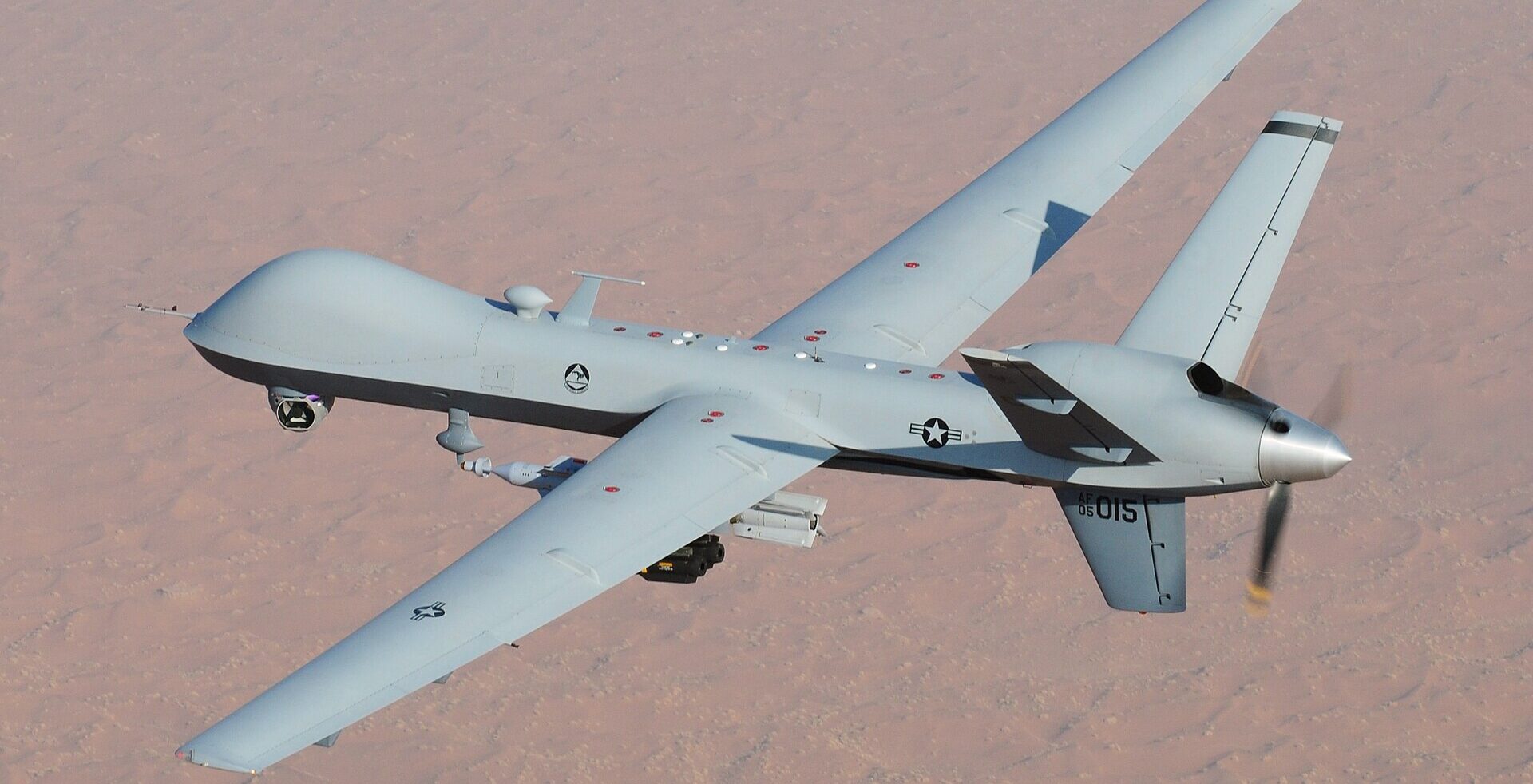
The United States has lost at least 45 MQ-9 Reaper drones during its ongoing war with Iran, representing roughly one-quarter of the country’s Reaper fleet, according to a Washington Post report citing three U.S. officials familiar with the matter. The scale of the losses highlights the growing vulnerability of high-value unmanned aircraft when operating in heavily contested environments.
The MQ-9 Reaper is one of the U.S. military’s primary long-endurance unmanned aircraft. It is used for intelligence, surveillance and reconnaissance missions as well as precision strikes. Depending on its configuration, sensors and weapons, an individual Reaper can cost between approximately $30 million and $50 million. Based on those figures, the reported losses could represent more than $1.3 billion in aircraft value alone.
The losses have reportedly occurred across operations connected to the Iran conflict, including missions around strategically important areas such as the Strait of Hormuz. Several Reapers have been reported as being shot down, while other aircraft were lost under different circumstances, including incidents involving loss of contact or operational damage.
The reported attrition rate is particularly significant because the Reaper has traditionally provided the U.S. military with persistent surveillance and strike capabilities without putting a manned aircraft crew directly into the contested airspace. Losing approximately 25% of the fleet in a single conflict could therefore place additional pressure on U.S. unmanned aviation resources and force commanders to reconsider how such platforms are employed against increasingly capable air-defence systems.
The development also underscores a broader challenge for modern militaries. Large, relatively slow-moving unmanned aircraft can provide valuable endurance and payload capacity, but their survivability becomes more complicated when facing sophisticated air-defence networks, electronic warfare and other counter-drone capabilities.
For the United States, replacing the lost aircraft and maintaining sufficient Reaper availability for other global missions could become an important operational consideration. The reported losses may also accelerate interest in more survivable unmanned platforms, autonomous systems and next-generation drones designed to operate in highly contested airspace.
The MQ-9 Reaper remains a major component of U.S. intelligence and strike operations, but the scale of losses reported during the Iran war demonstrates that even a mature and widely deployed unmanned combat aircraft can face substantial attrition in a high-intensity conflict.