


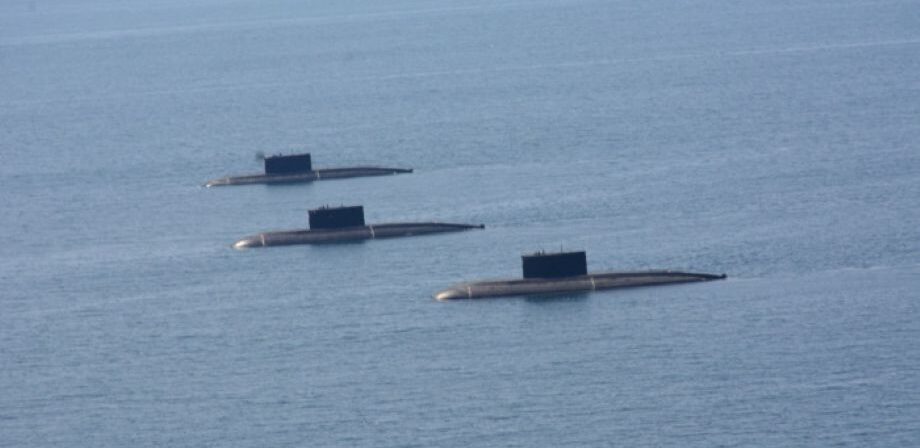
India’s long-pending plan to strengthen its conventional submarine fleet is moving closer to a major decision, with the approximately ₹70,000-crore Project-75(I) programme expected to reach the Cabinet Committee on Security (CCS) for consideration. The proposed Indo-German programme involves the construction of six advanced conventional submarines for the Indian Navy and has been under discussion for several years.
The programme is centred on an Indian partnership between Mazagon Dock Shipbuilders Limited (MDL) and Germany’s ThyssenKrupp Marine Systems (TKMS). If the proposal receives the required approval, it would clear a major hurdle towards concluding the agreement and beginning the next phase of submarine construction in India. Recent reports indicate that negotiations have progressed significantly, although the final contract should not yet be treated as signed.
Project-75(I) is particularly important for the Indian Navy because the new submarines are planned to incorporate Air Independent Propulsion (AIP). This technology enables a conventional submarine to remain underwater for considerably longer periods without relying as frequently on atmospheric air through snorkeling. The capability can improve stealth, endurance and operational flexibility during extended missions.
The six submarines are expected to feature modern combat systems, sensors and underwater warfare capabilities. Their induction would provide the Navy with additional platforms for surveillance, sea denial and maritime operations at a time when maintaining an adequate conventional submarine fleet remains a significant challenge.
The programme also has an important industrial dimension. Construction in India through MDL and cooperation with TKMS is expected to support domestic shipbuilding capabilities while providing opportunities for technology transfer and development of specialised submarine-related expertise. The extent of technology transfer and indigenous participation remains one of the significant aspects of the programme.
The proposed Indo-German collaboration also builds on an established history of cooperation in submarine technology. India previously operated German-designed Type 209/1500 Shishumar-class submarines, while MDL has gained extensive experience through the construction of six Kalvari-class submarines under the separate Project-75 programme.
The new Project-75(I) submarines would therefore represent another step in India’s effort to expand its underwater warfare capabilities while increasing domestic expertise in complex naval platforms. The programme is also expected to strengthen India’s ability to sustain and modernise its submarine fleet over the long term.
The financial value of Project-75(I) has been reported at around ₹70,000 crore, although estimates can vary depending on the final scope, technology transfer arrangements and indigenous content. Some reports have placed the potential overall value closer to ₹90,000 crore.
For now, the immediate milestone is the CCS decision. Approval would allow the government and industry partners to move towards the final contractual stage. Once concluded, the programme could become one of India’s most significant conventional submarine acquisition initiatives and provide a substantial boost to the country’s naval modernisation and domestic defence manufacturing ambitions.