


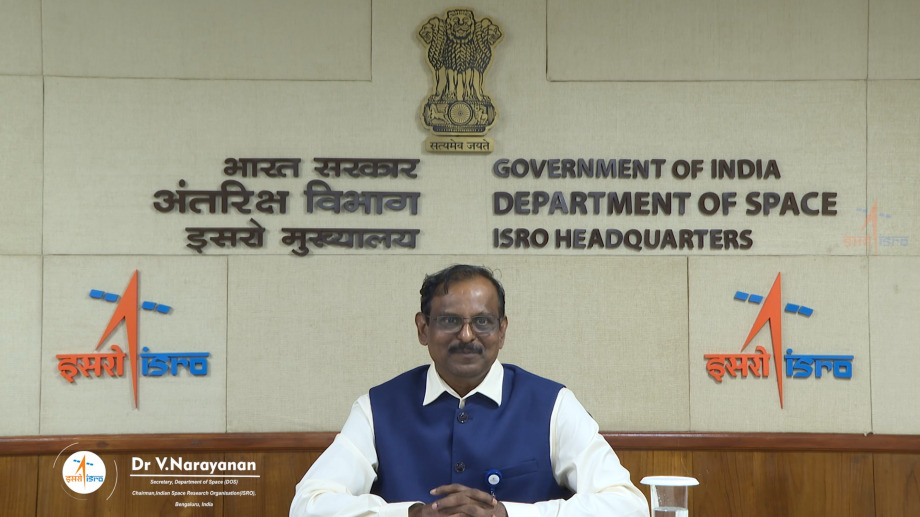
India is preparing for a major new chapter in its space programme, with the Indian Space Research Organisation (ISRO) targeting 2035 for the operationalisation of the Bharatiya Antariksha Station (BAS). ISRO Chairman Dr. V. Narayanan recently confirmed that the first module of the ambitious space station has already received approval, giving fresh momentum to India’s long-term human spaceflight ambitions.
The Bharatiya Antariksha Station is planned as a modular facility in low Earth orbit that will be developed in stages. According to the current roadmap, the first module, BAS-01, is targeted for launch in 2028 using the LVM3 launch vehicle. Additional modules will subsequently be added as India builds the infrastructure and capabilities required for a permanent orbital platform. The complete station is planned to comprise five modules and is expected to support astronauts conducting extended missions in orbit.
The project represents a significant shift in India’s space ambitions. While earlier programmes focused primarily on satellite operations and individual lunar and planetary missions, the BAS programme is designed to establish a sustained human presence in space. The station is expected to provide facilities for scientific research, including experiments in areas such as medicine, biology and materials science.
A key foundation for this ambition is the Gaganyaan human spaceflight programme. ISRO’s Gaganyaan mission is intended to demonstrate India’s capability to safely send astronauts to low Earth orbit and return them to Earth. Technologies involving crew safety, life-support systems and orbital operations will be critical for the eventual operation of the Bharatiya Antariksha Station. ISRO states that its human spaceflight programme is also intended to establish technologies needed for India’s longer-term human exploration objectives.
India’s broader space roadmap extends beyond the orbital station. The government’s Space Vision 2047 envisages the Bharatiya Antariksha Station in orbit by 2035 and an Indian crewed lunar mission by 2040. ISRO has identified technologies such as heavy-lift launch vehicles, human-rated spacecraft, docking systems, high-capacity lunar landers and re-entry systems as important requirements for achieving these goals.
The space station could also become an important platform for scientific and industrial development. Microgravity research has potential applications in areas ranging from pharmaceuticals and materials science to agriculture and climate-related studies. At the same time, the programme is expected to create opportunities for Indian industry and space startups as the country expands its capabilities in spacecraft manufacturing, launch systems, life-support technology and orbital infrastructure.
The 2035 target therefore represents more than the construction of a single space station. It is part of India’s broader effort to develop an integrated human-spaceflight ecosystem and strengthen its position among the world’s leading space powers. With Gaganyaan, advanced launch vehicles, docking technologies and future lunar missions progressing in parallel, the Bharatiya Antariksha Station could become a central element of India’s next-generation space programme.