


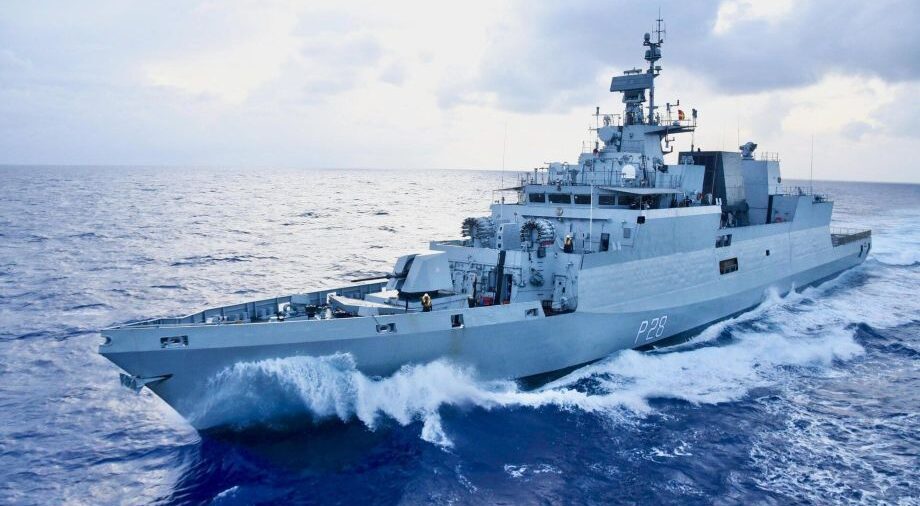
An IIT Madras-incubated deep-tech start-up, AstraYAN, has achieved a significant breakthrough in India’s defence industry by emerging as the lowest bidder (L1) for the Propulsion System Integration (PSI) contract covering five Next Generation Corvettes (NGCs) being constructed by Garden Reach Shipbuilders and Engineers (GRSE) for the Indian Navy.
The company reportedly outperformed established international competitors from Germany, Italy and Spain in the selection process. The development highlights the growing capabilities of Indian start-ups in specialised naval engineering and advanced defence technologies.
The propulsion integration contract is part of a major naval programme valued at approximately ₹32,000 crore. AstraYAN’s proposed assignment involves integrating the warships’ propulsion machinery, transmission systems and control architecture using Combined Diesel and Gas Turbine-Cross-Connect (CODAG-CC) technology. This configuration combines diesel engines for economical cruising with gas turbines for higher-speed operations, providing operational flexibility to modern naval vessels.
According to reports, the selection process took more than a year and involved technical and commercial evaluations with participation from the Indian Navy, the Naval Science and Technological Laboratory (NSTL), a DRDO laboratory and the concerned shipyards. AstraYAN reportedly emerged ahead of other competitors after multiple evaluation stages.
However, the company has not yet received the final contract. Its proposal has entered the price negotiation stage, which is expected to take at least a month before the contractual process is completed.
The development comes after the Ministry of Defence signed contracts worth ₹53,866.50 crore with GRSE and Goa Shipyard Limited (GSL) on November 2, 2026, for the construction of eight Next Generation Corvettes. GRSE will build five warships, while GSL will construct the remaining three.
The new corvettes are being designed for multiple naval operations, including anti-submarine warfare, anti-ship missions, maritime security, escort duties and anti-missile defence. They will strengthen the Indian Navy’s operational capabilities across important maritime regions.
AstraYAN is also reportedly looking to pursue a similar propulsion integration opportunity for the three additional corvettes being constructed by GSL.
The company’s emergence as the L1 bidder represents an encouraging development for India’s indigenous defence manufacturing ecosystem. It demonstrates the increasing role of domestic start-ups in advanced naval technologies and the country’s broader efforts to reduce dependence on foreign defence suppliers.