


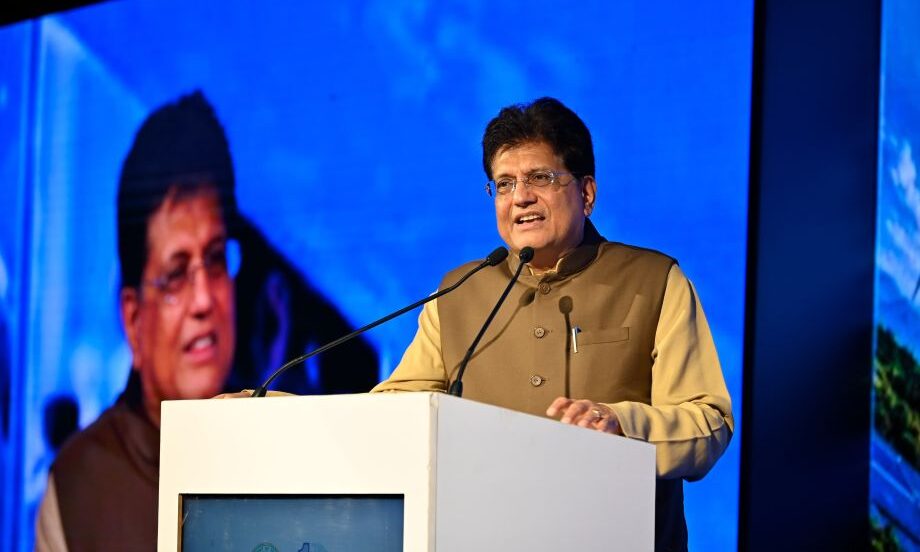
India has made it clear that restrictions on access to Chinese tunnel-boring machines will not derail its efforts to expand domestic manufacturing capabilities. Commerce and Industry Minister Piyush Goyal has said that the country will develop its own tunnel-boring machines (TBMs) if China refuses to supply the equipment, underlining the government’s commitment to technological self-reliance and reduced dependence on foreign suppliers.
Speaking at the Young Leaders Discourse Forum at Kirori Mal College in New Delhi, Goyal said India would not compromise its interests to secure access to critical machinery. He emphasised that the country was prepared to manufacture the equipment domestically if supplies from China became difficult. The minister also clarified that India did not want to damage its relationship with Beijing and remained open to improving bilateral ties, provided further obstacles did not emerge.
His remarks come after China announced fresh export-control measures covering tunnel-boring machines and associated equipment on October 19, 2026. The new requirements, scheduled to take effect on November 18, will require exporters to obtain licences for specified tunnelling machinery under China’s dual-use export-control framework. These machines are essential for constructing underground railway networks, metro systems, highway tunnels and other major infrastructure projects.
The development has attracted attention in India because of the country’s growing requirement for advanced tunnelling equipment. Major infrastructure programmes, including railway connectivity, metro expansion and road development in challenging mountainous regions, depend on reliable access to specialised machinery. Any disruption or delay in equipment supplies could create additional challenges for project schedules and maintenance operations.
India’s experience with earlier supply difficulties has also highlighted the importance of reducing external dependence. In 2024, concerns emerged over delays involving tunnel-boring machines manufactured in China by German engineering company Herrenknecht for Indian infrastructure projects. The issue highlighted vulnerabilities in international supply chains and the potential impact of export restrictions on important domestic construction programmes.
India is already making progress towards building its own tunnel-boring machine manufacturing ecosystem. Railway Minister Ashwini Vaishnaw has previously stated that the country has developed the capability to manufacture machines with diameters of eight metres and has also started producing larger 15-metre machines. A manufacturing facility in Tamil Nadu is contributing to these efforts, with further plans to develop machines exceeding 16 metres. These developments indicate that India is gradually expanding its capabilities in the design, production and maintenance of advanced tunnelling equipment.
Goyal also referred to India’s response to earlier restrictions on rare earth materials, highlighting the role of domestic startups in developing alternative technologies. He said the government had encouraged companies to explore manufacturing motors that could operate without relying on rare earth elements. According to the minister, some Indian startups have already begun producing rare-earth-free motors with comparable performance and efficiency.
The government’s approach reflects a broader effort to strengthen domestic industrial capabilities and protect critical supply chains from external disruptions. Reducing dependence on imported technology is particularly important in sectors that support large infrastructure programmes, industrial development and national security requirements.
Although China’s new export rules do not amount to a blanket prohibition on all tunnel-boring machine exports, the licensing requirements could create uncertainty for international buyers. Their actual impact on Indian projects will depend on how the restrictions are implemented and whether the necessary equipment, components and replacement parts continue to reach Indian manufacturers and infrastructure companies.
Goyal’s statement sends a clear message that India intends to address such challenges through domestic innovation and manufacturing rather than relying entirely on overseas suppliers. As the country continues expanding its infrastructure network, developing indigenous tunnel-boring technology could become an important step towards strengthening industrial self-reliance and ensuring long-term project continuity.