

The Indian Air Force (IAF) has begun the process of finding a successor to its ageing Hawk Mk-132 advanced jet trainer fleet, marking a major step toward modernising India’s fighter pilot training system. The IAF has issued a Request for Information (RFI) to Indian and global aerospace manufacturers for around 150 Stage-III (F) trainer aircraft and associated equipment.
The new aircraft will form the final stage of fighter pilot training before pilots transition to frontline combat aircraft. The IAF wants a trainer capable of familiarising pilots with the technologies and operational concepts increasingly found in modern fighters, including airborne radar, electronic warfare systems and beyond-visual-range air-to-air missiles.
The requirement comes as the IAF expands and modernises its frontline fighter fleet, including platforms such as the Rafale and Tejas, while also preparing for the future induction of the Advanced Medium Combat Aircraft (AMCA). A more capable advanced trainer is therefore expected to play an important role in bridging the gap between basic flight instruction and operational fighter conversion.
According to the RFI details reported by The New Indian Express, responses from potential manufacturers are due by October 5, 2026. The proposed procurement is currently at the information-gathering stage, meaning the RFI does not itself represent a firm order or procurement commitment. The IAF will use industry responses to assess available aircraft, technical capabilities, indigenous content, technology-transfer opportunities and delivery schedules.
India has also indicated a preference for the “Buy (Indian) or better” procurement category, placing significant emphasis on domestic manufacturing and technology transfer. Foreign companies competing for the programme will therefore need to demonstrate not only that their aircraft meet the IAF’s operational requirements but also how much production and technology can be brought into India.
Potential contenders are expected to include Leonardo’s M-346 Master and Korea Aerospace Industries’ T-50 family. India’s Hindustan Aeronautics Limited (HAL) is also developing the HLFT-42, which could provide an indigenous option for the requirement.
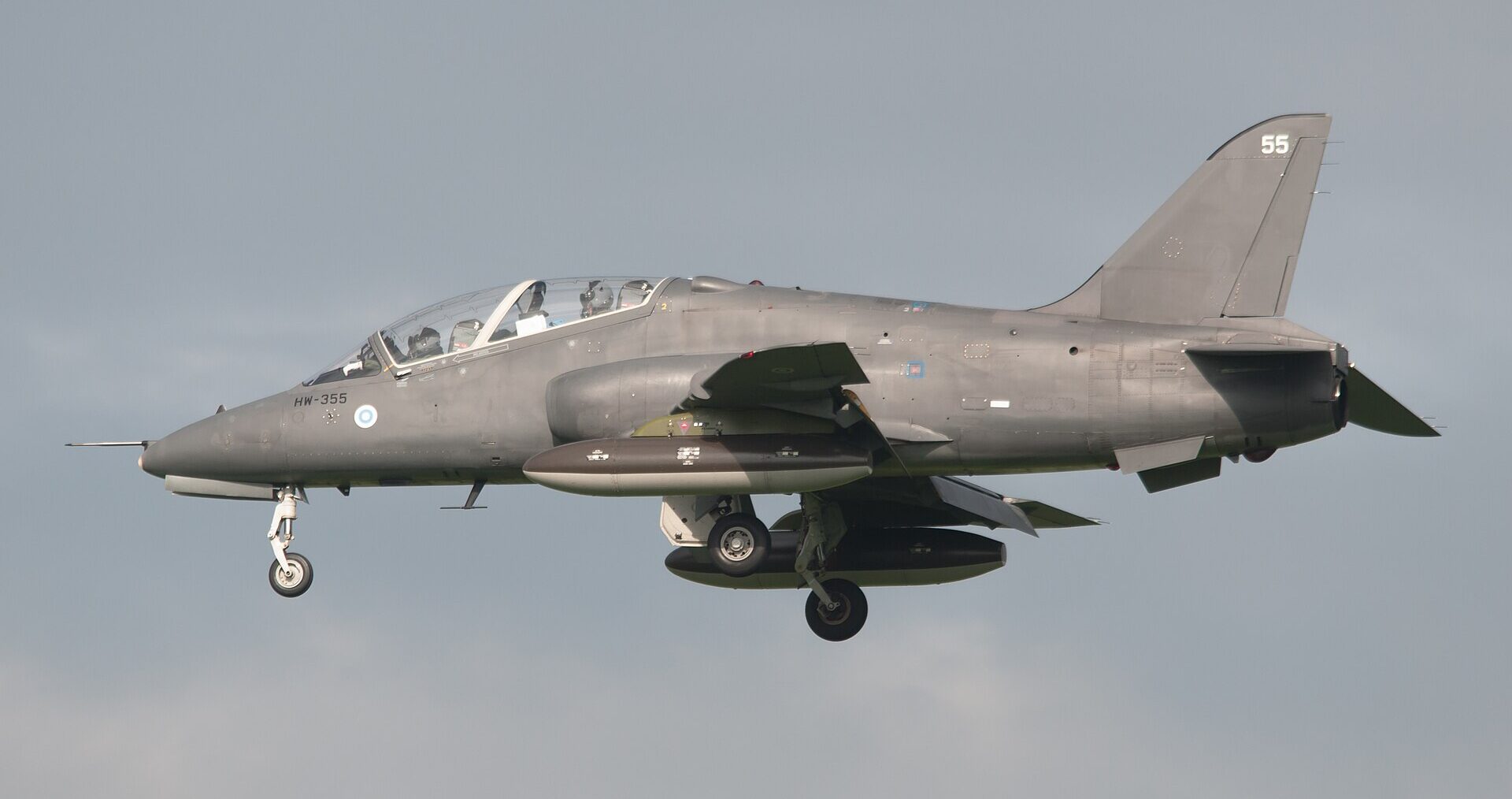
The IAF currently operates Hawk Mk-132 trainers acquired through two procurement tranches. The first contract, signed in 2004, covered 66 aircraft, while another 40 were contracted from HAL in 2010. The long-serving Hawk fleet has been an important component of India’s advanced fighter pilot training pipeline.
The replacement programme, however, is likely to take several years. The formal Request for Proposal (RFP) is tentatively scheduled for December 2027, with deliveries expected to be completed within 60 months of the contract’s effective date. Based on this timeline, the first replacement aircraft may not reach an IAF training base until the mid-2030s.
The programme is significant because India’s future fighter fleet will require pilots trained to operate increasingly sophisticated sensors, weapons and networked combat systems. By seeking a new generation of advanced jet trainers, the IAF aims to ensure that pilots are better prepared before moving to frontline fighters and future combat platforms.