


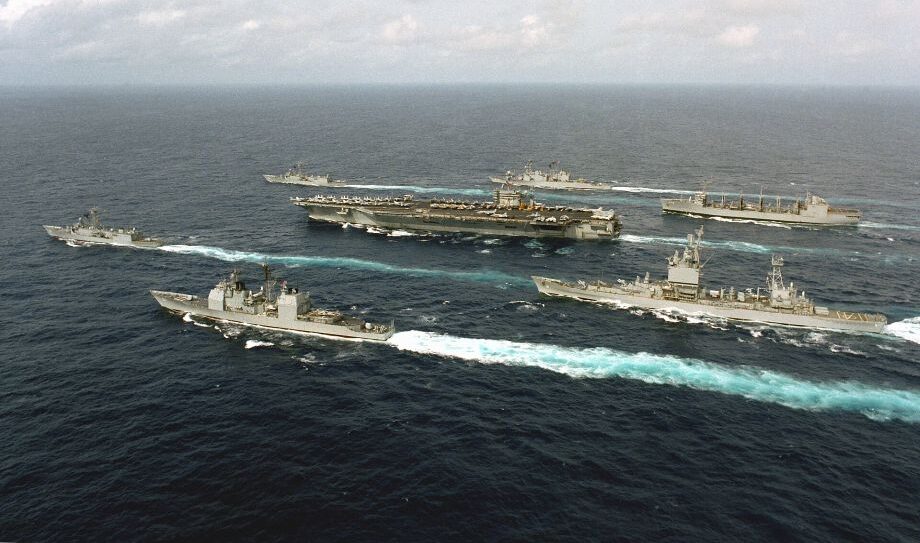
The U.S. Navy’s aircraft carrier USS Abraham Lincoln has come under renewed scrutiny after reports that multiple sailors allegedly attempted to go overboard during the carrier’s prolonged deployment, raising concerns about the physical and mental strain facing its crew.
According to reports cited by Military Times, at least some sailors aboard the carrier have reportedly attempted to jump overboard, with one incident allegedly involving a sailor who was stopped by another crewmate. The reports have prompted concerns among family members of the approximately 5,000 sailors and Marines serving aboard the carrier.
The USS Abraham Lincoln began its current deployment in November 2025 and has remained at sea far longer than originally expected. Its deployment has been extended as the U.S. Navy continues supporting military operations in the Middle East amid escalating regional tensions and the conflict involving Iran.
The unusually long deployment has reportedly created significant stress for personnel and their families. Relatives have raised concerns about exhaustion, limited opportunities for sailors to return home and uncertainty over when the carrier will finally be relieved. Some families have also raised allegations about living conditions aboard the ship, including problems involving sanitation, food supplies and other basic facilities.
The reports of sailors allegedly attempting to go overboard have added another dimension to those concerns. However, the U.S. Navy has not publicly confirmed a specific number of suicide attempts or incidents involving sailors deliberately going overboard. Navy officials have said that they have not identified an increase in reported suicidal ideation or suicide attempts aboard the Abraham Lincoln based on the information available to the command.
The Navy has emphasized that mental-health professionals, chaplains, counselors and other support services are available to sailors aboard the carrier. Officials have also disputed some claims regarding conditions on the ship, stating that essential services and basic necessities remain available to the crew.
The extended deployment has also increased pressure on the Navy to provide a clearer timeline for the carrier’s return. Reports indicate that the USS Theodore Roosevelt could eventually relieve the Abraham Lincoln, although a firm schedule for the transition and the Lincoln’s return has not been publicly announced.
The situation highlights the challenges faced by naval personnel during extended deployments, particularly when operational requirements keep a carrier at sea for months beyond its original schedule. For the U.S. Navy, maintaining combat readiness while protecting the health and welfare of its personnel remains a critical challenge as the Abraham Lincoln continues its mission in the Middle East.