

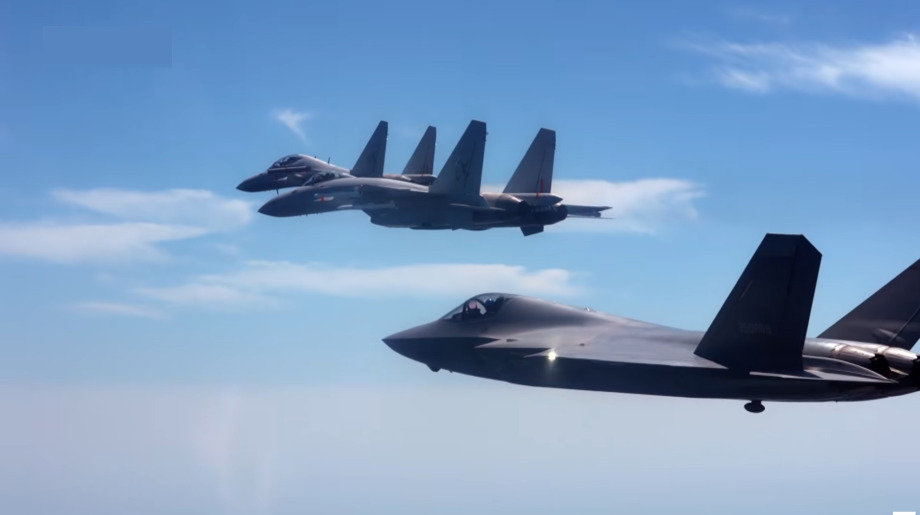
China is unlikely to approve the transfer of its fifth-generation J-35 stealth fighter to Pakistan in the near term, according to analysis by a Beijing-based independent think tank researcher. The restraint reflects Beijing’s strategic calculus that flooding South Asia with advanced stealth jets could destabilise the region and divert critical resources from China’s primary security focus in the Western Pacific.
Yang Xiaotong, an assistant researcher at a Beijing think tank specialising in China-Middle East and North Africa affairs, argues that a Pakistani acquisition of around 40 J-35 aircraft would fundamentally alter the regional air power balance. Neither India nor Pakistan currently operates a fifth-generation fighter in operational service, making such a sale a potential game-changer in the subcontinent’s military equilibrium.
Beijing has strategic disincentives for the sale. A decisive technological advantage in stealth fighters could embolden Pakistan to undertake greater military risk-taking during future crises between the two nuclear-armed neighbours, potentially escalating tensions beyond China’s control. Such instability contradicts Beijing’s preference for a stable South Asian environment while it concentrates on deterring the United States and its allies across the Western Pacific.
The J-35 represents China’s most advanced carrier and land-based stealth platform to date. The aircraft incorporates low-observable design principles, sophisticated active electronically scanned array radar, integrated avionics, and sensor-fusion architecture that rivals Western fifth-generation fighters in several capability domains. Unlike the J-10CE, a fourth-generation multirole fighter that China has exported to Pakistan and other partners, the J-35 embeds cutting-edge technologies that Beijing considers strategically sensitive.
China’s own military modernisation requirements present a second constraint. The People’s Liberation Army Navy and Air Force have only recently begun inducting the J-35 into operational units. Diverting dozens of aircraft for export would directly compete with the PLA’s fleet expansion and modernisation timelines at a moment when China prioritises force development across multiple theatres.
Technology security remains a third barrier. The J-35’s airframe geometry, propulsion integration, and sensor architecture would offer Western and Indian intelligence services invaluable insights into Chinese stealth design philosophy. Allowing the aircraft to operate in South Asia, where allied intelligence collection is intensive, poses unacceptable risks to technology compartmentalisation.
Yang’s assessment does not foreclose a future export scenario. Rather, it reflects a likely timeline measured in years rather than months. Pakistan has long sought fifth-generation capability parity with India, but China appears content for now to equip its own armed forces while keeping the J-35 within the strategic inner circle of allied nations with whom it shares the deepest defence cooperation ties.