


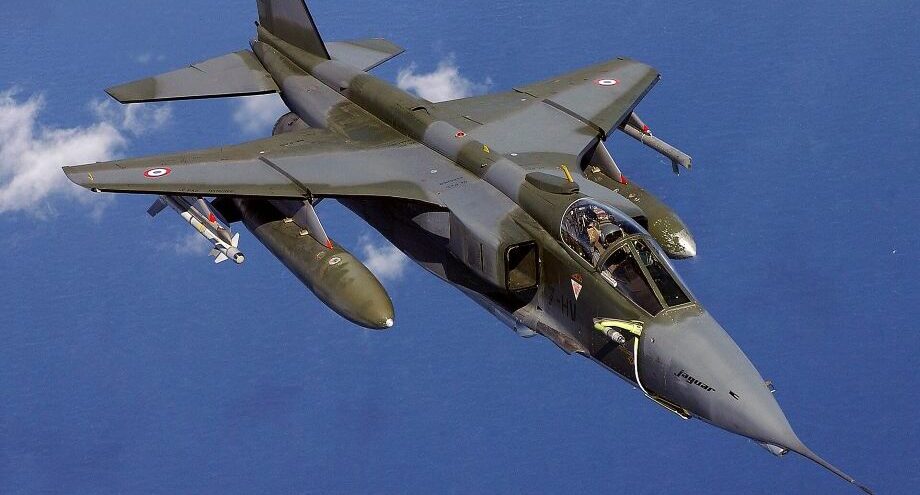
The United Kingdom has begun transferring retired SEPECAT Jaguar fighter aircraft to India as part of an ongoing effort to sustain the Indian Air Force’s ageing strike fleet, UK Defence Minister Luke Pollard told Parliament. Nine retired Jaguar airframes have already arrived in India since January 1, 2026, comprising five single-seat variants and four twin-seat trainer models.
The remaining retired British Jaguars will be dismantled and shipped to India in batches over the coming months. The UK Defence Ministry confirmed that transfer activity to India is currently ongoing, with the aircraft sourced from Britain’s out-of-service inventory.
The Jaguar aircraft being transferred are not airworthy. Instead, India will cannibalize them for spare parts to maintain its remaining operational fleet. The Indian Air Force is now the world’s last operator of the SEPECAT Jaguar, a Cold War-era strike fighter first introduced in the 1970s. Britain, France, Oman, and other original operators retired their Jaguars decades ago, drying up the global supply chain for replacement components and consumables.
India has been acquiring retired Jaguar airframes from multiple sources for several years to address this logistics challenge. By harvesting serviceable parts from retired aircraft, the IAF extends the operational life of its remaining active Jaguars without investing in new-build replacements. The UK still has 42 retired Jaguar aircraft remaining in storage, indicating that India may receive additional airframes beyond the initial batch.
The Jaguar remains integral to Indian air power. The IAF operates both single-seat strike variants (designated Jaguar IS) and twin-seat deep penetration strike variants (Jaguar IB). These aircraft have been upgraded multiple times with modern avionics, air-to-surface missiles, and targeting pods. They form the backbone of India’s conventional strike capability and see regular deployment in military exercises and operations.
Maintenance of a purely indigenous fleet presents significant challenges. The Indian Air Force has no domestic manufacturer of Jaguar-specific spare parts and cannot easily develop replacements for subsystems originally built by Rolls-Royce, Marconi, or other British defence contractors. This dependency on cannibalizing retired airframes reflects a broader challenge facing air forces that operate legacy platforms long after the original manufacturer has ceased production and support.
India’s continued reliance on the Jaguar underscores the slow timeline for retiring older platforms and transitioning to new fighters. The IAF’s induction of the Tejas Light Combat Aircraft and future acquisition of additional Rafale multirole fighters will eventually reduce Jaguar numbers, but full retirement remains years away. Until then, the airframe harvesting strategy represents a pragmatic solution to sustaining India’s strike fleet with constrained budgets and limited alternative sources.