


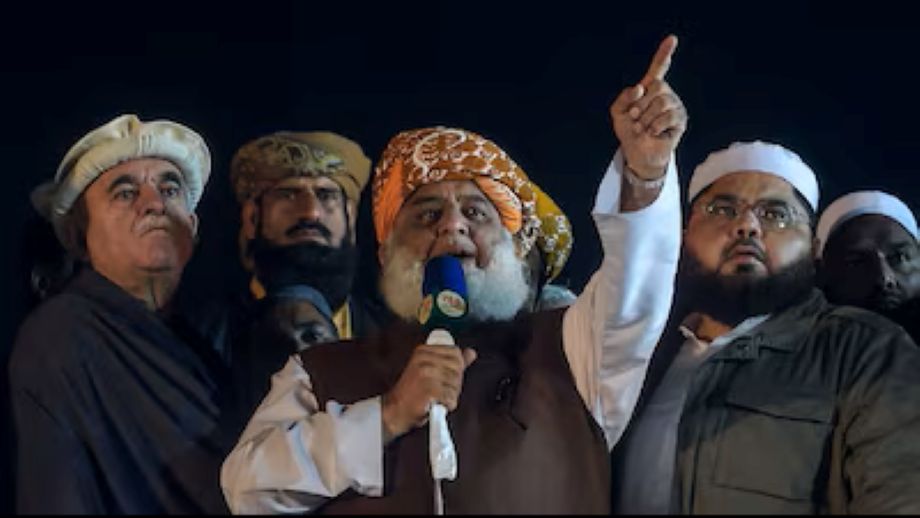
Jamiat Ulema-e-Islam-Fazl (JUI-F) chief Maulana Fazlur Rehman has launched a rare public challenge to Pakistan’s military establishment, invoking the 1999 Kargil conflict to question the Pakistan Army’s handling of the war and its authority on counter-terrorism policy.
In remarks accessed by media, Rehman questioned who had abandoned Pakistani soldiers in Kargil to be buried by India, reopening one of the most sensitive episodes in Pakistan’s civil-military history. The comments mark one of the strongest public rebukes of the military by a senior religious leader in recent months.
The Kargil conflict of 1999 remains deeply contentious in Pakistan’s political discourse. The war, fought in the high-altitude region of Ladakh, ended with India regaining control of the occupied positions after fierce fighting. Pakistan initially denied the involvement of its regular forces before eventually withdrawing under international pressure. The conflict continues to be a subject of political and military debate in both India and Pakistan.
Rehman’s invocation of Kargil carries particular weight because the conflict has historically been treated as a military domain, largely insulated from civilian political criticism. By directly questioning the army’s conduct during the war, the JUI-F chief has breached an unwritten taboo in Pakistani politics surrounding scrutiny of military operations.
Rejecting accusations of disrespecting martyrs, Rehman said his original statements had been taken out of context and that the controversy had been deliberately manufactured. He argued that routine political discourse had been turned into an attack on his credibility. He also emphasised that the JUI-F had consistently opposed armed politics and maintained that gun politics is contrary to Islamic principles.
Rehman challenged the military’s counter-terrorism narrative, stating that the Pakistani public itself was raising questions about the army’s security strategy and policies. He asserted that the JUI-F’s long-standing opposition to armed movements and its efforts to keep party workers away from weapons gave it the moral authority to question military policy.
The cleric also said that the JUI-F had suffered significant losses due to terrorist violence over the years, arguing that the party’s sacrifices reflected its commitment to peace and national stability. He framed his criticism as being motivated by concern for Pakistan’s future rather than opposition to the state.
The escalating exchange reflects growing strain in Pakistan’s civil-military relationship. Senior religious and political leaders have traditionally exercised caution when commenting on military operations, institutional decisions, or national security matters. Rehman’s willingness to publicly challenge the army on both historical conduct and current policy signals a notable shift in Pakistan’s political discourse.
Observers believe the remarks highlight increasing frustration within sections of Pakistan’s religio-political leadership over the military’s influence on political and policy matters. Rehman presented his position as a defence of civilian political space and democratic accountability while questioning the military’s expanding role in governance and national security.