


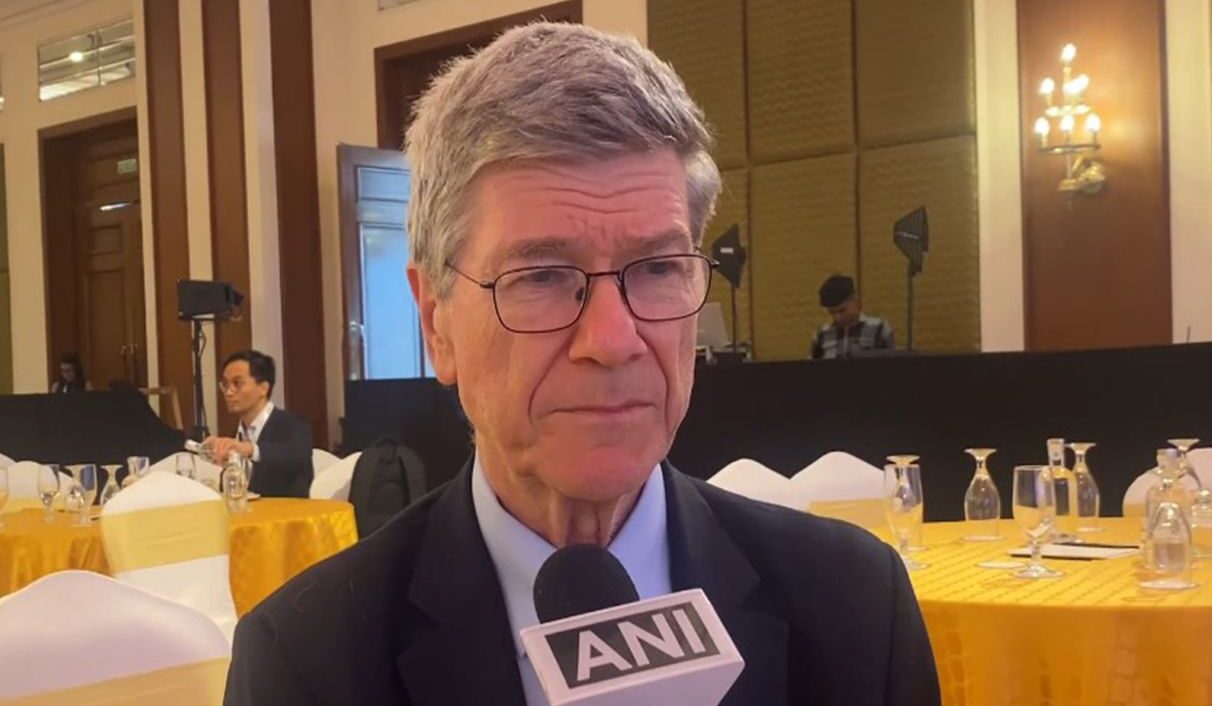
American economist and foreign policy expert Jeffrey Sachs has described India as one of the world’s four major superpowers, alongside the United States, China and Russia, arguing that the era of Western-dominated global politics has come to an end. His remarks highlight India’s expanding international influence and the growing importance of a multipolar global order in shaping geopolitical and security affairs.
Speaking to ANI in Varanasi on November 3, 2026, Sachs said the international community had yet to develop a shared understanding of the emerging global power structure. He argued that Washington’s continued belief in its dominant position could create instability, particularly when American foreign policy relies on unilateral military action and economic pressure.
According to Sachs, India has an important role to play in the changing international environment. He specifically called on Prime Minister Narendra Modi, Chinese President Xi Jinping and Russian President Vladimir Putin to encourage cooperation among major powers rather than allowing geopolitical competition to deepen existing divisions. He maintained that countries with significant global influence should respect one another’s sovereignty, avoid unnecessary military confrontation and refrain from treating international relations as a contest between rival alliances.
Sachs also criticised recent American foreign and trade policies, arguing that military conflicts and tariff measures have contributed to global economic uncertainty. He expressed concern that continued confrontation between major powers could undermine international stability and make cooperation on shared challenges increasingly difficult.
His comments come at a time when India is strengthening its strategic relationships across different regions while maintaining an independent approach to international affairs. New Delhi has expanded defence partnerships with the United States, European countries and Indo-Pacific partners, while continuing its longstanding defence and energy cooperation with Russia. India’s engagement with China, despite unresolved border issues and strategic differences, also remains an important dimension of its broader diplomatic approach.
India’s growing economic position, expanding defence capabilities, technological development and increasing diplomatic engagement have strengthened its standing in international affairs. Its participation in platforms such as the G20, BRICS, the Shanghai Cooperation Organisation and the Quad reflects its ability to engage with countries representing different geopolitical interests.
Sachs further argued that the United Nations needs institutional reforms to reflect the changing balance of global influence. He specifically advocated making India a permanent member of the UN Security Council, suggesting that its inclusion would strengthen the organisation’s international legitimacy and improve its ability to address global challenges. He also urged China and other influential countries to support India’s bid for permanent membership.
India has consistently called for comprehensive reform of the UN Security Council, arguing that its current structure does not adequately represent contemporary geopolitical and economic realities. New Delhi has sought permanent membership alongside other countries advocating changes to the existing international governance framework.
Sachs’ assessment presents a broader argument about the transition towards a more distributed international power structure, in which emerging economies and established powers must find ways to cooperate despite competing strategic interests. For India, the remarks underline its growing relevance in discussions concerning global security, international diplomacy and the future of multilateral institutions.
However, the description of India as one of four global superpowers represents Sachs’ geopolitical assessment rather than an officially recognised international classification. The country’s long-term global influence will continue to depend on economic growth, technological advancement, military modernisation and its capacity to contribute to international stability.
As geopolitical competition intensifies, India’s ability to maintain strategic autonomy while expanding partnerships with major powers is likely to remain central to its foreign policy. Sachs’ remarks add to the wider debate over the changing global order and the role India could play in shaping its future.