


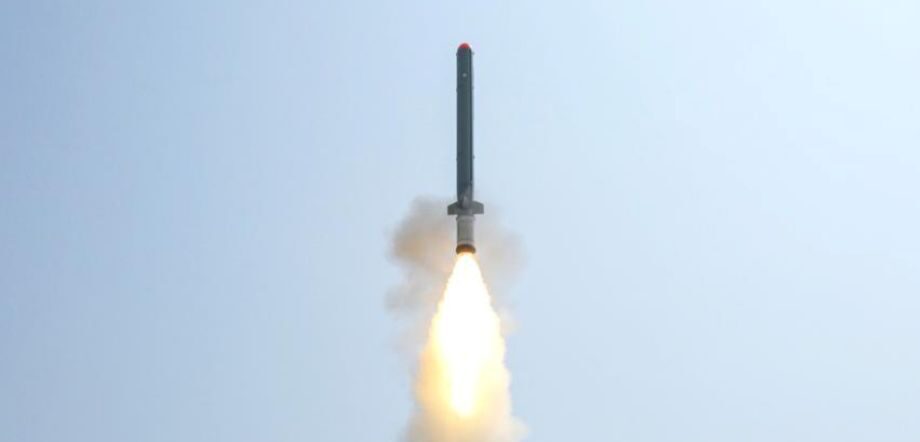
India is accelerating its push for self-reliance in space and defence by giving a greater role to private industry in the production of technologies developed by the country’s premier research organisations, the Indian Space Research Organisation (ISRO) and the Defence Research and Development Organisation (DRDO).
The shift reflects a broader effort to separate high-end research and technology development from large-scale manufacturing. While organisations such as ISRO and DRDO remain central to developing strategic technologies, private companies can provide the industrial capacity, supply chains and manufacturing infrastructure required to produce these systems at scale.
For India, the approach could help shorten the time between technology development and operational deployment while also strengthening the domestic industrial base. Mature technologies can be transferred or made available to industry once they are sufficiently developed, allowing government laboratories to focus more heavily on next-generation research, advanced development and strategic programmes.
DRDO already has dedicated mechanisms for working with industry, including technology transfer, the Technology Development Fund and industry-partner programmes. The organisation describes its core mission as achieving self-reliance in critical defence technologies and systems, while its technology-transfer framework is designed to help Indian industry take developed technologies toward production.
This model is particularly important for defence manufacturing, where India is seeking to reduce dependence on imported equipment and build stronger domestic supply chains. Technologies developed by DRDO across missiles, radars, electronic warfare, air-defence systems and other strategic areas can create opportunities for Indian manufacturers to expand their capabilities and participate more deeply in defence production.
The space sector is undergoing a similar transformation. ISRO continues to handle major national missions and advanced technology development, but the wider Indian space ecosystem is increasingly opening up to private companies. ISRO’s current activities include cooperation with industry and the expansion of private participation across different areas of the space sector.
The move does not mean that ISRO or DRDO are withdrawing from their strategic responsibilities. Instead, it represents a division of roles in which government research organisations can concentrate on difficult and emerging technologies while industry takes on a larger share of manufacturing and commercial-scale production.
This approach could also support the growth of Indian aerospace and defence companies by giving them access to indigenous technologies and enabling them to develop expertise in advanced manufacturing. A stronger private industrial base could eventually contribute to exports as well as meet domestic requirements.
The timing is significant as India continues to expand its space capabilities and modernise its armed forces. ISRO recently successfully launched the GSLV-F17 mission carrying EOS-05 on September 4, 2026, while DRDO continues to advance and test indigenous defence systems.
India’s evolving model therefore places research institutions, public-sector organisations and private industry in increasingly complementary roles. If technology transfer and industrial scaling continue effectively, the partnership between ISRO, DRDO and Indian companies could become an important pillar of the country’s ambition to build a globally competitive aerospace and defence manufacturing ecosystem.