


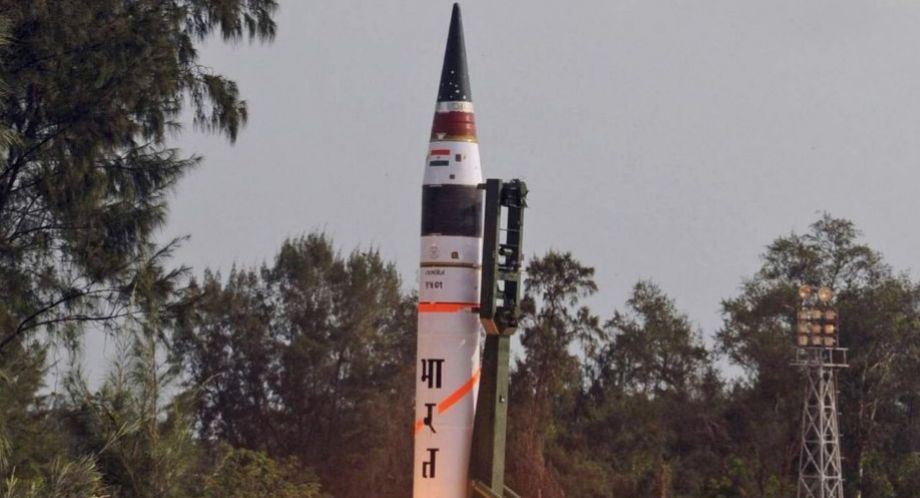
India’s nuclear weapons arsenal is estimated to have expanded to around 190 nuclear warheads, according to a new assessment by the US-based Federation of American Scientists (FAS). The assessment, published as part of its India’s Nuclear Weapons 2026 analysis, indicates that India continues to modernise its nuclear forces while developing additional systems capable of delivering nuclear weapons. Since India does not publicly disclose the size of its nuclear stockpile, the figure is an estimate based on open-source information, state-originating data and commercial satellite imagery.
According to FAS, more than 160 warheads are associated with operational nuclear delivery systems, while additional warheads are being prepared for newer missile systems currently under production. The organisation estimates that India may have produced enough military plutonium for between 140 and 225 nuclear warheads, although the actual number assembled is assessed at around 190. FAS cautions that these calculations involve significant uncertainty because the design and material requirements of India’s nuclear warheads are not publicly known.
The assessment also highlights India’s continuing development of nuclear-capable delivery platforms across land, air and sea. FAS estimates that India currently operates nine nuclear-capable systems, including two aircraft-based systems, six land-based ballistic missile systems and one sea-based ballistic missile system. Several newer systems are also being developed to complement or eventually replace existing platforms, supporting the gradual development of India’s nuclear triad.
Fissile-material availability could also influence the future size of India’s nuclear arsenal. The FAS assessment, citing estimates from the International Panel on Fissile Materials, puts India’s production of weapon-grade plutonium at approximately 730 kilograms, with an uncertainty of around 170 kilograms, by the beginning of 2026. Using an assumed requirement of roughly four kilograms of plutonium per warhead, the material could theoretically support production of between 140 and 225 warheads. However, FAS stresses that this does not mean all of the material has been converted into nuclear weapons, as some may remain in reserve and different warhead designs may require different quantities of fissile material.
India is also continuing to strengthen its nuclear infrastructure and delivery capabilities. SIPRI’s 2026 assessment said India slightly expanded its nuclear arsenal during 2025 and continued developing new nuclear delivery systems, with increasing attention on longer-range weapons capable of reaching targets across China while maintaining the longstanding focus on Pakistan.
The latest FAS assessment comes amid broader growth and modernisation among nuclear-armed states. FAS estimates India’s total inventory at about 190 warheads, compared with an estimated 170 for Pakistan and 225 for the United Kingdom. China’s estimated arsenal stands substantially higher at around 620 warheads. FAS also notes that the exact figures for countries such as India remain uncertain because nuclear stockpile data are not publicly disclosed.
India continues to maintain its stated policy of credible minimum deterrence and no first use of nuclear weapons. The expansion highlighted by the latest assessment therefore reflects the modernisation of India’s strategic deterrent and the development of newer delivery systems rather than a publicly announced change in its nuclear doctrine.
With additional missile and naval systems under development, India’s nuclear warhead inventory could increase further in the coming years. FAS notes that the future size of the arsenal will depend not only on fissile-material availability but also on the number and types of nuclear-capable delivery systems India ultimately deploys.