

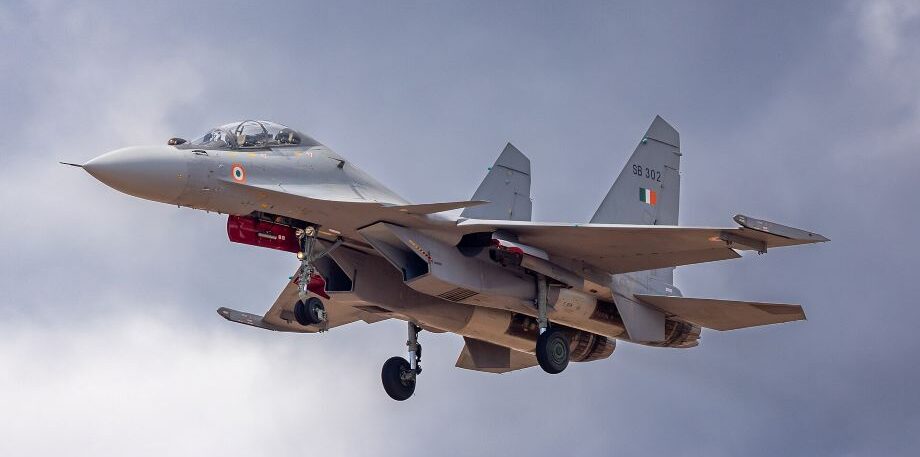
The Defence Acquisition Council (DAC), chaired by Defence Minister Rajnath Singh, is scheduled to examine a proposal for the overhaul of 40 Sukhoi Su-30MKI fighter aircraft as India continues efforts to maintain the operational availability of its frontline combat fleet.
The proposal has been put forward by Hindustan Aeronautics Limited (HAL), which plays a central role in manufacturing and supporting the Indian Air Force’s Su-30MKI fleet. The planned overhaul is aimed at keeping the aircraft operational for longer and addressing the maintenance requirements of a fleet that remains one of the IAF’s most important combat assets.
The IAF operates around 260 Su-30MKI fighters, making the aircraft a major component of India’s air combat capability. The fleet is used for a wide range of missions, including air superiority, long-range strike and other operational tasks. With the Air Force continuing to face a shortfall in fighter squadron strength, maintaining the availability of existing aircraft has become increasingly important.
The current proposal represents an expansion from an earlier plan involving 20 aircraft. Increasing the number to 40 would allow a larger portion of the fleet to undergo comprehensive maintenance and life-extension work. Such overhauls are particularly significant for an aircraft fleet that is heavily utilised and expected to remain in service alongside newer platforms entering the IAF.
The latest proposal also follows earlier government action concerning the Su-30MKI fleet. In March 2026, the DAC cleared the overhaul of Su-30 aero engines and their aggregates, with the Ministry of Defence stating that the work would help increase aircraft service life and meet the operational requirements of the Air Force.
HAL’s role is significant because the company has extensive experience in the production, maintenance and overhaul of India’s Su-30MKI aircraft. The government had also approved the acquisition of 12 additional Su-30MKIs from HAL in December 2024, with the aircraft being manufactured at the company’s Nashik facility.
The proposed overhaul should not be confused with India’s broader Su-30MKI modernisation programme. The larger modernisation effort is intended to introduce advanced indigenous systems and substantially enhance the fighter’s combat capabilities, whereas the current proposal before the DAC is focused on overhaul and sustaining the aircraft’s operational availability.
The DAC’s consideration of the proposal would represent an important stage in the procurement process, but it would not itself amount to a final contract award. If an Acceptance of Necessity is granted, the proposal would move through subsequent procurement and contracting stages, where the final cost, scope and implementation schedule would be determined.
The decision will therefore be closely watched as India seeks to maintain sufficient fighter availability while simultaneously progressing with newer combat aircraft programmes. For the IAF, extending the useful service of existing Su-30MKIs could provide additional operational flexibility during the transition towards a larger and more modern fighter fleet.