


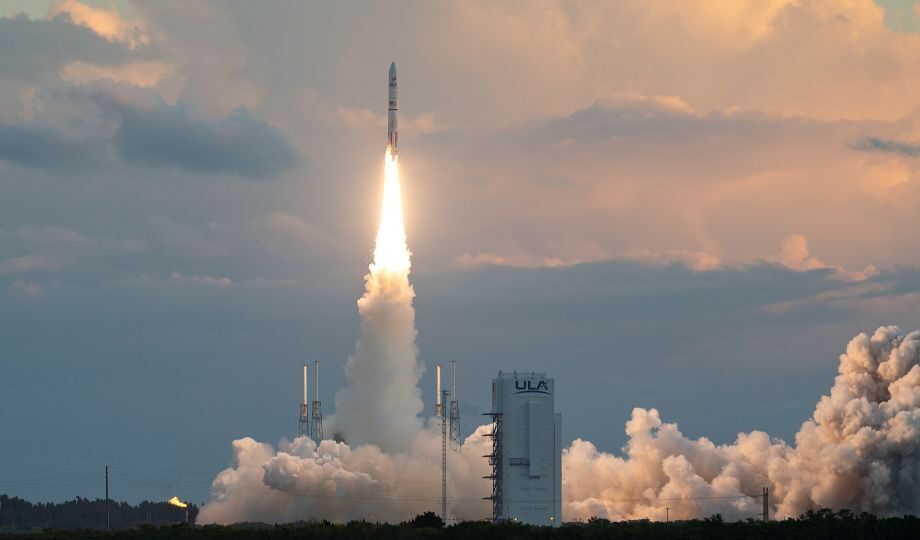
United Launch Alliance (ULA) has suffered a major setback after its Vulcan rocket failed during a satellite deployment mission on November 15, 2026, resulting in the loss of 40 Amazon Leo satellites. The incident occurred around 10 minutes after liftoff from Cape Canaveral Space Force Station in Florida, marking the first unsuccessful mission for the Vulcan launch vehicle.
The rocket departed from Space Launch Complex 41 at approximately 12:40 p.m. EST, carrying 40 satellites intended to strengthen Amazon’s low-Earth orbit broadband network. However, an in-flight anomaly prevented the vehicle from completing its mission and placing the spacecraft into their planned orbit. ULA acknowledged the failure and said it would investigate the incident alongside its partners to determine the technical cause.
Preliminary information indicates that the rocket encountered difficulties during the upper-stage flight phase following the separation of its first stage. The Centaur upper stage is responsible for completing the orbital insertion process, but the mission did not proceed as planned. The company has not yet released a confirmed explanation for the malfunction.
The failure is particularly significant because Vulcan was developed as ULA’s next-generation launch vehicle to replace its ageing Atlas V and Delta IV rockets. Since its first flight in January 2024, the rocket had completed four successful missions before this latest launch attempt. Previous flights had also experienced solid rocket booster nozzle-related problems, leading to additional inspections and engineering modifications.
For Amazon, the incident represents another challenge in developing its Leo satellite internet service, formerly known as Project Kuiper. The company aims to establish a constellation of more than 3,200 satellites to provide broadband connectivity and compete with SpaceX’s Starlink network. Before this mission, Amazon had deployed approximately 398 satellites through 14 launches. Losing another 40 spacecraft will increase the pressure on its deployment schedule.
Amazon has arranged launches with several providers, including ULA, Blue Origin, Arianespace and SpaceX, to accelerate the constellation’s development. However, the Vulcan failure could affect upcoming launch schedules and require additional planning to replace the lost satellites.
The consequences also extend to ULA’s future commercial and military launch commitments. Vulcan is expected to become a key platform for US national security missions, making its reliability particularly important for government customers.
ULA will now face the task of identifying the failure’s underlying cause, implementing necessary technical corrections and demonstrating that Vulcan can safely resume operations. The timeline for its next flight will depend on the outcome of the investigation.