


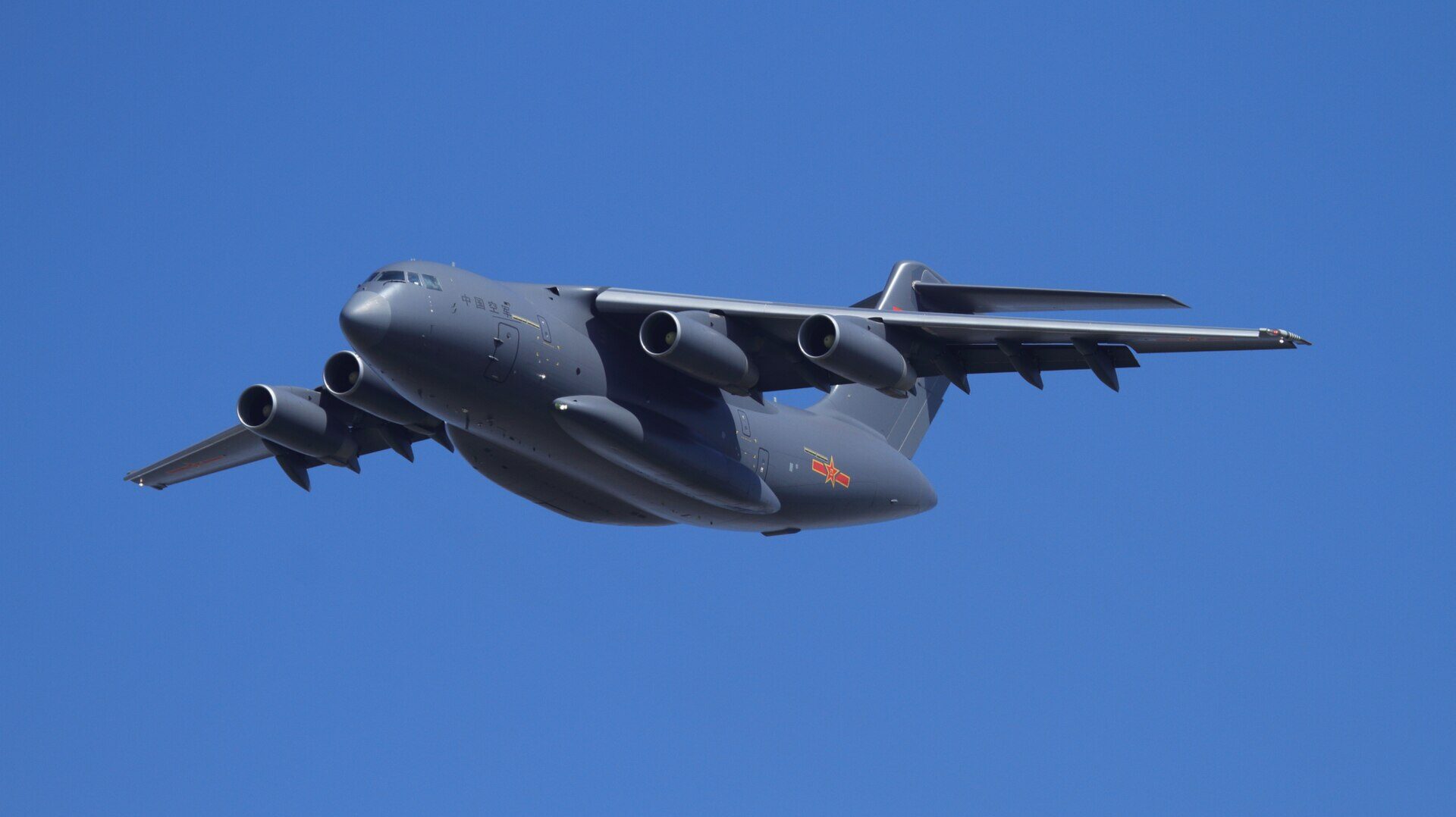
India’s eastern airspace has come under renewed scrutiny following reports of a Chinese military aircraft entering Indian airspace over Sikkim on November 12. The reported incident has raised questions about aerial security along the India-China border, particularly in a region that holds considerable strategic importance for India’s defence infrastructure.
According to a report published by Outlook India on November 14, the aircraft was detected by the Indian Air Force (IAF) at approximately 8:00 AM while flying at an altitude of around 25,000 feet. Citing an unidentified source familiar with the development, the report claimed that the aircraft remained within Indian airspace for approximately 20–25 minutes.
The Indian Air Force reportedly issued several radio warnings, directing the aircraft to leave Indian airspace and return towards Chinese territory. Despite these communications, the aircraft allegedly continued flying over the area before eventually departing. However, the available reporting has not established the aircraft’s exact identity, its mission or the circumstances that led to the alleged entry.
The incident is particularly sensitive because Sikkim occupies an important position along India’s northeastern frontier. The region is close to the Doklam plateau, where Indian and Chinese troops were involved in a prolonged military standoff in 2017. The surrounding areas remain strategically significant for monitoring military movements and maintaining security along the Line of Actual Control (LAC).
The reported airspace violation also draws attention to the Siliguri Corridor, a narrow geographical connection linking India’s northeastern states with the rest of the country. Often referred to as the Chicken’s Neck, this corridor is essential for India’s military logistics, transportation networks and civilian connectivity. Any unusual military activity in the surrounding region naturally attracts attention because of its importance to India’s national security.
For the Indian Air Force, maintaining continuous surveillance across sensitive border regions remains an important operational priority. Monitoring unidentified aircraft, tracking aerial movements and maintaining communication with military assets are essential elements of protecting national airspace, particularly in areas where geographical conditions and proximity to neighbouring countries create additional security challenges.
The reported episode comes against the backdrop of continuing efforts by India and China to manage tensions along their disputed Himalayan border. Although both countries have maintained military and diplomatic communication channels to address border-related concerns, developments involving potential airspace violations can create additional sensitivities.
As of November 16, the reported incident had not been independently confirmed through a detailed public statement from the Indian Air Force or the Ministry of Defence. Consequently, the aircraft’s alleged entry and the reported response should be treated as claims attributed to unnamed sources rather than officially established facts.
Further clarification from Indian defence authorities would be necessary to establish the full circumstances of the incident. Nevertheless, the report has once again highlighted the importance of India’s airspace monitoring capabilities and continued vigilance along the strategically sensitive Sikkim sector.