

Two oil tankers have reportedly suffered explosions and caught fire in waters near the Strait of Hormuz following alleged encounters with naval mines, according to Iran’s Islamic Revolutionary Guard Corps (IRGC). The incidents have raised fresh concerns about the safety of international commercial shipping through the strategically important waterway.
Iranian state media reported that the IRGC Navy accused the vessels of entering a restricted maritime corridor without authorisation. According to the Iranian military, both ships were travelling through an alternative route in the southern section of the Strait of Hormuz when explosions occurred, triggering fires aboard the vessels.
The IRGC alleged that the tankers had ignored warnings issued by Iranian authorities and were using an unauthorised passage. It also claimed that the ships had disabled their Automatic Identification System (AIS) equipment, which is commonly used to transmit a vessel’s identity, position and movement information to maritime authorities and other ships.
One of the most serious claims concerns a supertanker reportedly carrying more than two million barrels of crude oil. Iranian authorities stated that the vessel sank following the explosion and subsequent fire. Details about the tanker’s identity, ownership, flag registration and the fate of its cargo have not been independently established.
Information about the second vessel also remains limited, including the extent of the damage and whether it was able to continue operating after the fire. There has been no independently verified confirmation establishing the precise cause of the explosions or whether naval mines were responsible.
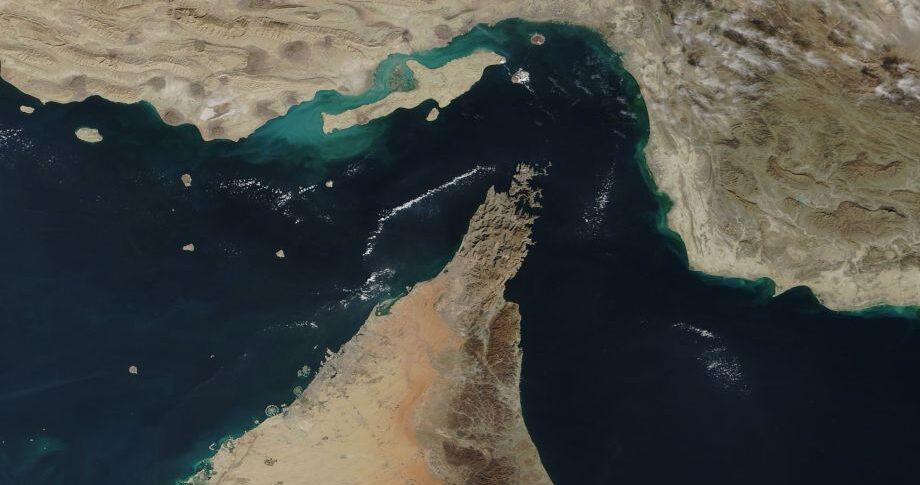
The reported incidents come at a time of heightened maritime tensions in the Persian Gulf, where restrictions on commercial vessel movements have increased uncertainty for international shipping operators. The Strait of Hormuz is a particularly sensitive location because it provides the principal maritime connection between the Persian Gulf and the Gulf of Oman.
The waterway handles a substantial share of international petroleum shipments, making its security important for major oil-producing countries as well as energy-importing economies across Asia and Europe. Any prolonged disruption could affect tanker movements, shipping insurance costs, crude oil transportation and international energy markets.
The reported sinking of a fully loaded supertanker also raises questions about possible environmental consequences. A spill involving millions of barrels of crude oil could present a serious threat to marine ecosystems and coastal areas. However, no confirmed information about an oil spill or the extent of environmental damage was immediately available.
The latest developments underline the growing vulnerability of commercial shipping in the region. Until further details emerge from independent maritime authorities and shipping operators, the circumstances surrounding the two tanker incidents and Iran’s claims remain subject to verification.