


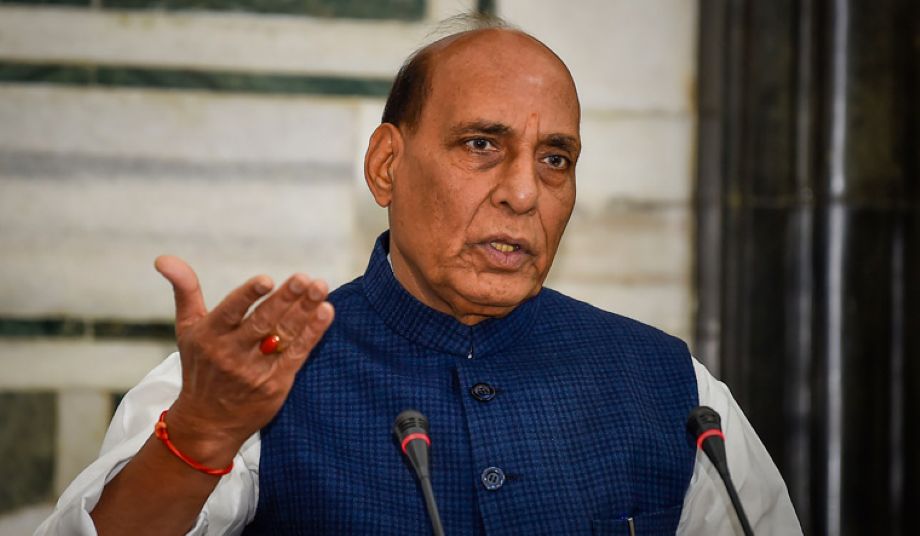
India has taken a major step towards expanding indigenous missile manufacturing, with Defence Minister Rajnath Singh approving the transfer of technologies for all conventional missile systems developed by the Defence Research and Development Organisation (DRDO) to the Indian defence industry. The decision will allow eligible Indian companies to undertake domestic production of these systems, subject to prescribed qualifications, certifications and regulatory requirements. The Ministry of Defence described the move as an important milestone in increasing industry participation and moving missile programmes from development into industrial-scale production.
The technology-transfer initiative covers conventional missile systems designed for air defence, air-to-air combat, anti-ship missions and strikes against ground targets. Systems identified in the portfolio include the Akash and Akash-NG surface-to-air missile systems, Very Short Range Air Defence (VSHORADS), Astra air-to-air missiles, Rudram anti-radiation missiles, and anti-tank missile systems such as Nag and SANT. The scope also includes the NASM-SR anti-ship missile, indigenous land-attack cruise missile systems and Pralay, a conventionally armed quasi-ballistic missile.
However, the decision does not extend to strategic missile systems. Nuclear-capable strategic missiles such as the Agni series remain outside the technology-transfer programme. Systems involving foreign partnerships, including BrahMos and MRSAM, are also outside the scope of the move. This distinction keeps the initiative focused on conventional missile capabilities that can be produced and scaled within India’s domestic defence manufacturing ecosystem.
A major feature of the decision is the greater role it gives to private-sector defence companies. According to Business Standard, Indian private firms will compete for the right to receive technology transfers and undertake development-cum-production partnerships, while systems integration will be carried out in partnership with DRDO. This represents a shift from the earlier model in which government-owned defence companies, particularly Bharat Dynamics Limited, played the dominant role in series production of DRDO-developed missile systems.
The move is also expected to create opportunities for Indian MSMEs and specialised technology partners to enter the missile supply chain. Beyond increasing production capacity, the government aims to strengthen domestic value addition, improve lifecycle support and reduce India’s dependence on imported defence equipment. The wider participation of industry could also help manufacturers scale production more rapidly when operational requirements increase.
The timing of the decision is significant as modern conflicts have demonstrated the importance of maintaining adequate stocks of conventional precision weapons and the ability to replenish them quickly. The Russia-Ukraine conflict and recent fighting in West Asia have highlighted the importance of production capacity and affordable missile inventories. India’s decision therefore seeks to strengthen not only its defence manufacturing ecosystem but also the long-term operational readiness of the armed forces.
For DRDO, the initiative provides a pathway for mature missile technologies to move more efficiently from development laboratories into large-scale manufacturing. For Indian industry, it creates an opportunity to acquire established indigenous technologies and develop manufacturing capabilities around them. The government sees the initiative as part of the broader Atmanirbhar Bharat objective of building a stronger and more self-reliant defence industrial base.