


India is undergoing a major transformation in the way it equips its armed forces, with its dependence on foreign sources for defence procurement declining significantly as indigenous manufacturing capabilities continue to expand. Recent government-linked assessments indicate that the foreign component of India’s capital defence procurement has fallen sharply, from roughly ₹70 for every ₹100 spent around 2010 to about ₹12 per ₹100 in 2026.
The decline marks a significant shift from India’s earlier heavy reliance on overseas suppliers for military platforms, weapons, equipment and critical components. Over the past decade, the government has placed increasing emphasis on Make in India, Aatmanirbhar Bharat and defence indigenisation, encouraging Indian companies to develop and manufacture a wider range of equipment for the armed forces.
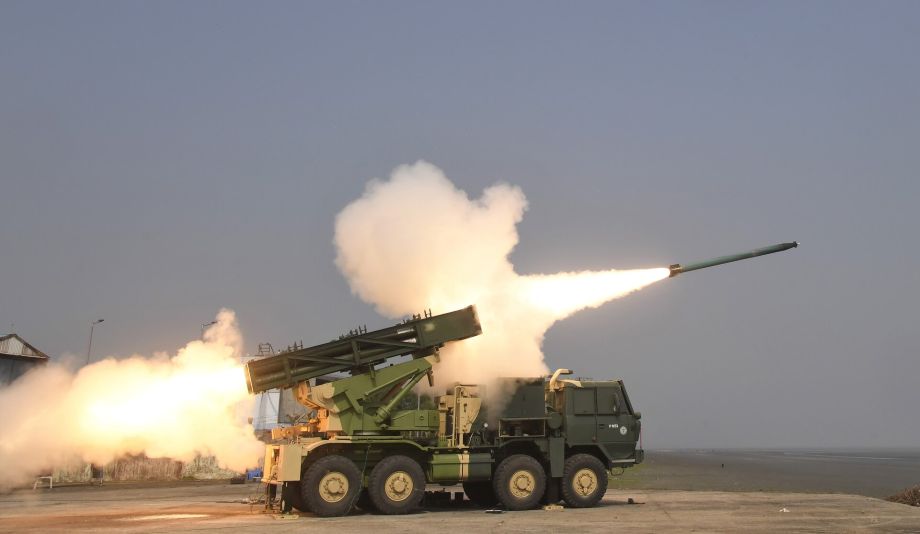
Government data also indicates that around 65% of India’s defence equipment is now produced domestically, reflecting the growing capacity of the country’s defence industrial base. Indigenous manufacturing has expanded across several areas, including aircraft, artillery systems, armoured platforms, missiles, radars, naval systems and electronic warfare equipment.
The expansion of India’s defence export sector provides another indication of this changing landscape. Defence exports reached a record ₹38,424 crore in FY 2025–26, registering a 62.66% increase over the ₹23,622 crore recorded in FY 2024–25. The latest figure is also more than 56 times higher than the ₹686 crore recorded in FY 2013–14.
Indian defence products are now being exported to more than 80 countries, with both the private sector and defence public-sector undertakings contributing to the growth. During FY 2025–26, the private sector accounted for ₹17,353 crore, or 45.16% of total defence exports, while defence public-sector undertakings contributed ₹21,071 crore.
The government has simultaneously expanded efforts to replace imported defence equipment with indigenous alternatives. Initiatives such as the Positive Indigenisation Lists, SRIJAN Defence Portal and Innovations for Defence Excellence (iDEX) have encouraged greater participation from Indian manufacturers, startups, research organisations and technology developers. These programmes are designed to strengthen domestic supply chains and reduce dependence on overseas sources for critical defence requirements.
The decline in foreign procurement, however, does not mean India has completely moved away from international defence cooperation. Foreign-origin platforms, technologies and partnerships continue to play an important role, particularly in areas where suitable indigenous capabilities are still under development. India’s approach is increasingly focused on combining selective international cooperation with domestic research, development and manufacturing.
India’s defence production has also reached a record ₹1.78 lakh crore in FY 2025–26, further demonstrating the expansion of the country’s indigenous defence industry. The government has set an ambitious target of increasing annual defence production to ₹3 lakh crore and defence exports to ₹50,000 crore by 2029.
The sharp reduction in dependence on foreign defence procurement, together with rising domestic production and exports, represents an important milestone in India’s drive towards greater defence self-reliance. The next challenge will be to move beyond import substitution and assembly towards greater indigenous ownership of advanced technologies, intellectual property, research and development.
If this momentum continues, India could further strengthen the resilience of its military supply chains while emerging as a more competitive global centre for defence manufacturing and exports.