


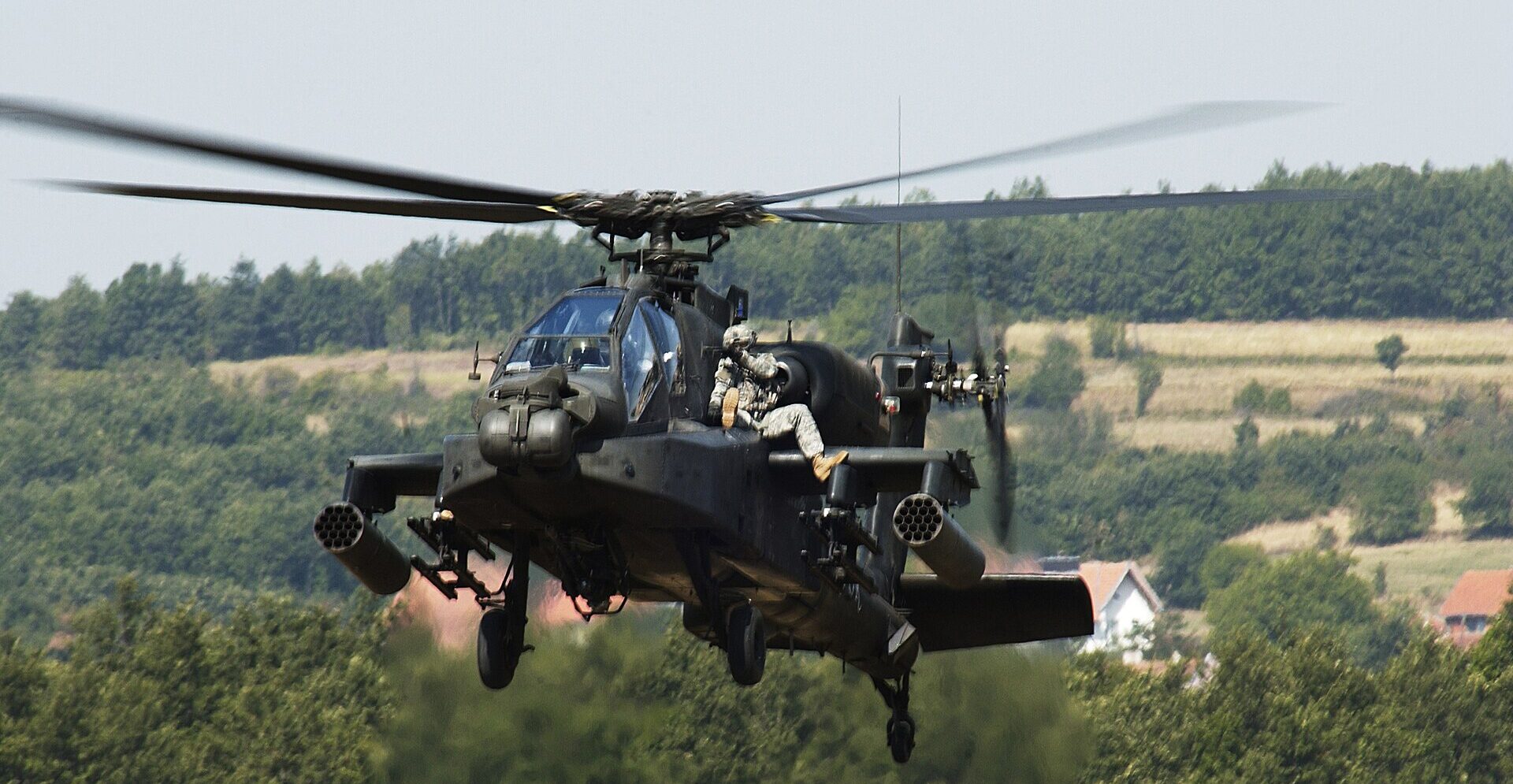
The U.S. Army’s AH-64 Apache has come under renewed scrutiny following a fatal crash in central Texas that killed both crew members aboard the attack helicopter. The incident occurred near Salado in Bell County, during what officials described as a routine training flight from Fort Hood.
The two-seat Apache crashed into a field, and the impact triggered a large grass fire. Emergency responders moved quickly to contain the blaze, while nearby residents were evacuated as the fire spread across the surrounding area. No buildings were struck by the helicopter.
The identities of the two soldiers have not been publicly released pending notification of their families. Fort Hood authorities have begun an investigation into the circumstances surrounding the accident, but the cause of the crash has not yet been established.
The accident has once again put the Apache’s safety record in the spotlight. The AH-64 Apache is one of the world’s most widely recognised attack helicopters and has been a major component of U.S. Army aviation for decades. Its combination of advanced sensors, night-fighting capabilities, precision weapons and battlefield survivability has made it a key platform for attack and close-support missions.
However, the Texas crash also highlights the risks associated with operating complex combat helicopters, particularly during demanding training activities. A military aircraft can face hazards ranging from mechanical failures and environmental conditions to human factors and operational pressures. Investigators will therefore need to determine whether the Texas accident was linked to a technical problem, flight conditions, human factors or another cause.
The Apache remains an important platform not only for the United States but also for several international operators. India is among the countries operating the AH-64E Apache, with the Indian Air Force having inducted the type into its combat helicopter fleet. The helicopter has also operated in challenging environments, including high-altitude areas along India’s northern borders.
The latest U.S. crash does not by itself establish a systemic problem with the Apache fleet. Instead, it underscores the importance of detailed accident investigations, regular maintenance, crew training and continuous safety improvements for sophisticated military aviation platforms.
As investigators examine the wreckage and flight history of the Texas-based Apache, the findings could provide important information about what caused the fatal accident and whether any corrective measures are required across the fleet.