

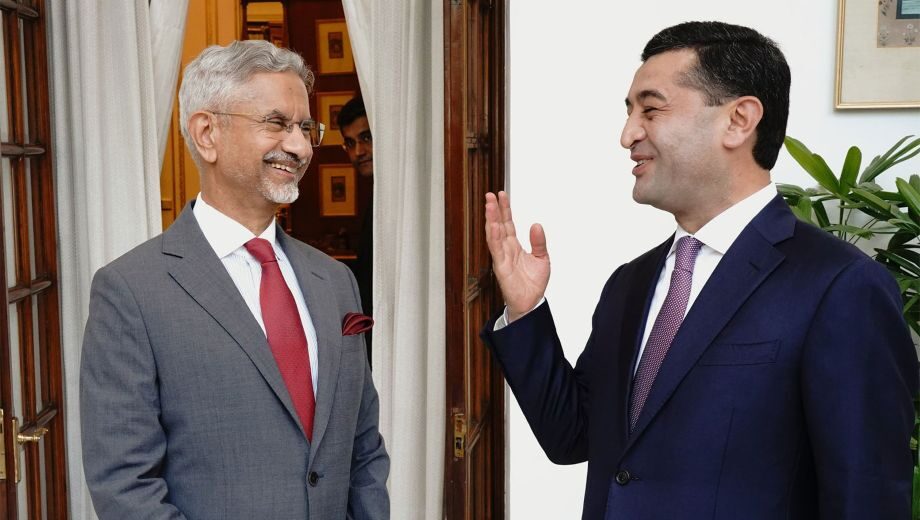
India and Uzbekistan have reaffirmed their commitment to strengthening their strategic partnership, with defence and security cooperation emerging as a key pillar of bilateral discussions held during the official visit of Uzbekistan’s Foreign Minister Bakhtiyor Saidov to New Delhi.
During high-level meetings with External Affairs Minister Dr. S. Jaishankar, both sides reviewed the progress of their strategic relationship and agreed to broaden collaboration across defence, trade, energy, infrastructure, critical minerals, connectivity and education. The discussions also covered regional security, counter-terrorism and cooperation in multilateral forums, reflecting the growing importance of the India-Uzbekistan partnership in Central Asia.
Defence cooperation remains one of the strongest aspects of bilateral relations. India and Uzbekistan have steadily expanded military engagement through regular joint exercises, defence dialogues, training programmes and exchanges between their armed forces. Officials from both countries reiterated their commitment to enhancing defence-industrial cooperation and exploring new opportunities in security collaboration.
The leaders also emphasized strengthening economic ties by increasing investment, improving connectivity and encouraging cooperation in mining and critical minerals. Both nations see significant potential to expand trade while supporting resilient supply chains and regional economic integration.
The visit is also viewed as an important step in preparations for Prime Minister Narendra Modi’s upcoming visit to Uzbekistan, which is expected to provide fresh momentum to bilateral relations. Uzbekistan described India as one of its most important strategic and economic partners in South Asia, underlining the mutual commitment to elevating cooperation across multiple sectors.
With expanding defence collaboration, stronger diplomatic engagement and growing economic cooperation, India and Uzbekistan continue to reinforce a strategic partnership that supports stability, connectivity and shared development across the wider Central Asian region.