

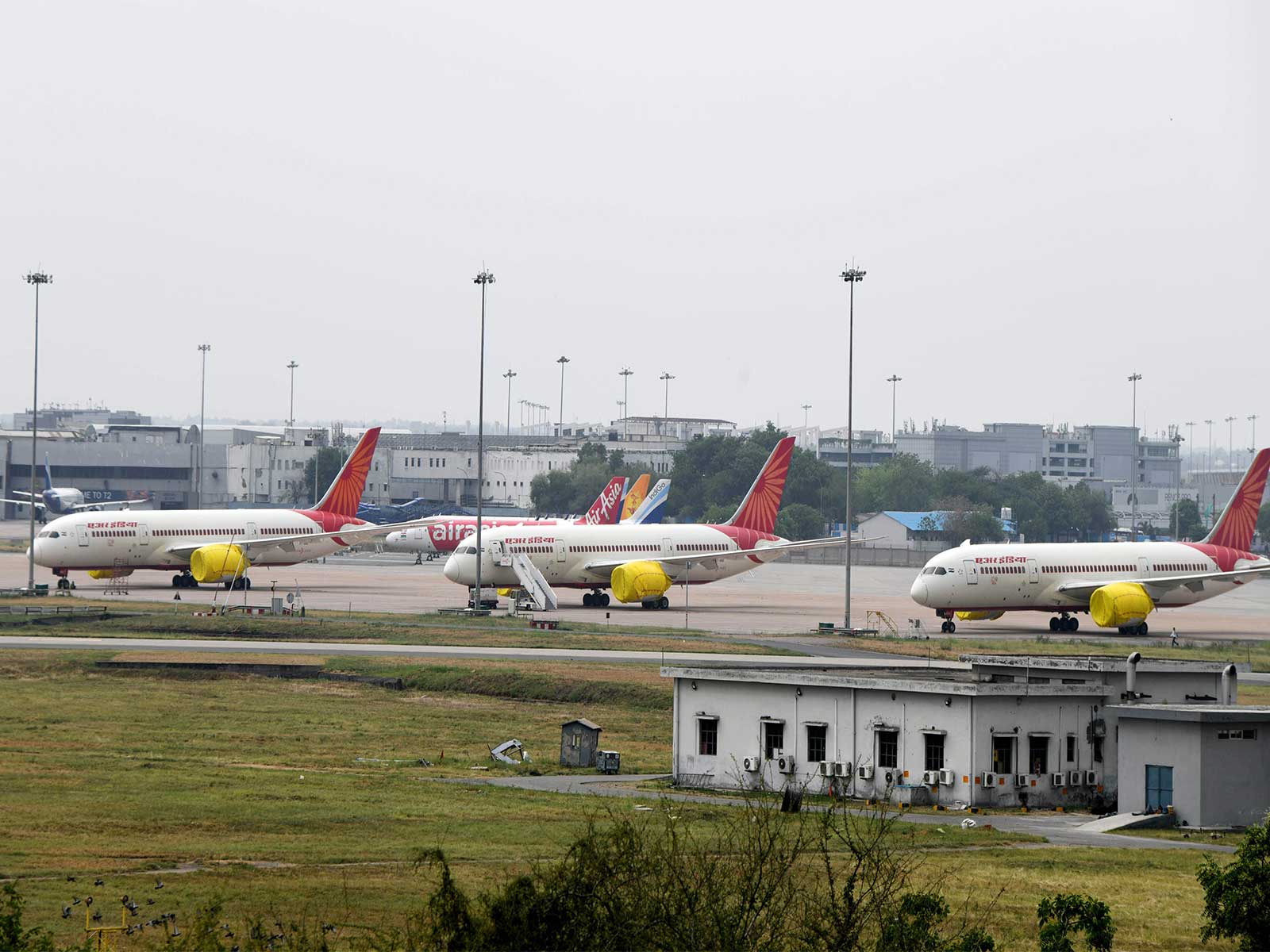
An Air India Boeing 787 operating flight AI2379 from Phuket, Thailand, to New Delhi encountered severe in-flight turbulence on August 4, resulting in a brief altitude change and minor injuries to several passengers and crew members, the airline confirmed.
The turbulence occurred during cruise flight approximately 90 minutes after departure. A passenger account described the event as sudden and severe, with the aircraft tilting sharply while most passengers were asleep in the early morning hours, with the disturbance lasting two to three minutes.
Air India stated that flight AI2379 experienced a “brief in-flight turbulence-related event during cruise, resulting in a momentary change in altitude.” The aircraft landed safely at Indira Gandhi International Airport in New Delhi, and all passengers and crew disembarked without incident.
A small number of passengers and crew members sustained minor injuries requiring medical assessment. Ambulances were positioned at the terminal gate, with several passengers assisted in wheelchairs and others displaying head bandages. A passenger claimed that 15 to 20 individuals were injured, including an infant, with injuries ranging from lower back strain to shoulder and back trauma. Air India’s airport medical team conducted precautionary examinations at the airport facility.
The airline stated that passenger and crew safety remains its highest priority and confirmed full cooperation with relevant authorities investigating the incident. Air India is extending necessary support to all affected individuals.
Commercial aviation safety protocols require aircraft to maintain structural integrity during turbulence events. Modern wide-body aircraft like the Boeing 787 Dreamliner are engineered to withstand turbulence far exceeding what passengers experience. Flight crew training emphasizes rapid response procedures including altitude adjustments, route diversions, and passenger cabin management during such incidents.
This incident underscores the ongoing challenge of predicting and mitigating clear-air turbulence despite advances in meteorological forecasting and aircraft design. Airlines operating long-haul international routes across the Indian subcontinent and Southeast Asia face regular exposure to seasonal weather patterns requiring constant monitoring and adaptive flight planning.