


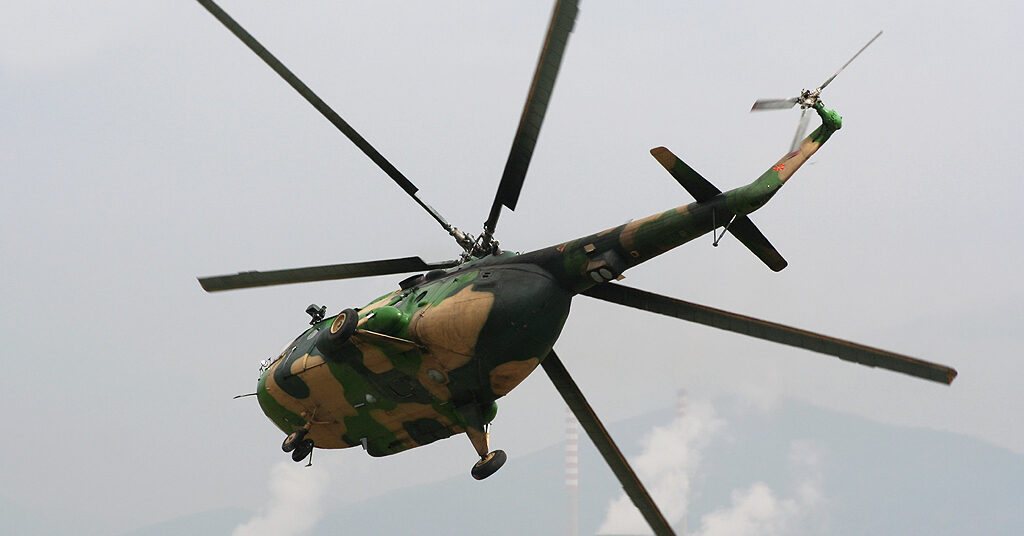
The Indian Air Force (IAF) has demonstrated the formidable combat capabilities of its Mi-17 helicopters during a recent operational exercise, where the aircraft executed coordinated rocket salvo attacks against simulated enemy targets. The exercise underscored the versatility of the Mi-17 fleet, which continues to serve as a critical asset for both transport and combat support missions.
During the live-fire drill, the helicopters launched multiple unguided rockets in quick succession, creating a concentrated strike pattern designed to suppress enemy positions and provide effective close air support to ground forces. The demonstration reflected the IAF’s focus on maintaining high levels of combat preparedness while ensuring its aircrews remain proficient in offensive operations.
Although primarily known for transporting troops, equipment, and humanitarian relief supplies, the Mi-17 helicopter is also capable of carrying a variety of weapon systems, including rocket pods and machine guns. This dual-role capability enables the aircraft to rapidly transition from logistical support to battlefield strike missions whenever operational requirements demand.
The exercise also highlighted the importance of coordinated air operations, precision mission planning, and tactical execution under realistic combat conditions. Such training helps strengthen coordination between helicopter crews and ground forces while validating combat procedures in complex operational environments.
As the Indian Air Force continues to modernize its aerial capabilities with next-generation aircraft and indigenous defence systems, the Mi-17 remains a dependable platform for a wide range of missions. Its proven reliability, heavy payload capacity, and combat versatility ensure it continues to play a significant role in supporting military operations across diverse terrains.
The successful rocket firing demonstration reflects the IAF’s continued commitment to enhancing operational readiness and maintaining a highly capable helicopter fleet prepared to respond effectively to future security challenges.