


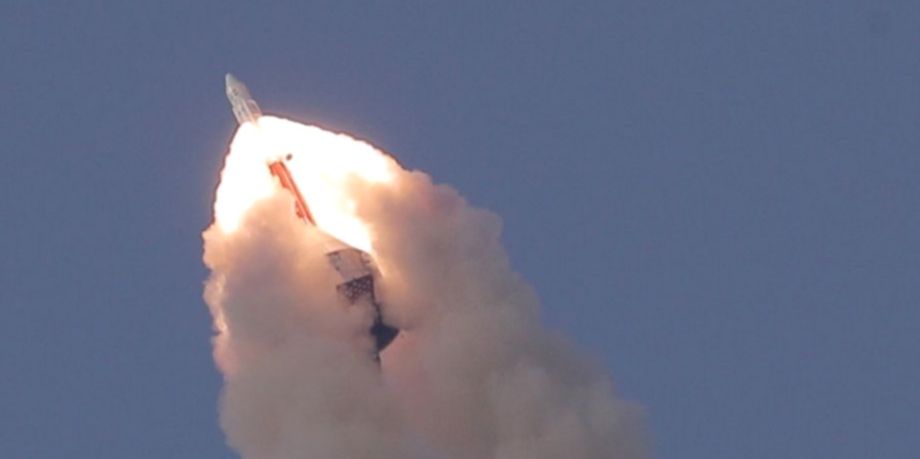
India has reaffirmed its long-term commitment to human space exploration with an ambitious roadmap that begins with the country’s first indigenous human spaceflight mission in 2027 and culminates in a crewed Moon landing by 2040. The plan, led by the Indian Space Research Organisation (ISRO), outlines a series of technological milestones designed to establish India as a leading spacefaring nation.
The first major step in this journey will be the Gaganyaan Human Spaceflight Mission, currently targeted for launch in 2027. The mission will send Indian astronauts into low Earth orbit aboard an Indian-built spacecraft, marking a historic milestone for the nation’s space programme. Before the crewed launch, ISRO will conduct multiple uncrewed test missions to validate critical systems, including crew safety, life-support technology, and spacecraft performance.
Following Gaganyaan, ISRO plans to expand its human spaceflight capabilities through orbital docking experiments, extended-duration missions, and advanced crew operations. These technologies are considered essential for future deep-space exploration and long-duration human missions.
Another key objective is the establishment of the Bharatiya Antariksh Station (BAS) by 2035. The indigenous space station will provide a permanent platform for scientific research, technology demonstrations, and long-term astronaut missions in low Earth orbit. Experience gained from operating the station will help prepare Indian astronauts for future lunar expeditions.
India’s lunar ambitions will also be supported by a series of robotic missions aimed at testing precision landing systems, lunar surface operations, communication networks, and resource utilization technologies. These precursor missions are expected to reduce risks before astronauts attempt a landing on the Moon.
Supporting the entire programme will be ISRO’s Next Generation Launch Vehicle (NGLV), a heavy-lift rocket being developed to transport larger payloads required for human exploration beyond Earth orbit. Future lunar missions are expected to involve multiple launches, orbital assembly of spacecraft, and advanced propulsion technologies capable of supporting complex deep-space operations.
The proposed roadmap envisions gradual progression from low Earth orbit missions to crewed lunar operations, ensuring that every phase builds upon proven technologies and operational experience. By following this phased strategy, India aims to achieve an indigenous human landing on the Moon by 2040, joining the select group of nations capable of independently conducting crewed lunar missions.
The programme reflects India’s broader vision of strengthening indigenous space technology, promoting scientific innovation, and expanding its role in global space exploration over the coming decades.