


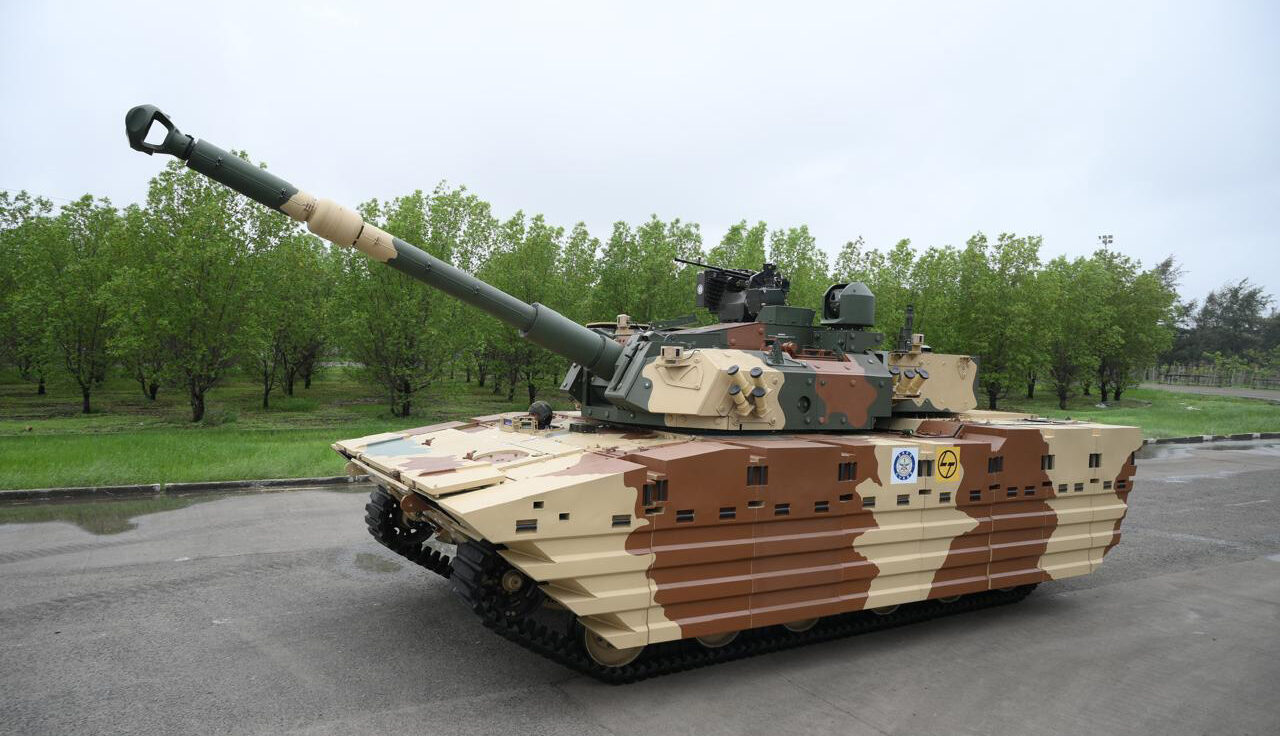
India’s indigenous Zorawar Light Tank programme has entered an important phase as the Indian Army is reportedly reassessing the vehicle’s protection requirements, a development that could influence its final design and induction timeline. While the project remains a priority for strengthening India’s high-altitude combat capabilities, the latest review highlights the Army’s effort to ensure the platform is fully prepared for evolving battlefield challenges.
The Zorawar light tank was conceived in the aftermath of the India-China military standoff in eastern Ladakh, where the need for a highly mobile armoured platform capable of operating in mountainous terrain became increasingly evident. Jointly developed by the Defence Research and Development Organisation (DRDO) and Larsen & Toubro (L&T), the tank is intended to provide the Indian Army with a modern indigenous solution for deployment along the Line of Actual Control (LAC), where conventional main battle tanks face mobility constraints.
According to defence reports, the Army is evaluating whether the platform should incorporate a higher level of ballistic and mine protection than originally planned. Meeting these revised expectations could require changes to the tank’s armour configuration and overall design. Any increase in protection, however, must be carefully balanced with the vehicle’s mobility, as maintaining agility in high-altitude terrain remains one of the programme’s primary objectives.
Defence experts note that the review reflects the Army’s broader focus on enhancing survivability against modern battlefield threats rather than indicating any loss of confidence in the project. Military platforms often undergo design refinements during development to accommodate changing operational requirements, technological advances and lessons drawn from contemporary conflicts.
The Zorawar prototype has already completed initial mobility and user evaluations, with further trials expected as the development process continues. Feedback generated during these assessments will play an important role in determining the final configuration before the platform enters production.
The programme is regarded as one of India’s key indigenous armoured vehicle initiatives under the government’s drive to strengthen domestic defence manufacturing. Once inducted, the light tank is expected to complement the Army’s existing armoured fleet by providing rapid-response capability in regions where heavier tanks are less effective because of terrain and infrastructure limitations.
Although any design modifications could affect the project’s schedule, defence analysts believe the emphasis remains on delivering a combat-ready platform that meets the Army’s operational expectations. The outcome of the ongoing review will be closely watched, as it is expected to shape the future of India’s dedicated high-altitude light tank programme and reinforce the country’s long-term efforts towards defence self-reliance.