


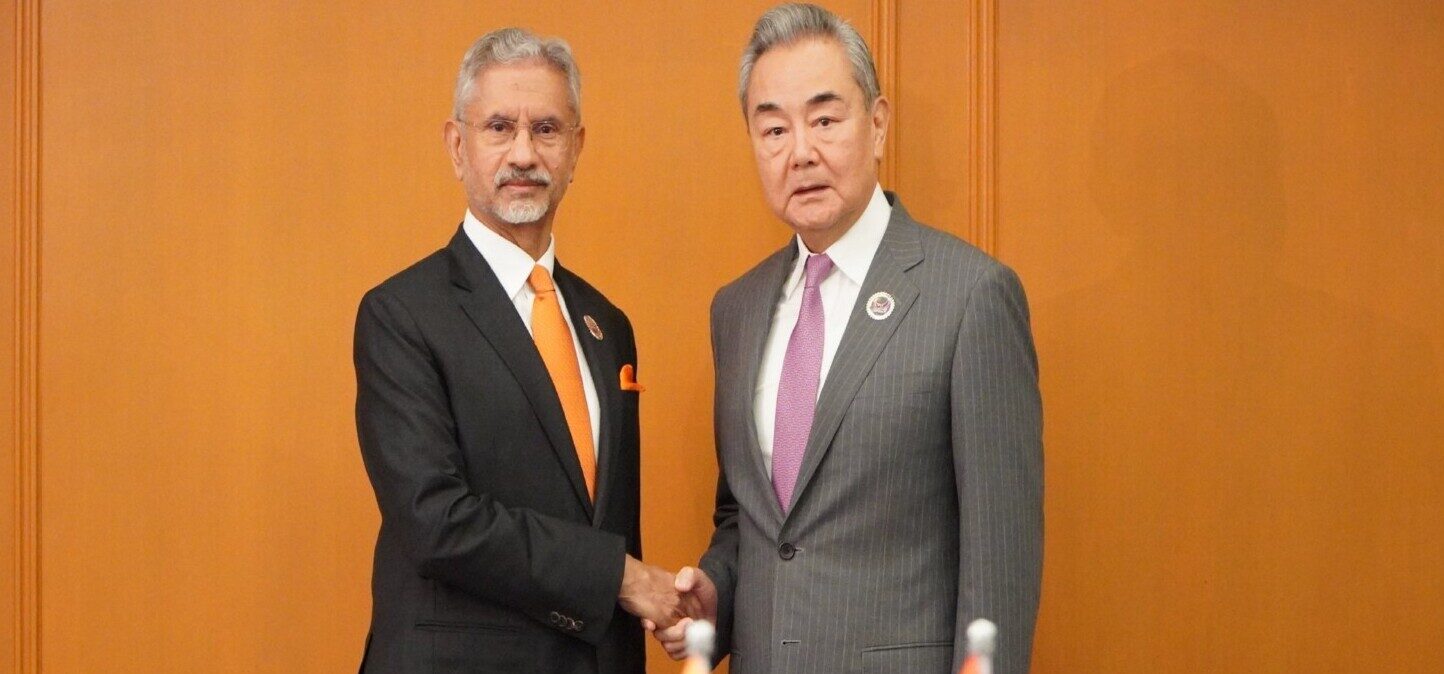
Chinese Foreign Minister Wang Yi has described India as a “partner” while calling for stronger cooperation between the two neighbouring countries during his meeting with External Affairs Minister Dr. S. Jaishankar in Manila.
The meeting was held on the sidelines of the ASEAN Foreign Ministers’ Meeting, where the two leaders reviewed the current state of India-China relations and exchanged views on regional and international developments. The discussions focused on maintaining dialogue and strengthening engagement between the two countries.
According to the Chinese Foreign Ministry, Wang Yi said China and India should regard each other as partners rather than competitors and as opportunities instead of threats. He stated that both nations should handle differences with a constructive approach, enhance mutual understanding and expand practical cooperation in areas of shared interest.
During the talks, Jaishankar reiterated India’s position that peace and tranquillity in the border areas remain the essential foundation for normal bilateral relations. He emphasised that sustained stability along the border is necessary for building trust and taking the relationship forward.
The External Affairs Minister also highlighted India’s economic concerns, calling for fair market access, a more balanced trade relationship and predictable supply chains. He noted that addressing these issues would help create a healthier framework for bilateral economic engagement.
Both ministers agreed on the importance of maintaining regular diplomatic communication and continuing discussions on issues affecting bilateral relations. They also exchanged views on key regional and international developments, reaffirming the value of dialogue in managing differences and exploring areas of cooperation.
The Manila meeting reflects continued diplomatic engagement between New Delhi and Beijing as both sides seek to maintain communication while addressing important political, economic and strategic issues through dialogue.