

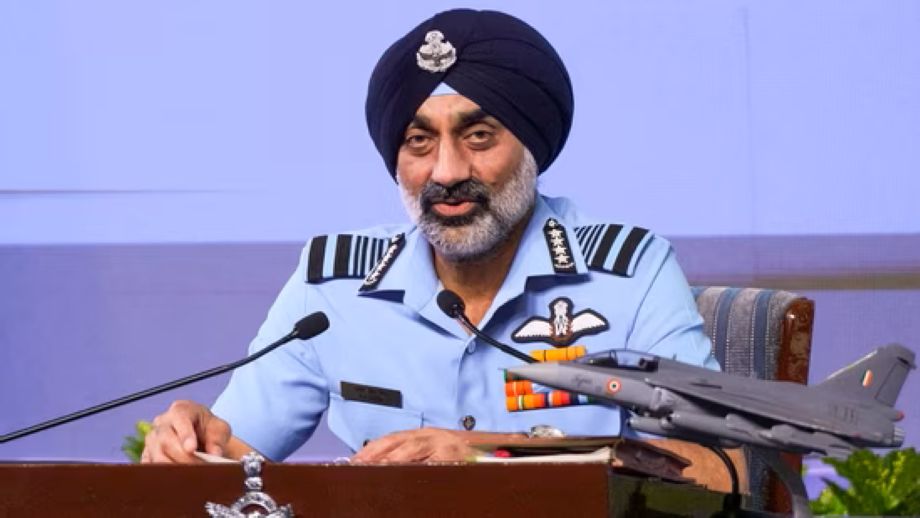
Air Chief Marshal A P Singh has emphasised that modern warfare demands seamless integration across all three services, signalling a strategic pivot toward joint operations planning and execution across the Indian armed forces. Speaking on the evolving nature of future conflicts, the Indian Air Force chief stressed that victory in modern warfare depends on the ability of the Army, Navy, and Air Force to operate as a unified fighting force rather than as separate entities.
Joint warfare has become the operational doctrine of contemporary defence establishments worldwide. The concept moves beyond service-specific capability development toward unified command structures, shared intelligence architecture, and coordinated strike packages involving air, land, and maritime assets.
India’s armed forces have been progressively aligning toward joint operations since the creation of the Department of Military Affairs under the Ministry of Defence. The Indian Air Force, Indian Navy, and Indian Army conduct regular joint exercises and tri-service operational drills to strengthen interoperability and coordination.
Air Chief Marshal A P Singh’s remarks reflect broader institutional recognition that no single service can independently shape the outcome of contemporary conflicts. Air superiority, maritime control, and ground operations are now deeply interdependent. The Indian Air Force continues to enhance coordination with the Army and Navy through integrated command-and-control mechanisms that improve situational awareness and operational effectiveness during joint missions.
India faces a two-front strategic challenge in the Indo-Pacific and mainland Asia, where potential adversaries possess advanced multi-domain warfare capabilities. Joint force integration directly addresses this challenge by enabling simultaneous operations across different geographical domains with unified logistics, command authority, and coordinated mission planning.
The Navy’s carrier strike groups, the Army’s mechanised formations supported by dedicated aviation, and the Air Force’s fighter fleets must operate as a single integrated force rather than as parallel organisations. This requires standardised communication protocols, compatible weapon systems, and commanders trained in joint operational planning.
India’s defence procurement strategy increasingly reflects this doctrine. Platforms such as the Tejas fighter, P-8I maritime patrol aircraft, and armed helicopters are being incorporated into joint operational structures. The Integrated Defence Staff continues to play a key role in joint operational planning and capability assessment.
The statement also underscores the importance of indigenous defence manufacturing in enabling rapid operational adaptation. Joint force structures require faster sensor-to-shooter cycles and adaptive logistics, supported by secure domestic supply chains and greater interoperability across multiple platforms and services.
Air Chief Marshal A P Singh said that strengthening jointness among the three services will remain essential for ensuring that India’s armed forces are prepared to respond effectively to future multi-domain conflicts, where speed, coordination, and integrated decision-making will determine operational success.