


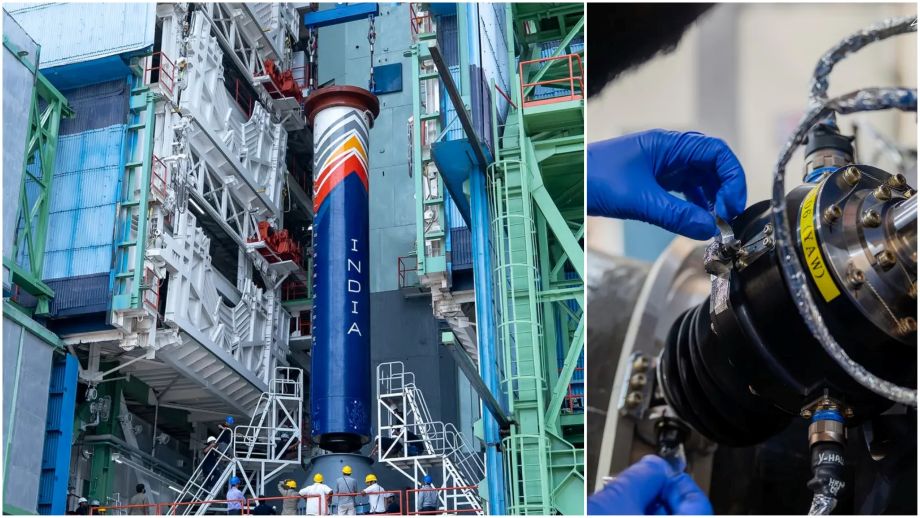
Skyroot Aerospace will launch Vikram-1, India’s first private sector orbital-class rocket, on July 18 as part of Mission Aagaman, marking a watershed moment for India’s commercial space sector and the broader Make in India defence and aerospace ecosystem.
Vikram-1 is a three-stage solid-fuelled launch vehicle developed entirely by Skyroot Aerospace, a Hyderabad-based space startup founded in 2018. The rocket is designed to place satellite payloads of up to 300 kilograms into low Earth orbit, addressing a critical gap in India’s launch cadence for small and medium satellite missions.
This flight represents the culmination of India’s policy shift toward private sector participation in space launch, a move formalized through the IN-SPACe (Indian National Space Promotion and Authorisation Centre) framework introduced in 2021. The framework de-licenses commercial launch operations and permits private companies to use ISRO facilities and expertise under a regulatory oversight model.
Prior to this, India’s orbital launch capacity was monopolized by the Indian Space Research Organisation through its Polar Satellite Launch Vehicle and Geosynchronous Satellite Launch Vehicle programmes. While ISRO’s track record is strong, the cadence and cost structure of government-led launches constrained India’s ability to service the growing commercial satellite constellation market, particularly for Earth observation and communications payloads in the 100-500 kg mass range.
Vikram-1’s development underscores India’s broader ambition to compete in the global commercial space launch sector, where companies like SpaceX (Falcon 9), Relativity Space (3D-printed rockets), and European players have established operational cadences. India currently lacks a private operator with demonstrated orbital capability, a gap that has allowed satellite operators to rely on international launch services.
The mission also reflects the Government’s intent to nurture a domestic space industrial base capable of competing globally, consistent with the broader defence manufacturing vision articulated through Strategic Partnership Model and Atmanirbhar Bharat initiatives. Space launch is a critical dual-use technology with direct implications for India’s national security, remote sensing infrastructure, and communications resilience.
Skyroot Aerospace has received funding and policy support from IN-SPACe, and the company has conducted multiple ground-based test campaigns to validate Vikram-1’s avionics, propulsion, and structural systems. The July 18 launch will be conducted from a designated commercial launch site coordinated through ISRO, with range safety and trajectory monitoring provided by the space agency.
Success on Mission Aagaman would position Skyroot as a credible operator capable of supporting India’s emerging commercial space economy while reducing national dependence on foreign launch providers for small satellite missions.