


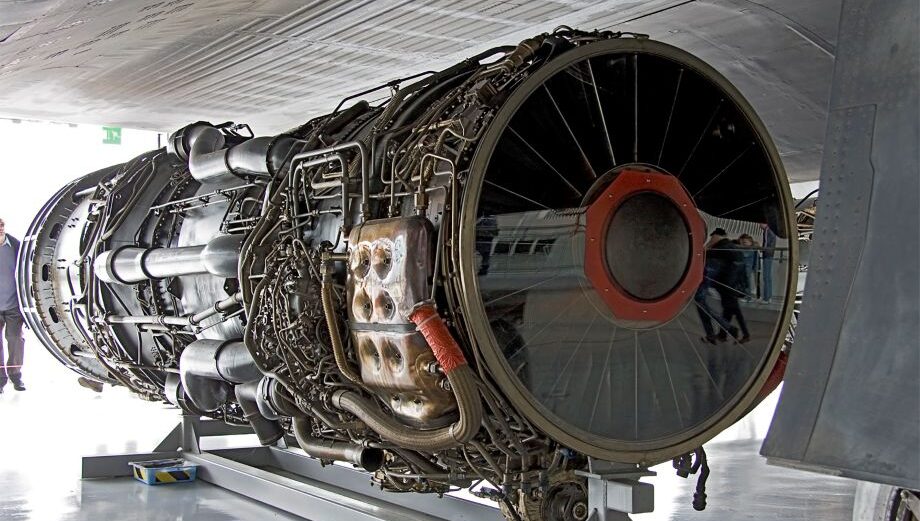
India’s push for indigenous fighter engine development reflects a strategic priority that transcends cost considerations, underscoring New Delhi’s commitment to self-reliance in critical air power capabilities.
The focus on battle-ready homegrown engines signals a fundamental shift in how India evaluates defence procurement. Rather than prioritizing unit cost, the calculus now centers on operational sovereignty, supply chain resilience, and the ability to sustain combat operations independently.
India’s primary indigenous fighter engine programme is the Kaveri, developed by the Gas Turbine Research Establishment (GTRE), a DRDO laboratory. The Kaveri was designed to power the HAL Tejas light combat aircraft and deliver thrust in the 15,000-pound-force class. Though the engine’s development timeline extended significantly beyond initial projections, the programme established indigenous expertise in turbofan design, metallurgy, and high-temperature materials critical for modern fighter propulsion.
The strategic imperative behind engine indigenisation stems from historical supply disruptions. India has faced embargoes and delayed spares availability for imported defence systems, most notably during the 1998 nuclear tests when Western nations imposed sanctions on military acquisitions. An engine built and maintained domestically eliminates dependency on foreign suppliers for critical components and sustains operational readiness during geopolitical tensions.
Current IAF operations rely heavily on imported engines across its fighter fleet. The Sukhoi Su-30MKI fleet uses Russian AL-31F turbofans, while the HAL Tejas is fitted with GE F404 engines. The HAL Tejas Mark 1A variant also operates on GE powerplants. This dependence on multiple foreign suppliers complicates logistics, increases lifecycle costs through licensing and royalty payments, and creates vulnerabilities if diplomatic relations deteriorate with source nations.
Indigenous engine development also enables customization for specific operational profiles. A domestically-designed engine can be optimized for India’s geographical challenges, from the Himalayan high-altitude environment to hot-and-hot conditions in the Deccan plateau and desert operations in Rajasthan. Foreign engines, while proven, are engineered to generic performance envelopes.
The economic argument extends beyond unit pricing. Domestic production generates skilled jobs in advanced manufacturing, builds an ecosystem of suppliers and sub-system integrators, and accumulates institutional knowledge transferable across aerospace programmes. Over a 30-year operational lifecycle, an indigenous engine programme amortizes development costs across thousands of units while capturing value creation within India.
International precedent supports this approach. The United States developed the F100 and F110 engines for F-15 and F-16 fighters despite initial higher costs. Russia maintains the Klimov and Ufa engine bureaus for fighter propulsion. France’s Snecma (now Safran) powers the Rafale. Each nation recognized that strategic autonomy in engine technology outweighs short-term procurement savings.
India’s next-generation Advanced Medium Combat Aircraft (AMCA) programme similarly prioritizes an indigenous engine roadmap. While interim variants may use foreign powerplants, the long-term architecture assumes domestically-produced turbofans. This aligns with the broader Make in India defence industrial strategy and India’s stated objective of reducing defence import dependency to below 50 percent by 2030.