


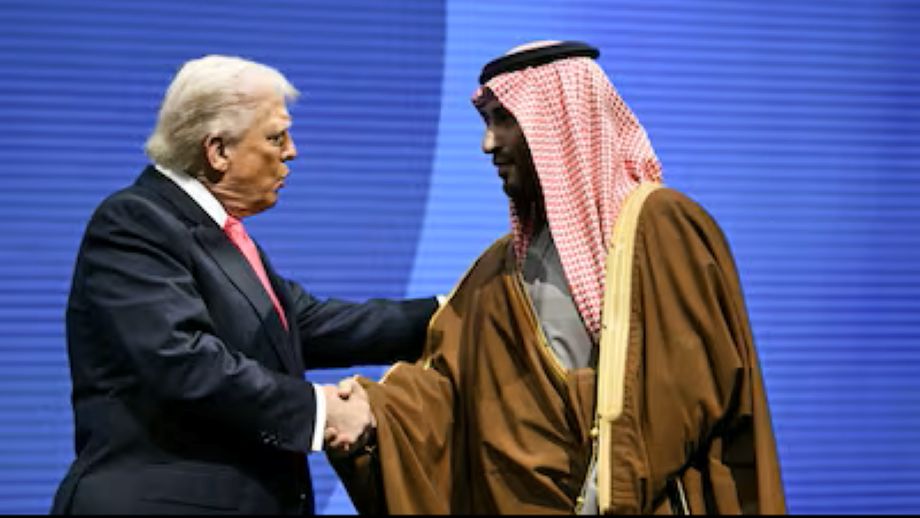
The United States and Saudi Arabia have announced a multi-billion-dollar civilian nuclear cooperation agreement, laying what officials describe as the foundation for a decades-long partnership that will reshape energy and strategic dynamics across the Middle East.
US Energy Secretary Chris Wright signed the nuclear cooperation accord alongside a separate bilateral safeguards agreement with Saudi Energy Minister Prince Abdulaziz bin Salman on Wednesday. The US Energy Department said the twin agreements establish the legal framework for what it termed a “long-term, multi-billion-dollar partnership” advancing nuclear nonproliferation and broader economic objectives.
The agreement is expected to unlock substantial opportunities for American nuclear companies, with reports indicating a potential provision allowing US firms to assist in constructing a uranium enrichment facility within Saudi territory. This element has become the focal point of international scrutiny, particularly among Israeli officials and some US lawmakers who have raised concerns that civilian nuclear capabilities could eventually transition toward military applications.
US Secretary of State Marco Rubio addressed proliferation concerns directly, stating that Washington would not approve agreements that create nuclear proliferation risks. The pact must still be submitted to the US Congress, though legislative approval is not a formal requirement for its implementation.
The accord arrives amid ongoing US military operations against Iran, a nation with which Washington has long contested nuclear programme development. Iran, like Saudi Arabia, has consistently asserted its sovereign right to develop civilian nuclear technology and has sought greater autonomy over nuclear fuel cycles. This geopolitical dimension underscores why the Saudi agreement carries strategic weight beyond commercial considerations.
Nuclear cooperation has historically served as a vehicle for broader US strategic objectives in the Middle East. Washington has previously linked nuclear partnerships with wider defence collaboration and potential Israeli-Saudi normalisation efforts. The current agreement reflects that pattern, embedding civilian nuclear development within a wider framework of bilateral security arrangements.
From India’s perspective, this development carries implications for regional power balance and non-aligned positioning. India has maintained its own independent nuclear programme under a separate US civil nuclear accord reached in 2008, and continues to navigate great-power competition in the Indo-Pacific. The US-Saudi agreement exemplifies how nuclear cooperation has become a tool of strategic statecraft, particularly in regions where Washington seeks to maintain influence against rival powers.
The 30-year timeline of the partnership signals long-term US commitment to Saudi Arabia’s energy diversification and technological advancement. Saudi Arabia’s interest in nuclear power reflects both its domestic energy needs and aspirations toward advanced industrial capability, factors that also drive regional competition for technological dominance and influence.