

The United States has destroyed five Iranian oil tankers in the Gulf of Oman and near Iran’s Kharg Island after accusing Iran’s Islamic Revolutionary Guard Corps (IRGC) of attempting to strike a US Navy warship with ballistic missiles. The latest operation marks another major escalation in the ongoing confrontation between Washington and Tehran and has raised fresh concerns over security in the Persian Gulf and the Strait of Hormuz.
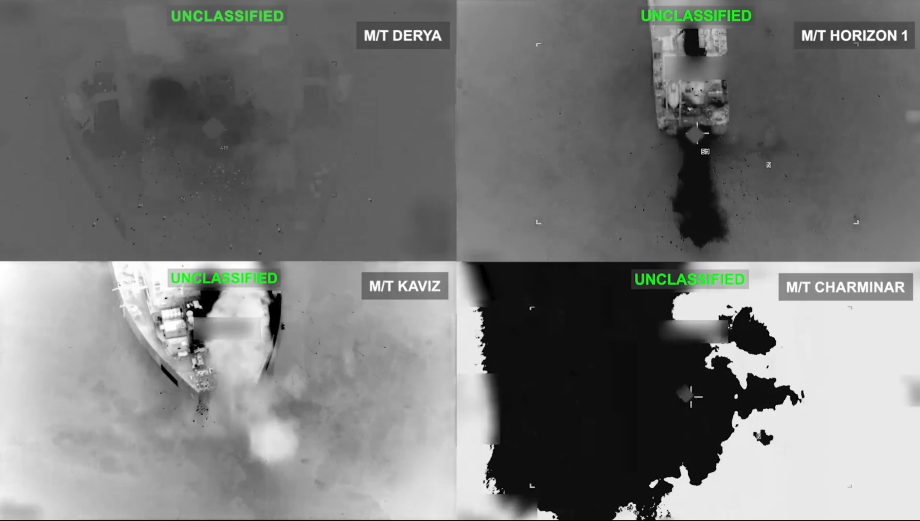
According to the US Central Command (CENTCOM), Iranian forces attempted to target a US warship twice over a two-day period. The American vessel successfully evaded the attacks and no US personnel were reported injured. In response, US forces targeted five Iranian crude-oil carriers that Washington said were associated with the IRGC.
CENTCOM identified the vessels as M/T Kaviz, M/T Charminar, M/T Horizon 1 and M/T Riesco in the Gulf of Oman, along with M/T Derya near Kharg Island. US officials said crews aboard the vessels were directed to abandon ship before the tankers were struck and rendered inoperable. CENTCOM also released video footage showing part of the operation.
Kharg Island is particularly significant because it serves as a major terminal for Iran’s crude-oil exports. The targeting of a tanker operating near the island therefore carries both military and economic implications, particularly as Washington continues to pressure Tehran’s oil-export network. US officials have accused Iran of using a shadow tanker fleet to generate revenue for the IRGC and its regional activities.
Iran responded to the US strikes with further military threats and attacks. Iranian state media reported missile strikes against US-linked targets in Jordan, while Jordan’s military said its air-defence systems intercepted 18 ballistic missiles and that two additional missiles fell in unpopulated areas. Jordan reported no casualties from the missile attack.
Iran has also claimed attacks against US naval vessels and commercial tankers in the region, although some of those claims had not been independently confirmed by the United States at the time of reporting. Iranian officials have warned that further attacks on its oil tankers could trigger additional retaliation against vessels operating around the Gulf.
The latest confrontation comes after US forces previously destroyed three Iranian oil tankers following an earlier attempted attack on American naval assets. The repeated strikes against Iranian shipping indicate that oil transportation and maritime activity have become an increasingly important part of the US-Iran confrontation.
The escalation is also having wider economic consequences. Oil prices moved sharply higher as markets reacted to the growing threat to shipping through the Strait of Hormuz, one of the world’s most important energy routes. Brent crude moved toward the $100-per-barrel level amid concerns that further military action could disrupt regional oil supplies and maritime traffic.
The destruction of the five Iranian tankers therefore represents more than another exchange of military strikes. It puts additional pressure on Iran’s oil-export capabilities while increasing the risks facing commercial shipping in the Gulf and Gulf of Oman. With both Washington and Tehran continuing to issue warnings and conduct military operations, concerns are growing that further retaliation could widen the conflict and create additional instability across the Middle East.