


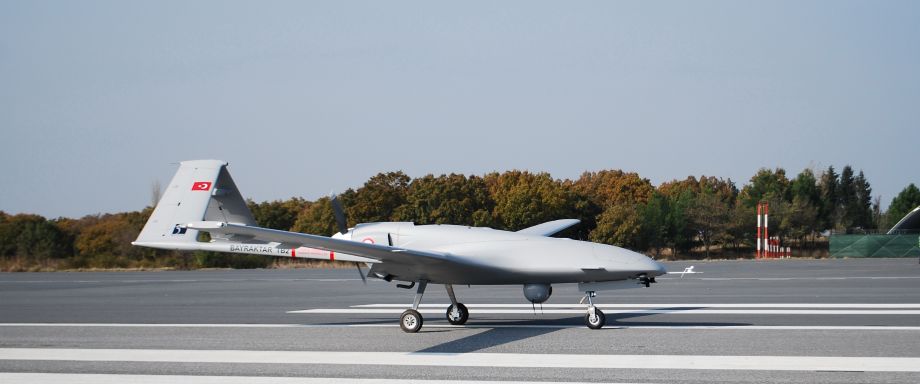
Turkey has demonstrated a new capability for its Bayraktar TB2 unmanned combat aerial vehicle (UCAV), transforming the widely used combat drone into an airborne carrier capable of transporting and deploying smaller kamikaze drones. The latest test, conducted by Turkish defence manufacturer Baykar, highlights an emerging approach to drone warfare in which larger unmanned aircraft act as launch platforms and communication relays for smaller attack systems.
According to Baykar, the Bayraktar TB2 took off from the company’s Flight Training and Test Center in Keşan, Edirne province, carrying 16 Skydagger first-person-view (FPV) kamikaze drones. During the flight demonstration, the aircraft released two of the smaller drones over a designated test area. Both launched FPV drones successfully engaged their intended ground targets.
The demonstration, conducted on November 4, 2026, showcased the TB2’s ability to do more than carry conventional guided weapons. The aircraft also provided a communication link through which the smaller drones could be controlled by operators on the ground. This arrangement allows the TB2 to function as an airborne carrier and communication relay, helping operators maintain control of FPV drones after their release from the larger aircraft.
The use of FPV drones has become increasingly significant in modern military operations, particularly in conflicts where relatively inexpensive unmanned systems are employed against vehicles, equipment and battlefield positions. However, conventional FPV platforms often face operational limitations related to communication distance, terrain obstacles and the availability of a reliable control signal. Deploying these smaller systems from a larger aircraft could help address some of these challenges by bringing them closer to their operational areas while maintaining an elevated communication link.
The Bayraktar TB2’s new configuration represents an expansion of its existing combat capabilities. Traditionally used for intelligence, surveillance, reconnaissance and precision-strike missions, the aircraft can carry guided munitions and support target acquisition. Its ability to transport and release multiple smaller FPV drones introduces another potential role, allowing a single unmanned platform to support different types of aerial strike operations.
The Skydagger FPV drones used in the demonstration were developed specifically for this type of deployment. By integrating smaller attack drones with an established unmanned combat aircraft, Baykar is exploring a system that combines the endurance and reach of a larger platform with the flexibility of compact, remotely controlled drones.
The concept of a larger unmanned aircraft carrying smaller drones is gaining attention in military aviation as armed forces look for more flexible and distributed ways to conduct operations. Such arrangements can potentially allow smaller unmanned systems to reach areas that would otherwise be difficult to access from conventional ground launch positions.
Baykar’s latest demonstration also reflects Turkey’s continued investment in unmanned aviation and the development of additional mission capabilities for its existing drone platforms. The Bayraktar TB2 has already established an international presence, with the company reporting export agreements for the aircraft with 36 countries.
Although the latest test demonstrated the successful deployment of two FPV drones from an aircraft carrying 16, Baykar has not yet released detailed information about the system’s operational range, deployment limitations or potential timeline for wider operational use.
The development nevertheless marks another step in the evolution of unmanned combat aviation. By turning the Bayraktar TB2 into a carrier for smaller attack drones, Turkey is exploring a new way to combine multiple unmanned systems within a single airborne mission architecture.