

India’s next-generation fighter aircraft programmes have received clearer development timelines, with Defence Secretary Rajesh Kumar Singh indicating that the Tejas Mk2 is expected to conduct its first flight by September 2027, while the Advanced Medium Combat Aircraft (AMCA) is targeted to make its first prototype flight in September 2028. The timelines were disclosed in New Delhi on September 27, highlighting the government’s expectations for two major indigenous combat aircraft programmes.
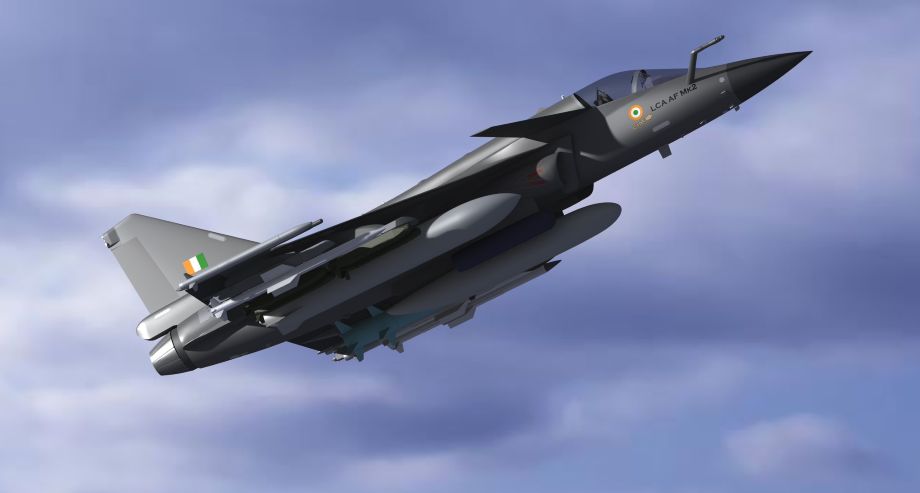
The Tejas Mk2, also known as the Medium Weight Fighter, is being developed by the Aeronautical Development Agency (ADA) in collaboration with Hindustan Aeronautics Limited (HAL). The aircraft is intended to be a larger and more capable successor to the Tejas Mk1 family, with increased payload, range and operational flexibility. According to the latest timeline, prototype testing is expected to take place between June and September 2027, with the first flight expected no later than September.
The aircraft is designed around the General Electric F414 engine and is expected to incorporate advanced avionics, an indigenous active electronically scanned array radar, infrared search and track capabilities and a wider range of weapons. Its design includes close-coupled canards and a larger airframe, allowing it to carry greater fuel and weapons loads compared with the existing Tejas Mk1A.
The Tejas Mk2 programme is significant for the Indian Air Force’s future fighter fleet because the aircraft is being developed to provide a medium-weight combat platform alongside lighter Tejas variants and heavier fighter aircraft. It is also intended to eventually replace older fighter fleets, including the Jaguar, Mirage 2000 and MiG-29, as these aircraft approach the later stages of their service lives.
Progress on the prototype has also moved into a more advanced stage. HAL has completed major structural assembly work on the first Tejas Mk2 prototype, with ground testing planned ahead of the maiden flight campaign. The latest developments indicate that the programme is transitioning from design and component-level work towards aircraft-level integration and testing.
The AMCA programme represents an even more ambitious step in India’s indigenous fighter development effort. Designed as a fifth-generation stealth combat aircraft, the AMCA is expected to feature a twin-engine configuration, internal weapons carriage, low-observable design features, advanced electronic warfare systems and integrated sensors. Its development is being led by the Aeronautical Development Agency.
According to the Defence Secretary’s latest timeline, the first AMCA prototype flight is targeted for September 2028. The programme received a major institutional push after the government approved the AMCA execution model involving Indian industry participation. Under the approved model, ADA will execute the programme in partnership with an Indian industry entity selected through a competitive process.
The government has also taken steps to strengthen the infrastructure supporting the programme. In May 2026, the Ministry of Defence announced the foundation stone for an ADA Aircraft Integration and Flight Testing Centre at Puttaparthi, intended to support aircraft integration, testing, validation and certification and accelerate the development of the AMCA programme.
The September 2027 and September 2028 targets therefore represent important milestones for India’s fighter aircraft development roadmap. The Tejas Mk2 is expected to enter flight testing first, while the AMCA will follow as India works towards developing an indigenous fifth-generation combat aircraft. Meeting these timelines will depend on prototype integration, ground testing, flight-test activities and the successful progression of the industrial development programme.
With both programmes moving towards their respective prototype flight stages, the coming two years will be closely watched across India’s aerospace and defence sector. The Tejas Mk2’s first flight in 2027 and AMCA’s planned maiden flight in 2028 would mark significant milestones in the country’s effort to expand indigenous fighter aircraft design, development and manufacturing capabilities.