


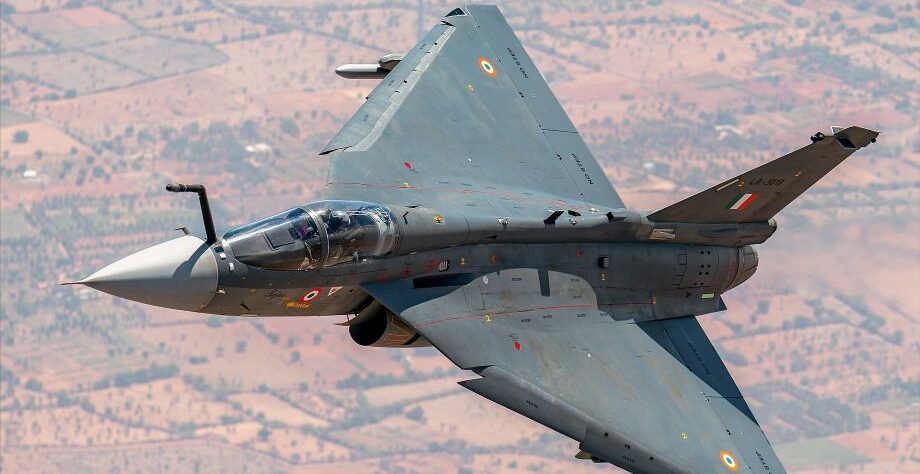
India’s Tejas Mk-2 fighter programme is moving forward with the planned integration of indigenous communication and night-flying systems developed by Bharat Electronics Limited (BEL) for the aircraft’s prototypes. The development underlines the growing contribution of Indian defence electronics companies to the country’s next-generation combat aircraft programme.
The Tejas Mk-2, being developed as a Medium Weight Fighter (MWF), is designed to provide the Indian Air Force with a more capable multirole fighter than the existing Tejas Mk-1 family. The aircraft is expected to incorporate a range of advanced avionics, sensors, electronic warfare equipment and indigenous systems as it progresses through development and testing.
BEL-developed communication and night-flying Line Replaceable Unit (LRU) systems are planned to be incorporated into the prototypes. LRUs are designed as modular aircraft systems that can be removed and replaced relatively quickly during maintenance and testing, helping improve serviceability and reduce downtime.
The integration of these systems is particularly significant as the Tejas Mk-2 moves toward its prototype and flight-testing milestones. Incorporating operationally relevant equipment during the development phase can help engineers evaluate the interaction between different avionics and identify potential integration issues before the aircraft moves toward certification and production.
The programme represents a major evolution of India’s indigenous fighter aircraft capability. The Tejas Mk-2 is larger than the Tejas Mk-1 and is being designed with increased fuel capacity, greater weapons-carrying capability and improved overall performance. The fighter is planned to be powered by the GE F414 engine and is expected to feature an advanced avionics suite, including an indigenous active electronically scanned array (AESA) radar and modern electronic warfare capabilities.
The aircraft is intended to perform a range of missions, including air defence, air superiority and precision strike operations. Its development is also strategically important for the Indian Air Force, which requires additional modern fighter aircraft to replace ageing platforms and strengthen its combat fleet.
The involvement of BEL reflects the broader expansion of India’s domestic aerospace and defence electronics ecosystem. Indian companies and government research organisations have increasingly contributed to avionics, radar, electronic warfare, communication and other critical systems used in indigenous military platforms.
For the Tejas Mk-2 programme, greater use of Indian-developed systems could help improve technological self-reliance while creating a foundation for future upgrades. It could also provide greater control over the aircraft’s electronic architecture and reduce dependence on imported subsystems.
As prototype development progresses, the successful integration and testing of these systems will be an important part of the aircraft’s journey toward flight trials and eventual operational clearance. The Tejas Mk-2 is expected to play an important role in India’s long-term fighter modernisation plans, with its development also supporting the country’s wider objective of building a stronger indigenous combat-aircraft manufacturing capability.